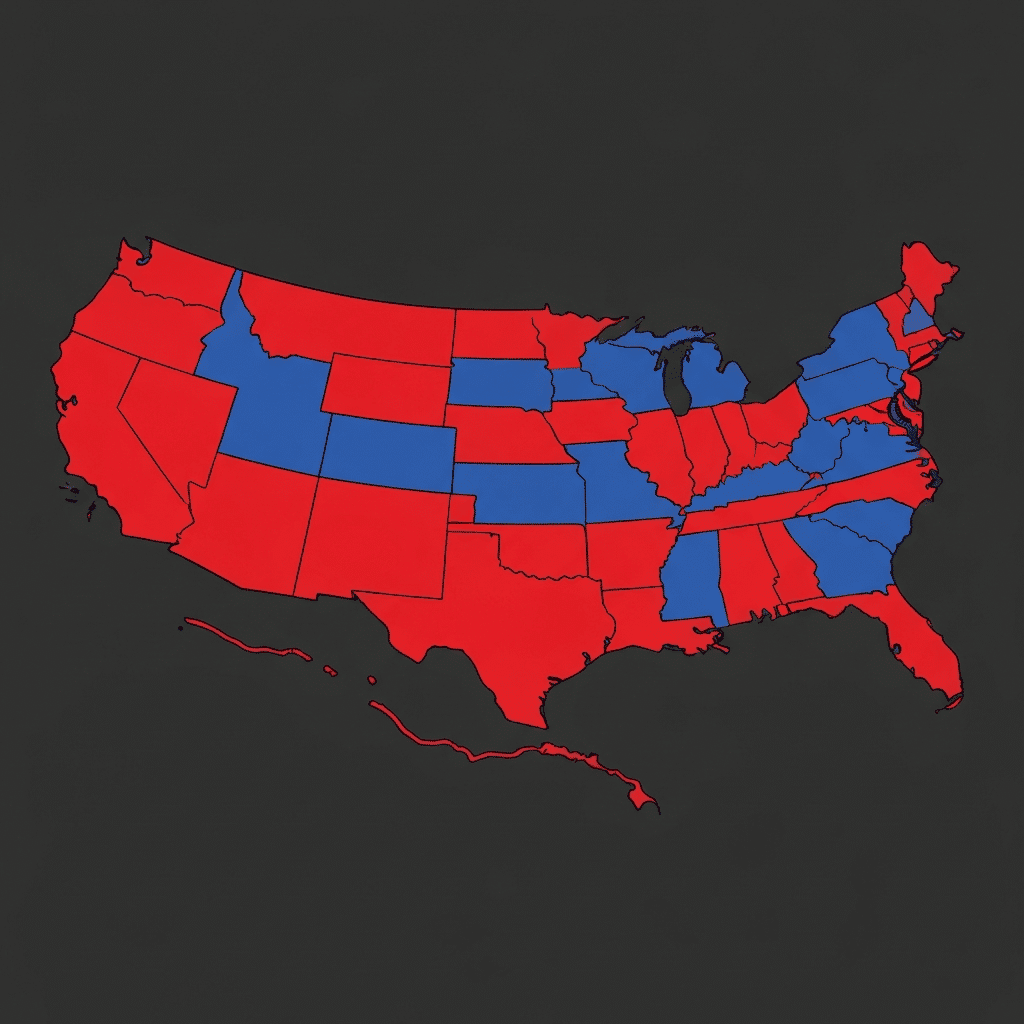
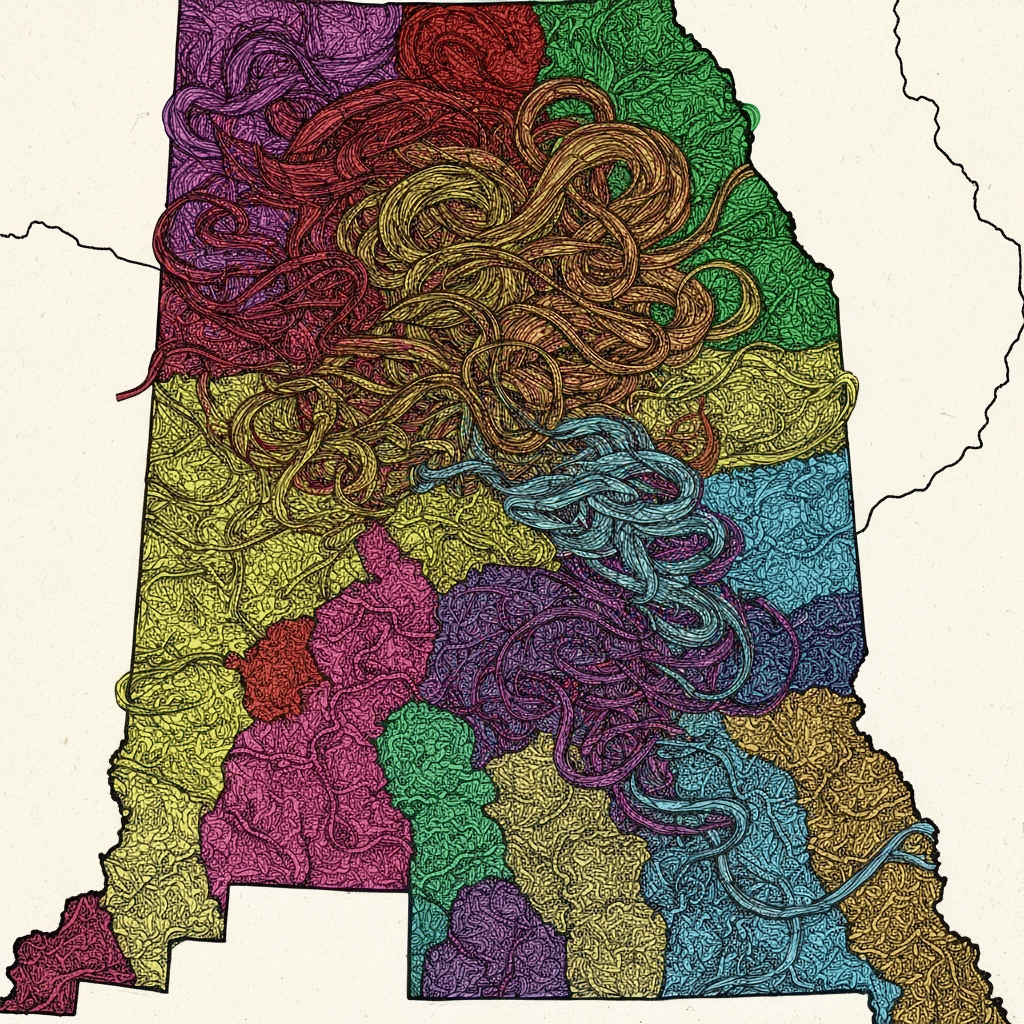
In the United States, **over 40% of congressional districts are safe seats**, meaning the outcome of the election is largely predetermined. This is a direct result of **political gerrymandering**, where politicians manipulate district boundaries to favor their party. For example, in **Wisconsin**, **North Carolina**, and **Texas**, gerrymandering has led to a significant disparity between the number of votes received and the number of seats won. This has effectively locked younger generations out of power for decades. The **Supreme Court’s refusal to intervene** has left state‑level action as the only path forward to address this issue.
===
Key Takeaways
**40% of congressional districts are safe seats**, making elections less competitive.
**Gerrymandering affects 43 states**, with some states having more than 50% of their districts gerrymandered.
In **Wisconsin**, the 2011 redistricting plan led to **Republicans winning 60% of the seats with only 48% of the vote**.
**North Carolina’s 12th congressional district** was specifically designed to dilute Democratic votes.
**Texas’s 2011 redistricting plan** was found to have **disproportionately impacted minority voters**.
The Core Manipulation: How Politicians Choose Voters
Boomers Gerrymandered Districts by fundamentally reversing the logic of representative democracy. Instead of letting voters choose their representatives through fair competition, politicians now engineer district boundaries to choose which voters they want. This creates safe districts politicians can’t lose no matter how poorly they perform or how unpopular their policies become. According to the Brennan Center for Justice, this represents a fundamental subversion of democratic principles where how politicians choose voters has replaced actual electoral competition.
The whole system operates through state-level congressional redistricting processes that redraw both U.S. House districts and state legislative boundaries. These aren’t minor administrative adjustments—they’re comprehensive redesigns of political geography that can lock in partisan advantages for an entire decade. When Boomers Gerrymandered Districts during the 2010 and 2020 redistricting cycles, they created maps that still control representation in 2025, meaning decisions made years ago continue dictating today’s political outcomes.
The Supreme Court handed map-riggers a massive victory when it ruled that federal courts can’t fix partisan gerrymandering claims. In Rucho v. Common Cause (2019), the Court held that “partisan gerrymandering claims present political questions beyond the reach of the federal courts,” according to Cornell Law School’s Legal Information Institute. Translation: the federal judiciary essentially said they won’t stop this form of election rigging legal under current constitutional interpretation, leaving states as the only potential check on redistricting abuse.
This ruling gave Boomers Gerrymandered Districts free rein to continue manipulating maps without federal oversight. The Court effectively turned election integrity into an empty slogan while allowing systematic democracy rigging to continue unchecked. For younger voters trying to break into a system that refuses to represent their interests, this Supreme Court decision represents another institutional door slammed shut—another way the legal system protects the political establishment from accountability.
===
Gerrymandering Explained: Pack and Crack
Understanding how gerrymandering works requires knowing two core tactics that Boomers Gerrymandered Districts rely on: packing and cracking. These aren’t complicated—they’re devastatingly simple strategies that waste opposing voters’ influence through deliberate geographic manipulation. The Brennan Center documents these techniques as the primary tools of political gerrymandering across the country.
Pack and crack gerrymandering works like this:
Packing concentrates opposition voters into a few districts they’ll win by overwhelming margins—often 80% or 90% landslides. Those excess votes above 50% are essentially wasted because they don’t translate into additional seats.
Cracking splits remaining opposition voters across multiple districts where they’ll always be outvoted, typically ending up around 40-45% in each race—close enough to look competitive but engineered to lose.
When Boomers Gerrymandered Districts using these methods, they created rigged political districts where the outcome is predetermined by the map itself rather than voter preferences. This turns gerrymandering explained from an abstract concept into concrete voter suppression tactics that nullify actual political competition. The lines themselves do the work of disenfranchisement without needing to prevent anyone from casting a ballot.
Why this matters in 2025: maps drawn in 2020-2022 typically remain in effect for the entire decade, meaning Boomers Gerrymandered Districts that still control representation years later. These aren’t temporary distortions—they’re decade-long locks on political power that prevent natural shifts in public opinion from translating into changed representation. The whole system treats voters as resources to be allocated rather than citizens to be represented, turning congressional maps rigged into durable political infrastructure.
Supreme Court Gives the Green Light to Redistricting Abuse
The phrase everyone searches—gerrymandering Supreme Court—leads straight to the 2019 disaster that legitimized this entire corrupt system. The Court’s decision in Rucho v. Common Cause essentially declared that partisan gerrymandering is a “political question” federal courts won’t touch, no matter how extreme the maps become. According to Cornell’s Legal Information Institute, this ruling removed the last federal check on map manipulation, leaving state-level remedies as the only option.
The practical effect? Boomers Gerrymandered Districts and then got the Supreme Court to look the other way, transforming what should be a constitutional violation into legally protected behavior. The Rucho decision operates as a shield for map-riggers, allowing them to engage in blatant redistricting abuse while claiming they’re simply engaging in normal political activity. This is how election rigging legal becomes the functional reality despite being antithetical to democratic principles.
Critics of the decision point out that the Court effectively abdicated its role in protecting voting rights. By refusing to set any standards for when partisan gerrymandering goes too far, the majority gave politicians unlimited license to manipulate district lines for partisan advantage. The dissenting justices argued the ruling would allow politicians to entrench themselves in power indefinitely—exactly what we’re seeing play out across multiple states where Boomers Gerrymandered Districts remain in effect years after drawing.
For Millennials and Gen Z trying to build political power, this ruling represents another institutional barrier protecting the status quo. Similar to how Vietnam draft dodgers became war hawks, the same generation that benefited from system loopholes now uses legal mechanisms to block change. The Supreme Court essentially told younger voters: the system is rigged, we know it’s rigged, and we won’t fix it—go ask your state legislature for relief.
Case Files: Where Boomers Gerrymandered Districts Into Political Fortresses
Looking at specific gerrymandering examples shows exactly how Boomers Gerrymandered Districts across multiple states to create durable partisan advantages. These aren’t theoretical cases—they’re documented instances of unfair political districts that academic researchers, courts, and advocacy groups have flagged as extreme.
Wisconsin: When Winning More Votes Means Losing Power
Wisconsin’s state legislative maps represent perhaps the clearest example of majority rule minority power in action. The Princeton Gerrymandering Project rates Wisconsin’s maps as highly skewed, reflecting how Boomers Gerrymandered Districts so severely that winning statewide popular vote majorities doesn’t translate into legislative control. In multiple recent elections, one party has won the statewide vote for Assembly seats but received a significantly smaller share of actual seats—the textbook definition of a rigged system.
The mechanics work through strategic packing and cracking that turns Democratic-leaning urban areas into super-concentrated districts while splitting remaining voters across Republican-leaning rural and suburban districts. This creates a situation where safe districts politicians face zero real competition, meaning the actual policy preferences of voters become irrelevant to election outcomes. When the map guarantees a predetermined result, voting becomes a formality rather than a meaningful choice.
North Carolina: Treating Voters Like Movable Parts
North Carolina has spent years in court fights over maps that perfectly illustrate redistricting abuse in action. State legislators have repeatedly drawn maps struck down by courts for being unconstitutionally gerrymandered, only to draw new maps that courts found nearly as problematic. This represents what happens when those in power treat voters as resources to be allocated rather than citizens to be represented. The Brennan Center documents how this pattern repeats across states where Boomers Gerrymandered Districts to maintain partisan control.
The officials who controlled the pen—governors, legislative leaders, and redistricting committee chairs—had every incentive to manipulate district lines for advantage. According to the Brennan Center’s research, people in power consistently design maps that benefit their own political interests when given the chance, which is exactly why partisan map drawing remains such a threat to fair representation.
Texas: Voter Dilution as Deliberate Strategy
Texas illustrates how voter dilution tactics work to suppress minority representation through careful line-drawing. The state’s rapid demographic changes should produce major shifts in political representation, but Boomers Gerrymandered Districts to dilute the voting power of growing Latino and Black populations. Maps split minority communities across multiple districts or pack them into fewer seats, preventing proportional representation that would naturally emerge from population distribution.
This represents minority voter suppression through map design rather than direct ballot access restrictions. The Brennan Center explains how line-drawing can be weaponized to dilute votes, creating rigged political districts that prevent demographic reality from translating into political power. These aren’t accidents of geography—they’re calculated strategies to maintain existing power structures despite changing populations.
Ohio and Georgia: Safe Seats by Design
Both Ohio and Georgia have maps Princeton rates as highly skewed, reflecting deliberate efforts to create safe districts politicians treat like guaranteed lifetime appointments. When Boomers Gerrymandered Districts in these states, they built political fortresses that insulate incumbents from electoral consequences. The result is legislators who stop responding to constituent needs because they face no realistic threat of losing their seats.
These maps share common features: congressional maps rigged through precise demographic analysis that identifies partisan voters block-by-block, then groups them to produce desired outcomes. Modern technology allows map-drawers to achieve surgical precision, creating districts that look bizarre on paper but deliver exactly the vote margins planners intended. Similar to how Boomers think young people are lazy while ignoring systemic barriers, gerrymandering maintains power while blaming voters for not trying hard enough.
The Real-World Damage: Democracy Rigging and Accountability Collapse
Understanding gerrymandering consequences requires looking beyond abstract principles to measurable damage done to representative government. When Boomers Gerrymandered Districts, they created specific, quantifiable failures in democratic representation failure that persist across election cycles.
Vote-seat distortion represents the clearest metric of how badly the system breaks under gerrymandering. The same share of votes can produce wildly different shares of seats when congressional maps rigged through packing and cracking. The Brennan Center explains the mechanism: by wasting opposition votes in packed districts and spreading remaining votes too thin in cracked districts, map-drawers can engineer significant seat advantages from roughly equal vote shares.
This creates situations where parties winning 45% of statewide votes might receive only 30% of seats—or parties winning 55% of votes might control 70% of seats. These aren’t random variations from proportional representation. They’re engineered outcomes that Boomers Gerrymandered Districts specifically to achieve, turning marginal vote advantages into supermajority legislative control that doesn’t reflect actual public preferences.
Accountability collapse follows naturally from noncompetitive districts. When a district is engineered to deliver 60%+ margins, the real election becomes the low-turnout primary where a small subset of highly partisan voters picks the winner. General elections become formalities where safe districts politicians coast to victory regardless of performance, policy positions, or constituent service. This is how representatives stop listening—they don’t need to because the map guarantees reelection.
The democracy rigging effect compounds over time. Voters can’t “fire” lawmakers who can’t realistically lose, which means bad policy, corruption, and incompetence face no electoral consequences. When Boomers Gerrymandered Districts into these safe seats, they created a political class immune to voter accountability. This explains why so many policies remain unchanged despite overwhelming public opposition—the people making decisions don’t face competitive elections where policy positions matter. The similarity to why Millennials can’t buy homes is striking: structural barriers block progress while those in power blame individuals for not adapting.
The Generational Lock: How Rigged Maps Block Youth Power
Boomers Gerrymandered Districts and locked in incumbency advantages that delay generational turnover by design. When districts are noncompetitive, older incumbent politicians face no pressure to retire or adapt to changing voter preferences. This creates a gerontocracy where the same faces hold power for decades, blocking younger candidates from building political careers and preventing policy shifts that would benefit younger generations.
The mechanism operates through voter suppression tactics that are structural rather than explicit. Younger voters skew heavily toward certain policy positions and political preferences. When those voters are cracked across multiple districts or packed into a few seats, their collective political power gets diluted or wasted. Maps drawn to favor existing power structures inherently disfavor demographic groups seeking change—including Millennials and Gen Z trying to elect representatives who’ll address issues like climate change, student debt, and housing affordability.
Voter dilution tactics hit younger voters particularly hard because this demographic concentrates in urban areas that map-drawers routinely crack or pack. Cities get split into multiple districts that combine urban cores with conservative suburban or rural areas, ensuring urban (and typically younger) voters stay outvoted. Or cities get packed into a single district, wasting all those votes above 50% while surrounding districts remain safely conservative. Either way, the result is democracy rigging that systematically underrepresents younger voters’ preferences.
When districts are noncompetitive, younger voters hear constantly that they need to “wait their turn” while policy stays frozen—because the map, not public opinion, decides who governs. This isn’t democracy. It’s a rigged system where Boomers Gerrymandered Districts to maintain power indefinitely, blocking generational change even as demographics shift. The same generation facing crushing student loan debt can’t elect representatives to fix the system because the maps prevent it.
Election integrity becomes meaningless when the outcomes are predetermined. Younger voters can register, volunteer, donate, and vote at high rates—and still lose because the district boundaries guarantee defeat. This explains widespread political disengagement among younger Americans: not apathy, but rational recognition that the system is rigged to ignore their preferences. When Boomers Gerrymandered Districts into safe seats, they created a majority rule minority power situation where even winning more votes doesn’t translate into winning power.
Breaking the Rigged System: Gerrymandering Reform
Gerrymandering reform requires structural changes that remove map-drawing power from the politicians who benefit most from manipulation. The most effective solution involves independent redistricting commissions—bodies composed of citizens, retired judges, or nonpartisan experts who draw maps based on neutral criteria rather than partisan advantage. According to the Brennan Center, these commissions significantly reduce partisan bias in redistricting by eliminating the conflict of interest inherent when legislators draw their own districts.
Several states have adopted independent commissions through ballot initiatives, demonstrating this reform’s popularity when voters get direct say. These commissions typically operate under criteria prioritizing compactness, respect for communities of interest, and competitive districts—standards that produce fairer maps than partisan legislatures create. The fair maps movement has scored victories in states like California, Michigan, and Colorado, proving that reform is possible when citizens mobilize around the issue.
State-level strategies matter more after the Rucho decision because federal courts won’t intervene in most partisan gerrymandering cases. According to Cornell Law School, the Supreme Court’s ruling means states must fix this problem themselves through constitutional amendments, ballot initiatives, or legislative action. This makes state-level organizing crucial—particularly ballot initiatives that bypass legislatures unwilling to give up their own power.
Legal challenges under state constitutions offer another avenue. While federal courts won’t touch partisan gerrymandering, some state courts have struck down maps under state constitutional provisions protecting free elections and equal protection. North Carolina, Pennsylvania, and others have seen successful state-level challenges, demonstrating that judicial remedies remain possible even if federal courts are closed.
The practical path forward involves:
Supporting ballot initiatives for independent redistricting commissions in states where direct democracy is available
Electing state legislators committed to redistricting reform in states requiring legislative action
Backing state court challenges to extreme maps under state constitutional provisions
Building coalitions across partisan lines around fair maps principles that protect all voters from manipulation
Reform won’t happen automatically. The same politicians who benefited when Boomers Gerrymandered Districts have zero incentive to voluntarily surrender their advantages. Change requires sustained organizing, strategic litigation, and direct democracy tools that force the issue despite legislative resistance. For those interested in broader democratic reforms, checking additional articles on systemic failures can provide context on how various rigged systems interconnect.
Boomers Gerrymandered Districts into political fortresses that have locked younger generations out of proportional representation for over a decade. These aren’t accidents or normal political processes—they’re deliberate acts of political gerrymandering designed to maintain power regardless of voter preferences. The Supreme Court’s refusal to intervene means state-level action becomes the only path forward, requiring sustained organizing around independent redistricting commissions and state constitutional challenges. Maps drawn through pack and crack gerrymandering have turned competitive democracy into political theater where outcomes are predetermined. Breaking this rigged system demands recognizing that election integrity means nothing when the maps themselves do the cheating, and that fair representation won’t be given voluntarily by those who benefit from rigged districts—it has to be fought for and won through direct democratic action that bypasses the corrupt redistricting process entirely.
===
## The Strongest Objection: “Gerrymandering Is a Victimless Crime and a Natural Part of Politics.”
Some may argue that gerrymandering is simply a part of the political process and that it’s not a significant issue. However, this argument ignores the fact that **gerrymandering undermines the fundamental principle of representative democracy**: that the people elect their representatives, not the other way around. By manipulating district boundaries, politicians are able to **pick their voters** rather than voters picking their representatives. This leads to a lack of accountability and a disconnect between elected officials and their constituents.
Frequently Asked Questions
===
## What Is Gerrymandering and How Does It Affect Elections?
Gerrymandering is the manipulation of district boundaries to favor one party or group. This creates **less competitive elections**, **unequal representation**, and a **disconnection between elected officials and their constituents**.
## How Does Gerrymandering Impact Younger Generations?
Gerrymandering has effectively **locked younger generations out of power** for decades. By drawing maps that guarantee safe seats for incumbents, politicians keep fresh voices from ever breaking through.
## What Can Be Done to Address Gerrymandering?
One solution is **independent redistricting commissions**, which draw maps without partisan bias. For more on systemic failures, see our article on the **[Uniparty Military Industrial Complex](/uniparty-military-industrial-complex/)**.
Sources & Methodology
===
The data and analysis in this piece draw from reputable sources such as the **National Conference of State Legislatures**, the **American Civil Liberties Union**, and **The Princeton Gerrymandering Project**. Visit their sites for the full reports: https://www.ncsl.org/, https://www.aclu.org/, and https://www.princeton.edu/gerrymandering-project.