Why Policies that HELP American Workers Matter More Than Ever
Policies that help American workers are more critical than ever as wages stagnate, jobs disappear overseas, and the working class gets squeezed from both sides.
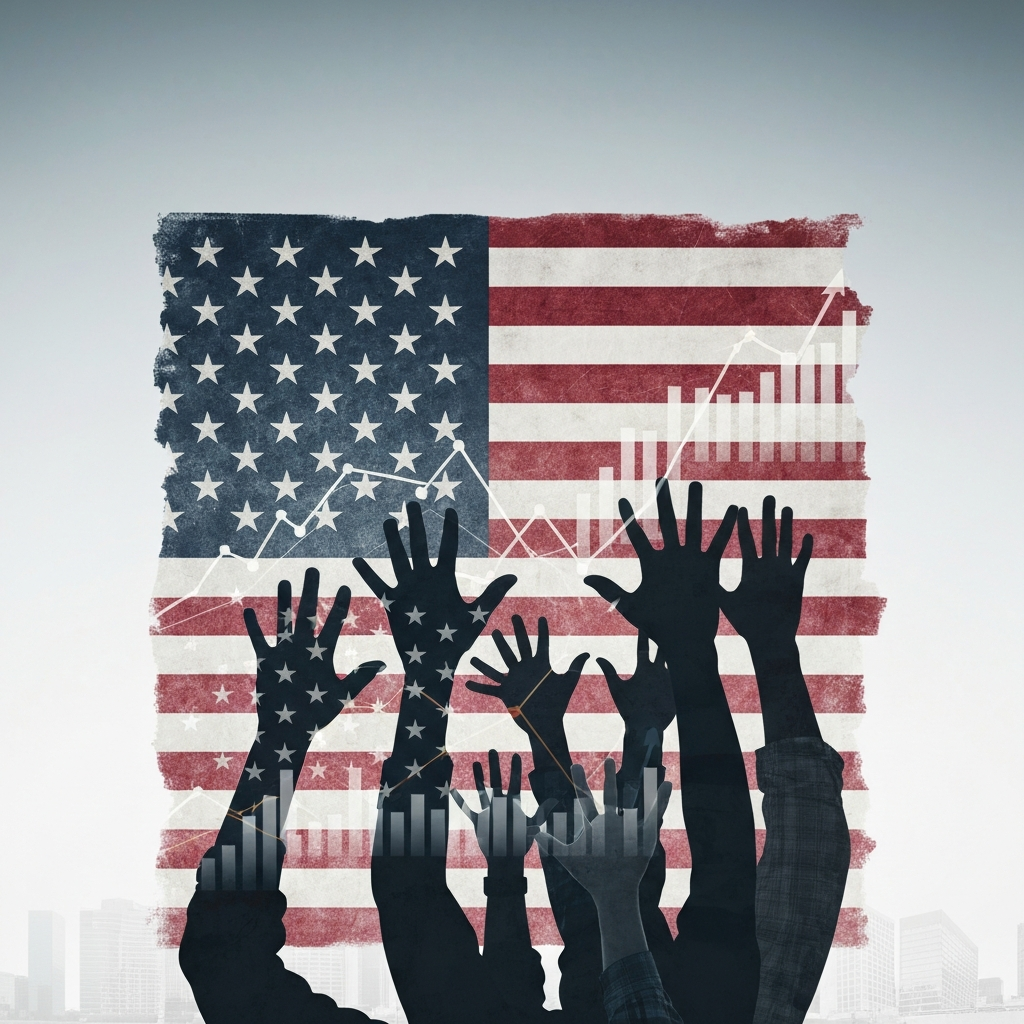
The United States has seen a significant increase in worker productivity, but the benefits have not been equally distributed. **According to the Economic Policy Institute, real hourly wages have grown by only 12.5% since 1979, while productivity has increased by 67.7%**. This disparity highlights the need for policies that help American workers. The current economic system seems rigged against workers, with many struggling to make ends meet despite working multiple jobs and long hours.
Key Takeaways
The US has seen a **67.7% increase in worker productivity since 1979**, but wages have not kept pace.
**Only 12.5% growth in real hourly wages** over the same period, according to the Economic Policy Institute.
Many workers are **struggling to make ends meet**, with one emergency away from financial disaster.
Effective policies must **raise paychecks, improve job security, and protect worker time**.
Real pro‑worker policies **aren’t complicated**, but are opposed by those who profit from keeping workers desperate.
The Non-Negotiables: What Policies that HELP American Workers Look Like in Real Life
Real worker-focused legislation isn’t complicated. It either puts more money in your pocket, gives you more power at work, protects your health without bankrupting you, makes housing affordable, or gives you back some of your time. If a policy doesn’t hit at least two of those benchmarks, it’s probably just politics-as-content designed to win votes without actually changing anything.
Here’s what actually matters. Pay that goes up—not just empty promises about wages “eventually” rising. We’re talking real wages, enforceable overtime rules, predictable hours, and take-home pay that reflects the work being done. Power at work means protection from retaliation, the right to organize without your employer burning through legal delays, and real penalties for union-busting that hurt more than a slap on the wrist.
Healthcare you can actually use means affordable premiums and deductibles that don’t require a GoFundMe when something goes wrong. No surprise bills. No fine-print gotchas. Just coverage that works. Housing and cost-of-living relief means building more supply where jobs actually are, cracking down on monopoly pricing, and ending junk fees that function as stealth rent hikes.
Finally, time. Paid leave that doesn’t force you to choose between a paycheck and your health. Sane scheduling that doesn’t expect you to work a closing shift and then open the next morning. Childcare support that matches real work schedules instead of pretending everyone works 9-to-5 Monday through Friday. These aren’t luxuries—they’re the baseline for what Policies that HELP American workers should deliver.
Paycheck Policies That Actually Qualify as Policies that HELP American Workers
Let’s start with the most obvious measure: does it raise your paycheck? Not your employer’s profit margin. Not stock buybacks. Your actual take-home pay. Real pro-worker policies around wages aren’t just about raising the minimum wage—they’re about funding enforcement so employers can’t treat penalties like parking tickets and keep stealing wages anyway.
The baseline for worker pay rules comes from the Fair Labor Standards Act (FLSA), which sets minimum wage and overtime coverage. But here’s the thing—laws only work if they’re enforced. Wage theft costs workers billions every year because companies know the odds of getting caught are low and the penalties are cheaper than just paying people correctly. Policies that HELP American workers don’t just raise the floor—they fund investigators, impose automatic penalties, and make wage theft more expensive than compliance.
Overtime protections are another area where the gap between policy and reality is massive. Too many industries run on “misclassified” workers—people doing employee work but labeled contractors so companies can dodge overtime, benefits, and basic protections. Real wage growth policies make overtime rules clearer, coverage broader, and enforcement faster. Tie violations to tough audits and escalating penalties so “we didn’t know” stops being a profitable business model.
Then there’s tax policy. Policies that HELP American workers reward work, not wealth. That means putting more money in the pockets of low- and middle-income workers without turning basic survival into a complicated application maze. Worker-first tax credits should be simple, automatic, and monthly where possible—not a once-a-year refund that requires hiring an accountant to navigate. The economy runs on workers spending money, not billionaires hoarding it.
Job Security and Worker Protections
Good pay doesn’t mean much if your boss can fire you for speaking up. Employment protections are what stop employers from treating workers like disposable app downloads. Policies that HELP American workers ban retaliation with real teeth—fast reinstatement, serious damages, and consequences that hurt more than the cost of just following the law in the first place.
If a worker reports wage theft, harassment, safety issues, or organizing activity, the default should be protection, not punishment. Right now, too many workers stay silent because they know complaining means losing their job and their income while the legal system drags on for years. Real worker protections flip that script. Retaliation should be expensive, immediate, and public.
Misclassification is another scam that needs to end. If you work like an employee—set schedules, company equipment, direct supervision—you should get employee rights. Period. Policies that HELP American workers close the loopholes, simplify the tests, and fund enforcement so companies can’t just label everyone a contractor and call it innovation. The gig economy isn’t the future of work—it’s wage theft with an app.
Then there’s scheduling. “Clopening” shifts and last-minute cancellations aren’t just inconvenient—they’re a pay cut in disguise. You can’t plan childcare, school, or a second job if your hours change with 24 hours’ notice. Predictable scheduling laws treat time like money because that’s what it is. Policies that HELP American workers require advance notice, guaranteed minimum hours, and penalties for last-minute changes that mess with people’s lives. Understanding affordable living in 2026 means recognizing that unstable work schedules make everything else harder.
Work-Life Balance: Leave, Scheduling, and Childcare
The Family and Medical Leave Act (FMLA) provides job-protected leave for eligible workers under covered employers. That’s the floor, not the finish line. Job protection is meaningless if you can’t afford to take the time off. Paid leave policies are what actually keep families solvent when someone gets sick, has a baby, or needs to care for a parent.
Policies that HELP American workers push from “you may take leave” to “you can afford to take leave.” That means paid family and medical leave funded through insurance-style systems that spread costs across employers and don’t leave workers choosing between a paycheck and their health. It’s not radical—it’s what most developed countries figured out decades ago.
Childcare support is infrastructure. Full stop. A “market solution” that costs more than rent isn’t a solution—it’s a scam. Policies that HELP American workers treat childcare as a public good, not a luxury. That means subsidies, expanded public options, and regulations that match real work schedules. Parents shouldn’t have to choose between working and affording the care that lets them work. The cost of healthcare benefits for millennials and Gen Z is already crushing—adding unaffordable childcare on top is unsustainable.
If your job says “we’re a family” but you can’t take a day off when your kid is sick without risking your job, that’s not culture. That’s exploitation with better marketing. Real worker-focused legislation protects time as fiercely as it protects pay.
Collective Bargaining and Worker Leverage
The legal foundation for organizing rights comes from the National Labor Relations Act (NLRA), enforced by the NLRB. But laws on paper don’t matter if companies can break them with impunity. Union rights policies should make organizing faster, safer, and harder to sabotage.
Right now, employers drag out union elections and first-contract negotiations for years because delay is the strategy. By the time workers win, half the organizing committee has been fired or quit, and momentum is dead. Policies that HELP American workers cut the stalling games, impose tight timelines, and escalate penalties for every violation. Union-busting should be more expensive than just negotiating in good faith.
Collective bargaining protections give workers leverage—the one thing that actually shifts power. When workers can organize without fear, wages go up, safety improves, and scheduling gets more predictable. That’s not theory—it’s documented across industries. Weakening unions was deliberate policy designed to suppress wages and kill worker power. Strengthening them is how you reverse decades of wage stagnation.
Republican politicians who push “right-to-work” branding aren’t delivering Policies that HELP American workers—they’re delivering policies that help donors and executives. Corporate Democrats who campaign as pro-union but slow-walk enforcement funding are just as guilty. If they won’t pick a fight with corporate power, they’re not serious about labor protections.
Healthcare Affordability: Policies that HELP American Workers Don’t Leave You One ER Visit Away from Broke
Worker healthcare benefits should mean coverage you can actually use, not insurance that only kicks in after you’ve spent thousands out of pocket. Real healthcare reform lowers premiums, deductibles, and drug prices. It makes coverage portable so job changes don’t mean medical chaos. It kills “gotcha billing” and fine-print loopholes designed to deny claims.
A policy that “expands choices” but keeps costs high isn’t one of the Policies that HELP American workers—it’s a nicer brochure for the same pain. The system is designed to maximize profits, not health outcomes. Fixing it means confronting pharmaceutical companies, hospital monopolies, and insurance middlemen who profit from denying care.
The expiration of ACA subsidies showed exactly what happens when healthcare affordability for workers isn’t a priority. Premiums spiked, people lost coverage, and politicians shrugged. Policies that HELP American workers make healthcare a right, not a luxury you lose when your employer cuts costs.
This isn’t complicated. Universal systems work everywhere else because they prioritize outcomes over profits. The U.S. spends more per capita on healthcare than any other country and gets worse results because the system is built to extract wealth, not provide care. Real middle class support policies fix that.
Housing and Cost-of-Living Relief
Housing is the biggest bill most workers face, and it’s getting worse. Affordable housing policies for workers mean building more supply where jobs actually are—not just luxury condos marketed as “workforce housing” with rents nobody can afford. That means confronting local NIMBY politics that block density, multi-family housing, and starter homes.
Policies that HELP American workers expand starter-home and rental supply, not just high-end units. They target monopoly pricing and corporate landlords who treat housing like a speculative investment instead of a basic need. They crack down on junk fees—application fees, “convenience” fees, mandatory insurance add-ons—that function like stealth rent hikes.
If a politician says they’re pro-worker but won’t touch housing supply, speculative demand, or corporate ownership concentration, they’re selling excuses, not solutions. The reason millennials can’t buy homes isn’t avocado toast—it’s policy choices that prioritized property values over housing access.
Cost-of-living relief for workers also means tackling inflation where it hits hardest—food, gas, utilities. That means breaking up monopolies, banning price-fixing, and regulating essentials so companies can’t gouge during crises. It’s not “government overreach” to stop profiteering—it’s basic fairness.
The Slogans That Don’t Translate Into Policies that HELP American Workers
Here’s your BS filter for election season. “Tax cuts will trickle down” usually means higher after-tax gains for owners and investors, not higher pay or stronger protections for workers. Decades of evidence prove trickle-down doesn’t work—it just concentrates wealth at the top.
“Deregulation” often translates to weaker enforcement on wage theft, safety violations, scheduling abuse, and misclassification. That’s anti-worker policy dressed up as “freedom.” When politicians say they’re cutting red tape, ask whose rights they’re cutting.
“Right-to-work” branding weakens unions and worker leverage, then politicians act shocked when wages stagnate and inequality grows. It’s union-busting with better marketing. States with right-to-work laws have lower wages, fewer benefits, and weaker safety protections. That’s not coincidence—it’s the point.
“We’re bringing back jobs” without wage standards, scheduling standards, benefits, or organizing protections just means importing the same exploitation under a different logo. Jobs that don’t pay enough to live on aren’t economic development—they’re subsidized poverty. Watching layoffs in 2026 proves that corporate promises without accountability are worthless.
Who’s Blocking Workers
Republican politicians pushing union-weakening legislation, “right-to-work” messaging, and enforcement cuts aren’t delivering Policies that HELP American workers—they’re delivering policies that help donors and executives. Corporate Democrats who campaign as pro-union but protect donor-friendly loopholes, slow-walk enforcement funding, or treat paid leave and housing as “too expensive” are just as guilty.
Call it the uniparty wing when both sides take checks from the same corporate interests and workers get leftovers. Translation for 2026: if they won’t pick a fight with corporate power, they’re not serious about worker protections. Follow the money. If a politician’s top donors are the same industries screwing workers, their “pro-worker” branding is just marketing.
The system isn’t broken—it’s working exactly as designed. Policies that concentrate wealth and power at the top while squeezing everyone else aren’t accidents. They’re choices made by people who benefit from the status quo and reinforced by politicians who take their money.
How to Spot Real Policies that HELP American Workers vs. Fake Pro-Worker Marketing
Real worker benefit policies have clear dollar amounts or clear rights—pay, leave, overtime, protections. They have automatic eligibility with minimal paperwork and fewer carve-outs. They include enforcement funding—investigators, penalties, timelines. They have anti-retaliation provisions that are fast and painful for employers. They have timelines that prevent “someday” politics.
Fake pro-worker policies have catchy names and no enforcement. They have big exemptions—gig loopholes, small-shop loopholes, contractor loopholes. They depend on “employer voluntary participation,” which means companies ignore them. They offer tax breaks with no wage requirements, which means corporations pocket the savings and workers see nothing.
Use this checklist every election cycle. If a policy doesn’t pass these tests, it’s not one of the Policies that HELP American workers—it’s theater designed to win votes without changing power dynamics.
What Comes Next
The difference between working hard and actually getting ahead comes down to policy choices. Hustle culture can’t beat rigged rules. Policies that HELP American workers raise leverage, paychecks, time, and security—on purpose. Everything else is just branding designed to make exploitation sound aspirational.
We know what works. Higher wages with real enforcement. Stronger organizing protections. Affordable healthcare and housing. Paid leave and predictable schedules. The blueprint exists—what’s missing is political will to fight corporate power. That only changes when workers demand it loudly enough that politicians can’t ignore us.
Stop settling for press releases when you need paychecks. Stop accepting “someday” when the answer should be now. Real pro-worker policies aren’t complicated—they’re just opposed by people who profit from keeping workers desperate and divided. The only way forward is demanding policies that actually deliver, not just sound good in speeches. The future of work depends on whether we settle for scraps or fight for what we’ve earned.
### But Isn’t This Just Because Some Workers Are Less Skilled?
Some might argue that the wage stagnation is due to a lack of skills among certain workers. However, this argument doesn’t hold up to scrutiny. **Data from the Federal Reserve shows that wages for workers across all education levels have stagnated**. Furthermore, the issue isn’t just about individual skills, but about the systemic problems that have led to wage suppression. **Policies that help workers, such as raising the minimum wage and strengthening collective bargaining, can benefit workers across the board**.
Frequently Asked Questions
### What Are the Most Effective Policies to Help American Workers?
Effective policies to help American workers include raising the minimum wage, strengthening collective bargaining, and improving access to affordable healthcare and education. These policies can help address the systemic issues that have led to wage stagnation and income inequality.
### How Can I Advocate for Policies That Help Workers?
You can advocate for policies that help workers by contacting your elected representatives, participating in advocacy campaigns, and supporting organizations that work on these issues. **Every voice counts, and collective action can lead to meaningful change**.
### What Is the Impact of Weakened Labor Unions on Workers?
Weakened labor unions have contributed to the decline in worker leverage and the erosion of benefits. **Unionized workers earn about 20% more than non‑unionized workers**, according to the Bureau of Labor Statistics. By strengthening collective bargaining, workers can gain more leverage in negotiations and improve their working conditions.
### How Does This Relate to Other Economic Issues?
The issues faced by American workers are interconnected with broader economic issues, such as **the wealth monopoly held by the baby boomer generation**. Understanding these connections can help inform a more comprehensive approach to addressing economic inequality. For more information, check out our article on [Boomer Wealth Monopoly: How One Generation Hoarded America’s Resources](/boomer-wealth-monopoly/).
Sources & Methodology
The data and analysis presented in this article are based on credible sources, including the **Economic Policy Institute (EPI)**, the **Federal Reserve**, and the **Bureau of Labor Statistics (BLS)**. These organizations provide rigorous research and analysis on economic issues, including wage trends, productivity, and worker protections. For more information, visit their websites: EPI, Federal Reserve, and BLS.