 ByAiden
Minab School Airstrike: Bellingcat Video Confirms US Tomahawk Missile Killed 165 Iranian Schoolgirls — and No One Is Being Held Accountable
Share your love
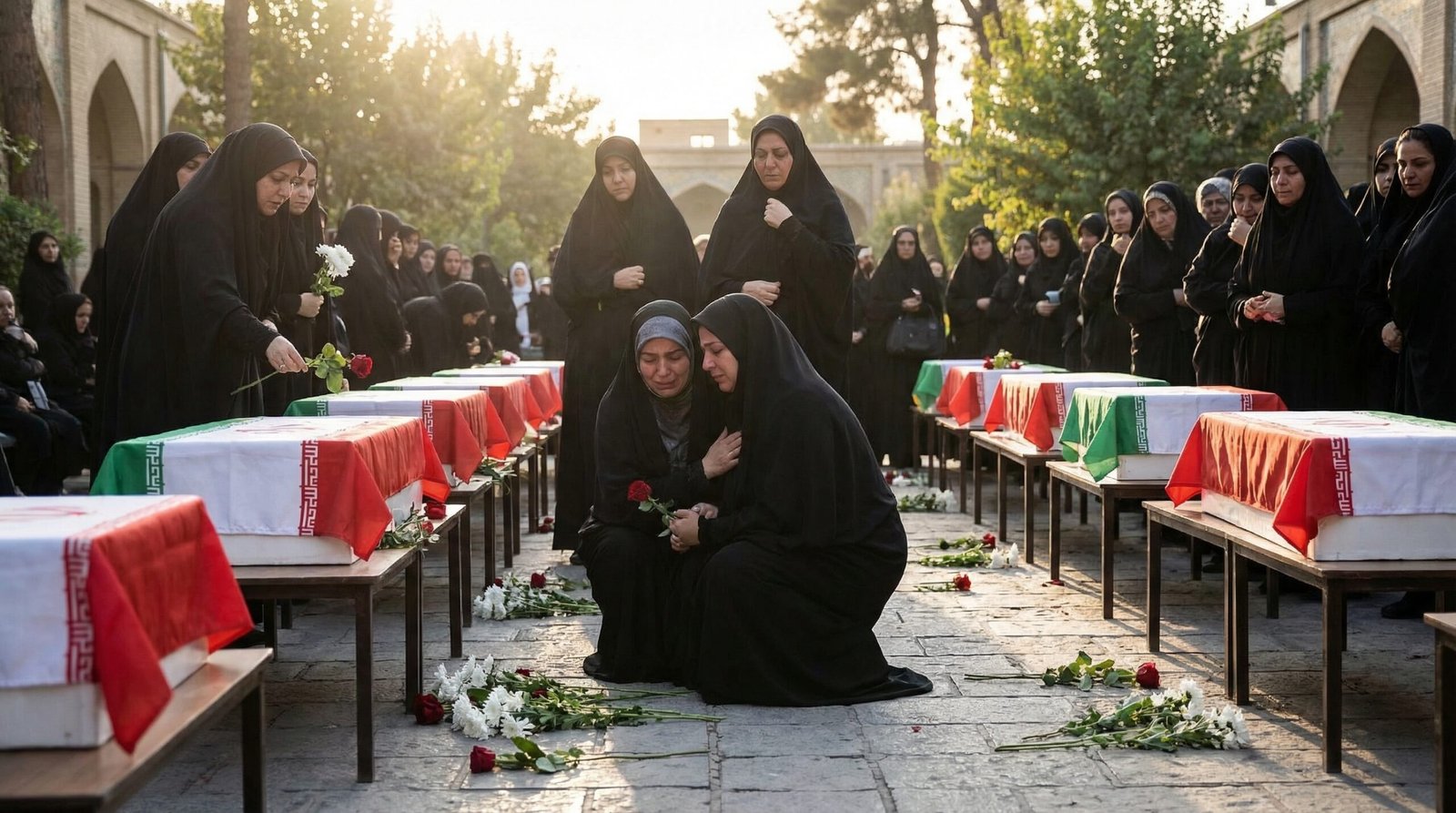
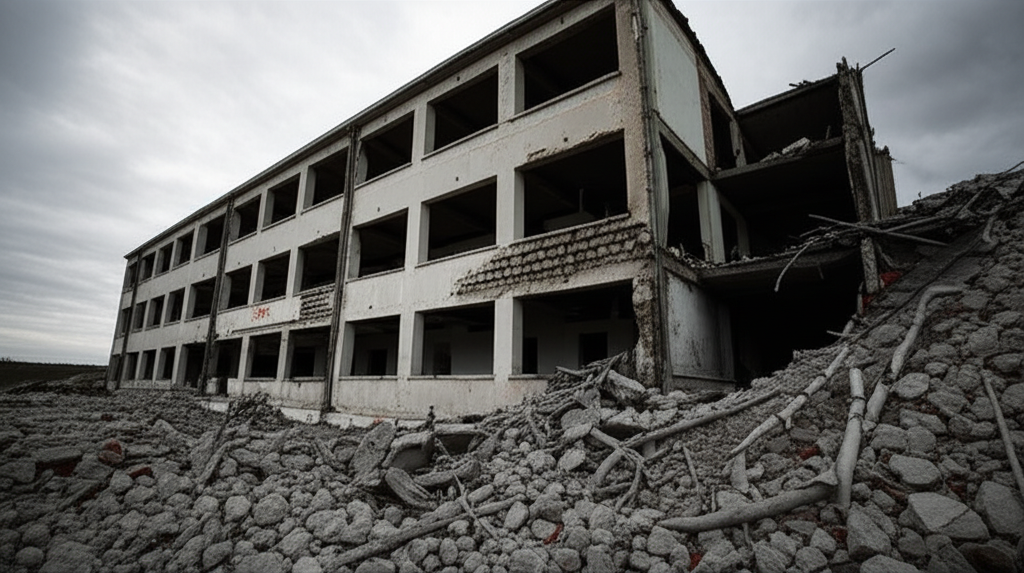
The Minab school airstrike on February 28, 2026 killed at least 165–175 schoolgirls aged 7–12 at the Shajareh Tayyebeh elementary school in Hormozgan Province, southern Iran — and video evidence released March 8 by Bellingcat confirms a US Tomahawk cruise missile struck an adjacent IRGC facility during the same strike package, directly contradicting President Trump’s claim that Iran bombed its own school. The Pentagon has launched an internal investigation. No one has been charged. No one has apologized. The dead have been buried.
Here is the generational math that no one in the press briefing room wants to calculate out loud.
The Iran war is costing approximately $1 billion per day. The defense contractors billing that tab — Lockheed Martin, Raytheon, General Dynamics — have seen stock prices surge between 30–45% since the war began. Those stocks are disproportionately held in Boomer retirement portfolios. The people paying the war’s cost in taxes, in market volatility, in gas prices at the pump, and in national reputation — are disproportionately younger Americans who didn’t vote for the war and weren’t asked.
When US military operations produce civilian massacres — and history tells us they do, regularly — the accountability tab doesn’t land on the generation that launched the war. It lands on everyone who comes after. The moral debt of Minab will be carried by American diplomats, soldiers, and civilians for a generation. The financial cost of whatever reparations, investigations, and international legal proceedings follow will be itemized on the national credit card that younger taxpayers are already maxed out on.
The seven US service members killed in the Iran war so far were all Army soldiers, including reservists — the working-class military that Millennials and Gen Z disproportionately join because the economic alternatives are narrowing. The NYPD officer who died in Kuwait, Major Sorffly Davius, joined the police force in 2014 and served in the National Guard. He wasn’t a career general deciding when to strike. He was a working-class public servant who got sent.
The 165 girls killed in Minab were between 7 and 12 years old. They were not combatants. They were not human shields. They were children sitting in school on a Saturday morning in a country that their government did not ask them whether to bomb. That is not a partisan observation. That is the uncontested factual record, confirmed by the AP, Reuters, CNN, the NYT, BBC Verify, Bellingcat, Human Rights Watch, and a now-public US military investigation that concluded it was “likely” American munitions that killed them.
The system that produced this outcome — undeclared wars, unchecked executive war powers, a military-industrial complex that profits from escalation, a political class immunized from the costs — was built over 40 years by the same generation currently holding most of the wealth, most of the power, and most of the institutional leverage in American life. The people dying in it — American soldiers, Iranian children — skew younger.
The Counterargument: IRGC Used a School as Cover
The most coherent counterargument is not that the US didn’t do it — the evidence for that has essentially collapsed. The argument that remains is: the IRGC was operating from a base adjacent to a civilian school, which constitutes a violation of international humanitarian law on Iran’s part, and the US cannot be expected to avoid every target that Iran deliberately places near civilian infrastructure.
This is a serious argument that deserves a serious answer.
Under the laws of armed conflict — specifically the principle of proportionality — an attack is prohibited when the expected civilian harm is “excessive in relation to the anticipated military advantage.” Striking an IRGC naval base is a legitimate military objective. Killing 165 elementary school children in the process requires a proportionality analysis that the US has not yet publicly conducted or released. The fact that the IRGC base was adjacent to the school is not, on its own, a legal justification — commanders are required to take feasible precautions to minimize civilian casualties, including timing strikes when schools are not in session.
February 28, 2026 was a Saturday. In Iran, Saturday is a school day. That the targeting package did not account for this — or accounted for it and struck anyway — is precisely what HRW, the UN, and multiple military law experts are demanding answers about. “An unlawful attack,” HRW wrote in its March 7 statement, “even if the military objective itself was lawful.”
Frequently Asked Questions
How many children were killed in the Minab school airstrike?
Iranian officials and UN sources report 165–175 people killed, the vast majority schoolgirls aged 7–12. Human Rights Watch could not independently verify the figure due to internet restrictions. The AP, which has the most rigorous independent verification, reported “scores of civilians including children.” The Minab school airstrike remains the deadliest single civilian incident of the Iran war.
Did the US admit responsibility for the Minab school strike?
The US has not formally admitted responsibility. However, Reuters reported on March 5 that US military investigators believe “it is likely that US forces were responsible.” An anonymous US official confirmed the same to the AP. The Pentagon said it is “investigating.” No public findings have been released as of March 8, 2026.
What is a Tomahawk cruise missile and why does it matter?
The Tomahawk is a long-range, precision-guided cruise missile manufactured by Raytheon. It is exclusively operated by the US military (and, in limited numbers, the UK Royal Navy) — it is not in the Israeli or Iranian arsenal. Bellingcat’s Trevor Ball identified the missile in the newly released video using its distinctive airframe profile, matching it to known Tomahawk imagery. If the missile in the video is a Tomahawk, only the US could have fired it.
Is the Minab school airstrike a war crime?
Human Rights Watch has formally called on the US and Israel to “investigate the attack as a war crime” under international humanitarian law. The UN Human Rights Office issued a similar demand. Whether it constitutes a war crime legally depends on a proportionality analysis — whether the military advantage of striking the adjacent IRGC base was proportionate to the foreseeable civilian harm — which the US has not publicly completed. International legal scholars have described the strike as “presumptively unlawful” pending full disclosure.
Sources & Methodology
This article draws on open-source intelligence analysis, primary reporting from major news organizations, and official statements from governments and international bodies. All figures cited are from the most recent available reporting as of March 8, 2026.
- Bellingcat — “Video Shows US Tomahawk Missile Strike Next to Girls’ School in Iran” (March 8, 2026)
- AP News — “Experts say Iran school blast likely targeted airstrike” (March 5, 2026)
- Human Rights Watch — “US/Israel: Investigate Iran School Attack as a War Crime” (March 7, 2026)
- UN OHCHR — “UN experts strongly condemn deadly missile strike on girls’ school in Iran” (March 2026)
- New York Times — “Analysis Suggests School Was Hit Amid US Strikes on Iranian Naval Base” (March 5, 2026)
- CNN — “Analysis suggests US was responsible for deadly strike” (March 6, 2026)
- Al Jazeera — “Iran girls’ school targeting likely ‘deliberate'” (March 3, 2026)
- NPR — “Satellite images show Iran school strike hit more buildings” (March 4, 2026)