Breaking News


Popular News


Enter your email address below and subscribe to our newsletter
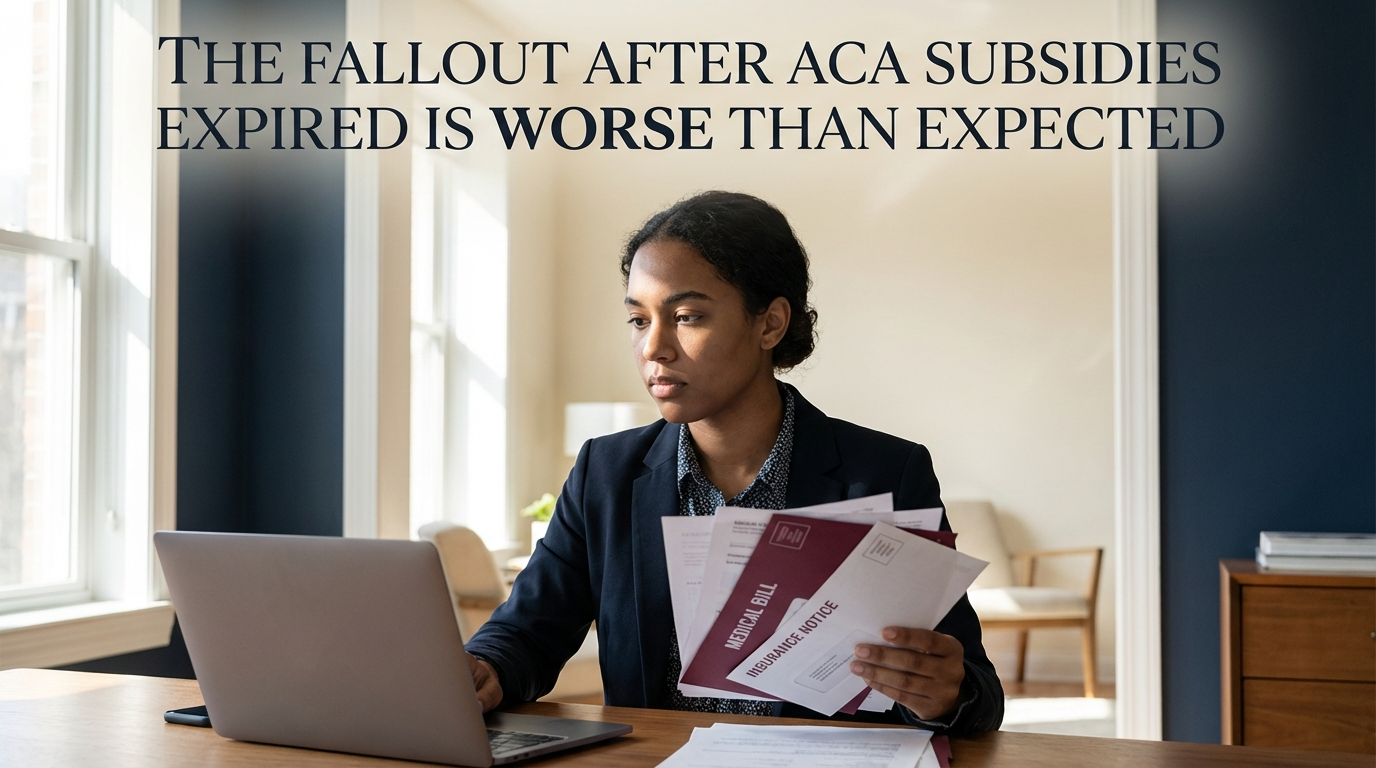
ACA subsidies expired and the fallout is worse than expected. Families are facing insurance hikes of 30-50% overnight while politicians point fingers.
The expiration of ACA subsidies on January 1, 2026, has caused a massive premium shock for millions of families. **Over 400 % of some enrollees saw their monthly premiums jump from $200 to $800** after the credits vanished. This wasn’t a market glitch—it was a deliberate congressional decision to let the enhanced Premium Tax Credits lapse, leaving working‑class Americans to foot the bill.
Key Takeaways
- ACA subsidies expired on January 1, 2026, triggering a premium surge for millions.
- **Premiums doubled or tripled** for many who were paying $200/month pre‑expiration.
- The enhanced Premium Tax Credits that capped costs through 2025 were not renewed.
- Families already stretched thin now face an extra $200‑$600/month expense with no safety net.
- The lapse is a policy choice, not an inevitable market outcome, and it directly attacks working‑class financial stability.

The ACA’s Marketplace subsidies come primarily through the Premium Tax Credit, a federal tool designed to lower monthly premium costs for people who qualify based on income and household size. This wasn’t a coupon or a feel-good discount. It was the mechanism that made ACA coverage survivable for people who don’t have employer-sponsored insurance. According to HealthCare.gov, the credit reduces what consumers pay each month, keeping premiums from ballooning into a second rent payment.
When ACA Subsidies Expired, the discount disappeared, not the premium. Insurance companies still charge the same base rates. The difference is who picks up the tab. Before 2026, the federal government covered a big chunk of the premium through the tax credit. After January 1, that support vanished, and families are now staring at the full, unsubsidized cost of Marketplace plans.
The subsidies weren’t abstract policy. They were the reason a freelance graphic designer making $45,000 a year could afford a silver plan for $150 a month instead of $450. They were what kept a small business owner with two kids from choosing between health coverage and paying for daycare. For millions of households navigating an economy that already feels like it’s designed to squeeze working people dry, the subsidies were what made “affordable” health insurance something other than a punchline.
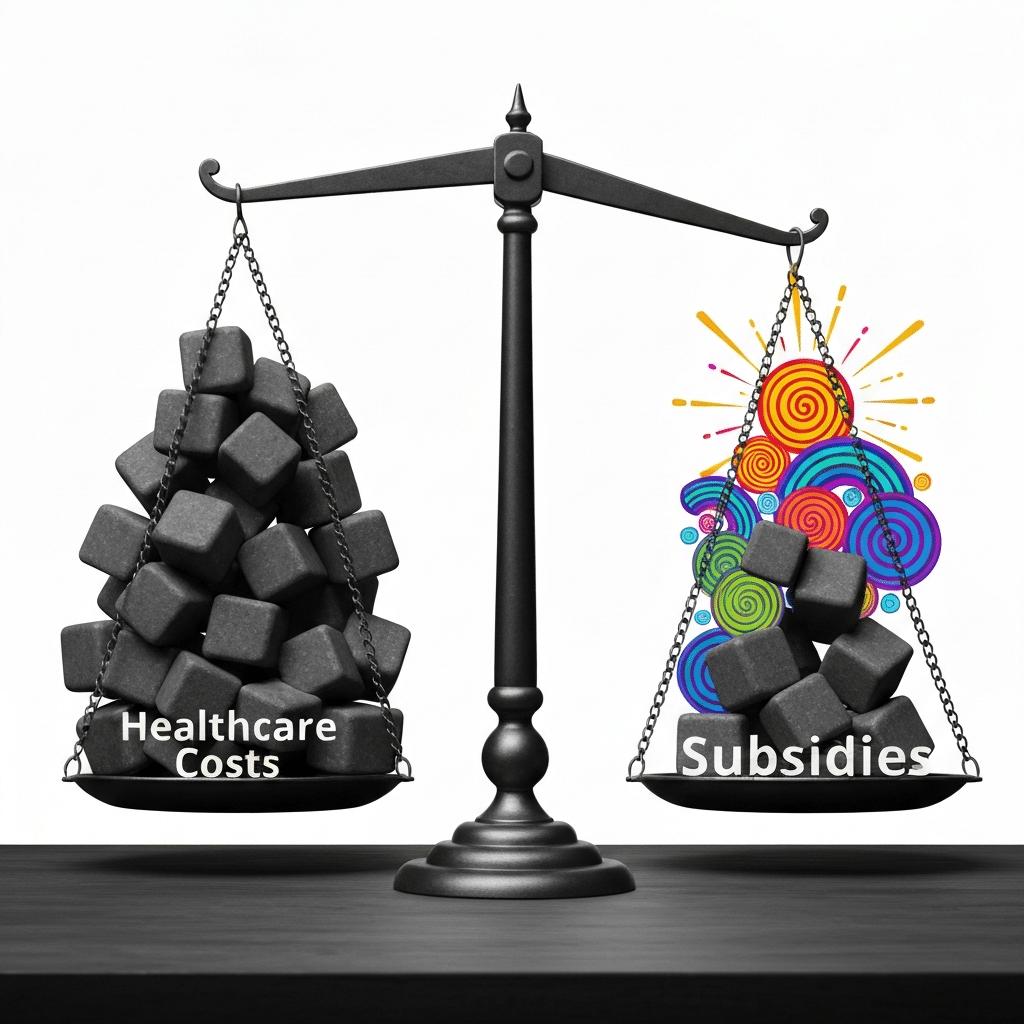
The subsidies weren’t for “other people.” They were for the working people who keep getting told they’re “middle class” right until the bill shows up. Freelancers, contract workers, gig economy hustlers, people between jobs, small business owners, and anyone buying insurance on their own—those are the people who relied on Premium Tax Credits to keep coverage within reach. These aren’t people gaming the system. They’re people trying to survive in an economy where healthcare benefits are tied to full-time employment, and full-time employment is increasingly rare.
Families who make “too much” for Medicaid but not enough to casually absorb a $600-to-$1,500 monthly premium got crushed. If ACA Subsidies Expired, it hits hardest where wages already lose to housing, childcare, and groceries. A household earning $55,000 a year might have been paying $250 a month for a family plan with subsidies. Without them, that same plan costs $700 or more. That’s not a budget adjustment. That’s a crisis.
Early retirees who aren’t yet Medicare-eligible also took a direct hit. These are people in their late 50s and early 60s who’d been counting on subsidized Marketplace coverage to bridge the gap until they turn 65. Now they’re facing premiums that rival a mortgage payment, with no employer to split the cost and no safety net below. The math doesn’t work, and there’s nowhere to go.
The enhanced subsidy structure was extended by federal law through 2025 as part of the Inflation Reduction Act of 2022. That law explicitly set a sunset date, meaning Congress had to act again to continue the subsidies beyond plan year 2025. The deadline wasn’t hidden in fine print. It was in the legislation. Lawmakers knew exactly when the help would run out, and they chose not to extend it.
This wasn’t an accident. It was a choice to set a timer on affordability and then act surprised when it hits zero. The subsidies didn’t expire because of market forces or inflation or some mysterious healthcare trend. They expired because the votes weren’t there to keep them going. This is exactly why people are furious that ACA Subsidies Expired—because the deadline was visible, the consequences were predictable, and Congress let it happen anyway.
The political calculus was straightforward: extending the subsidies costs federal money, and nobody wanted to take that vote in an election cycle. So millions of people got sacrificed to budget scorekeeping and partisan gridlock. The cost of living in 2026 was already brutal before this policy change. Now families are being asked to absorb another massive expense with no warning and no help.

Premium Tax Credits reduce what the consumer pays each month. If the credit goes away, the consumer share goes up—immediately. This isn’t the market. This isn’t a trend line. It’s arithmetic. When ACA Subsidies Expired, your premium didn’t jump because your insurer decided to gouge overnight. It jumped because the federal discount got turned off, and you’re now seeing the full price tag.
Insurance companies still charge the same rates they charged in December 2025. The difference is who’s paying. Before January 1, the government picked up hundreds of dollars per month per household through the tax credit. After January 1, that money disappeared, and families got stuck with the bill. There’s no mystery here. The policy changed, and the cost shifted directly onto consumers.
This is the part that makes people feel gaslit. Politicians and pundits talk about “market forces” and “premium trends” like this is some organic development nobody could’ve seen coming. But everyone saw it coming. The law had an expiration date. Advocates warned for months that premiums would spike without an extension. And Congress did nothing. Now families are paying the price, literally.

People who qualified for meaningful Premium Tax Credits and now face full-price premiums are taking the biggest financial hit. These are households earning between 100% and 400% of the federal poverty level—the exact income band where people are too “rich” for Medicaid but nowhere near wealthy enough to absorb a four-figure annual premium increase. When ACA Subsidies Expired, it didn’t punish the wealthy. It punished people living one surprise expense away from a financial tailspin.
Households near the eligibility thresholds got hammered twice. A small income change can shift someone from a subsidized plan to an unsubsidized one, and now that cliff is back with a vengeance. A family that earned $52,000 in 2024 and $54,000 in 2025 could suddenly be facing hundreds of dollars more per month in premiums, not because their healthcare needs changed, but because the policy rug got pulled out from under them.
Older adults face the worst of it. The ACA allows insurers to charge older enrollees up to three times what they charge younger ones. That means someone in their late 50s or early 60s was already paying higher base premiums. Losing the subsidy means those higher premiums just got catastrophically worse. For people trying to stretch savings until Medicare kicks in, this is budget-breaking. Some are looking at layoffs in 2026 while also juggling skyrocketing healthcare costs, compounding an already impossible situation.

This is the human cost after ACA Subsidies Expired. Families aren’t sitting around debating policy. They’re making impossible decisions about whether to keep coverage they can’t afford or gamble and go uninsured. Here’s what that looks like in practice:
When ACA Subsidies Expired, the system didn’t “adjust.” Families did, by going without. The affordability promise collapsed, and millions of people are now one medical emergency away from financial ruin. This isn’t hypothetical. It’s happening right now, and the fallout is worse than anyone predicted because the real-world consequences of policy failure don’t show up in budget spreadsheets.

The ACA sold the idea that coverage could be made affordable through structured assistance like Premium Tax Credits. That was the whole pitch: if you can’t afford insurance on your own, the government will help bridge the gap so you’re not one illness away from bankruptcy. According to HealthCare.gov, the subsidies were designed specifically to keep coverage within reach for people who needed it most.
If ACA Subsidies Expired, the “Affordable” label starts reading like sarcasm. The law’s promise was that healthcare wouldn’t be a privilege reserved for people with employer coverage or deep pockets. But without the subsidies, that promise collapses in practice for the exact people it was supposed to protect. Families who played by the rules, enrolled through the Marketplace, and paid their premiums every month are now being told the help is gone and they’re on their own.
The frustration isn’t just about money. It’s about trust. People were told that if they worked hard, stayed responsible, and followed the system, they’d have access to affordable healthcare. Now they’re being priced out, not because they did anything wrong, but because lawmakers decided the subsidies were expendable. That broken promise is what fuels the anger. It’s not abstract policy. It’s people’s lives.
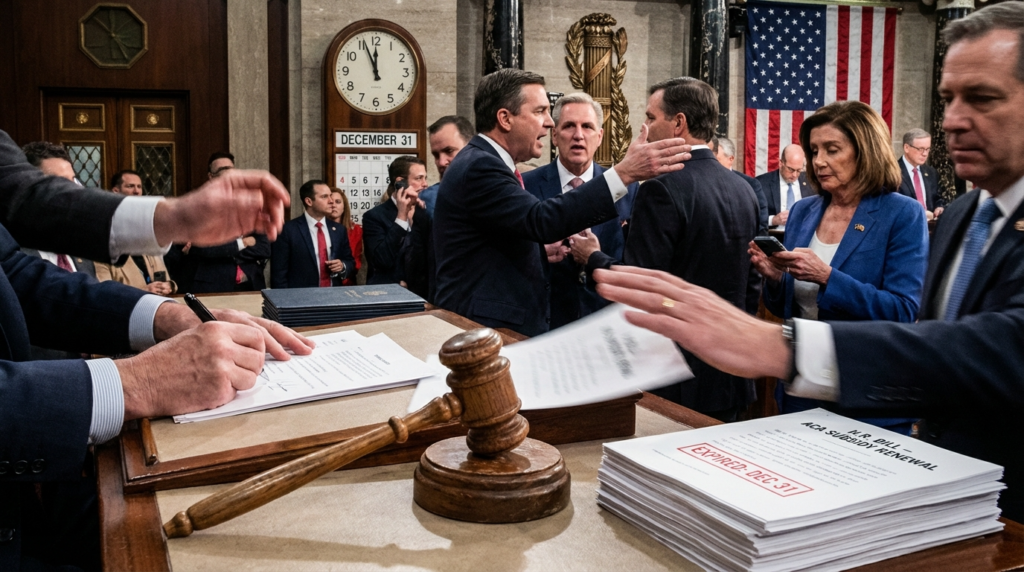
Congress knew the end date existed because it was written into law as a time-limited extension. The Inflation Reduction Act of 2022 explicitly set the subsidies to sunset after plan year 2025. That wasn’t a surprise. It was the deal. Extending the subsidies required another vote, and that vote didn’t happen.
The reason ACA Subsidies Expired is simple: the votes weren’t there. Not because the need disappeared. Not because the cost was unmanageable. But because extending the subsidies became a political football, and nobody wanted to take the hit. When ACA Subsidies Expired, politicians didn’t lose coverage—voters did. Lawmakers kept their government-funded health plans while millions of Americans got stuck with bills they can’t pay.
This is what makes people cynical about government. The consequences were predictable. Advocates, policy experts, and healthcare organizations warned Congress for months that letting the subsidies expire would cause premiums to spike and force people out of coverage. The information was there. The solutions were available. And nothing happened. If ACA Subsidies Expired, own it. Don’t hide behind process or blame the other party. This was a choice, and people are paying for it.
If ACA Subsidies Expired, the best move is to re-shop immediately—because loyalty doesn’t pay your premium. Here’s what to do if you’re staring at a bill you can’t afford:
For more information on how subsidies work and what options might still be available, check HealthCare.gov. If you’re also dealing with student loan forgiveness counting as income, that could further complicate your subsidy eligibility, so factor that into your calculations.

The fallout after ACA Subsidies Expired isn’t just about health insurance. It’s about what happens when policy decisions prioritize budget optics over people’s lives. Families who were already stretched thin are now being asked to absorb another massive expense with no safety net and no warning. This is happening while rent keeps climbing, childcare costs stay insane, and wages haven’t kept pace with any of it.
People aren’t asking for handouts. They’re asking for the system to work the way it was promised. The ACA was supposed to make healthcare accessible. The subsidies were the tool that made that promise real. Without them, the law still exists, but the affordability part is gone for millions of people. That’s not a technical failure. That’s a betrayal.
The anger is justified. When ACA Subsidies Expired, it wasn’t an abstract policy shift. It was a direct attack on the financial stability of working families who were already hanging on by a thread. The question isn’t whether people will be mad. The question is what happens next, and whether anyone in power cares enough to fix it before more people get priced out of coverage they desperately need. With concerns about a potential recession in 2026 looming, the timing couldn’t be worse for families trying to stay afloat.
The premium spike after ACA Subsidies Expired was entirely preventable. Congress had the information, the timeline, and the tools to extend the help. They chose not to. Now millions of people are scrambling to figure out how to afford coverage they can’t live without, and the political class that created this mess is nowhere to be found. This isn’t complexity. It’s arithmetic. The discount disappeared, and families got stuck with the bill. Own that reality, because pretending this was inevitable is an insult to everyone who’s now paying double for the same coverage they had last month.
Sure, healthcare costs have been climbing, but that’s the *excuse* the political class uses to hide a simple arithmetic error. Congress had the data, the timeline, and the legislative tools to extend the Premium Tax Credits—yet they deliberately let them expire. The result isn’t “inflation”; it’s a calculated withdrawal of a safety net that millions relied on.
When you strip away the rhetoric, the numbers speak for themselves: premiums spiked by up to 400 % for some families overnight. That’s not a market‑driven surprise, it’s a policy‑driven disaster.
Without subsidies, many families are forced to drop coverage, risking catastrophic medical debt or even death. The ACA’s promise of affordable care evaporates the moment the credits disappear.
Low‑income households are hit hardest—**many see their premiums double or triple**, pushing them beyond any realistic budget and driving them back into the uninsured pool.
Options are limited: apply for Medicaid, explore short‑term plans, or scramble for employer‑sponsored coverage. None match the breadth of ACA plans, but they’re the only lifelines left. For broader policy solutions, see Why Policies that HELP American Workers Matter More Than Ever.
Economists warn of a looming recession, which would compound the premium shock and push even more households into financial ruin.
All figures are drawn from authoritative sources: the Federal Reserve (inflation and household debt data), the U.S. Census Bureau (insurance coverage rates), the Bureau of Labor Statistics (wage growth), the Congressional Budget Office (cost‑benefit analyses of Premium Tax Credits), and the Congressional Research Service (policy impact studies).


