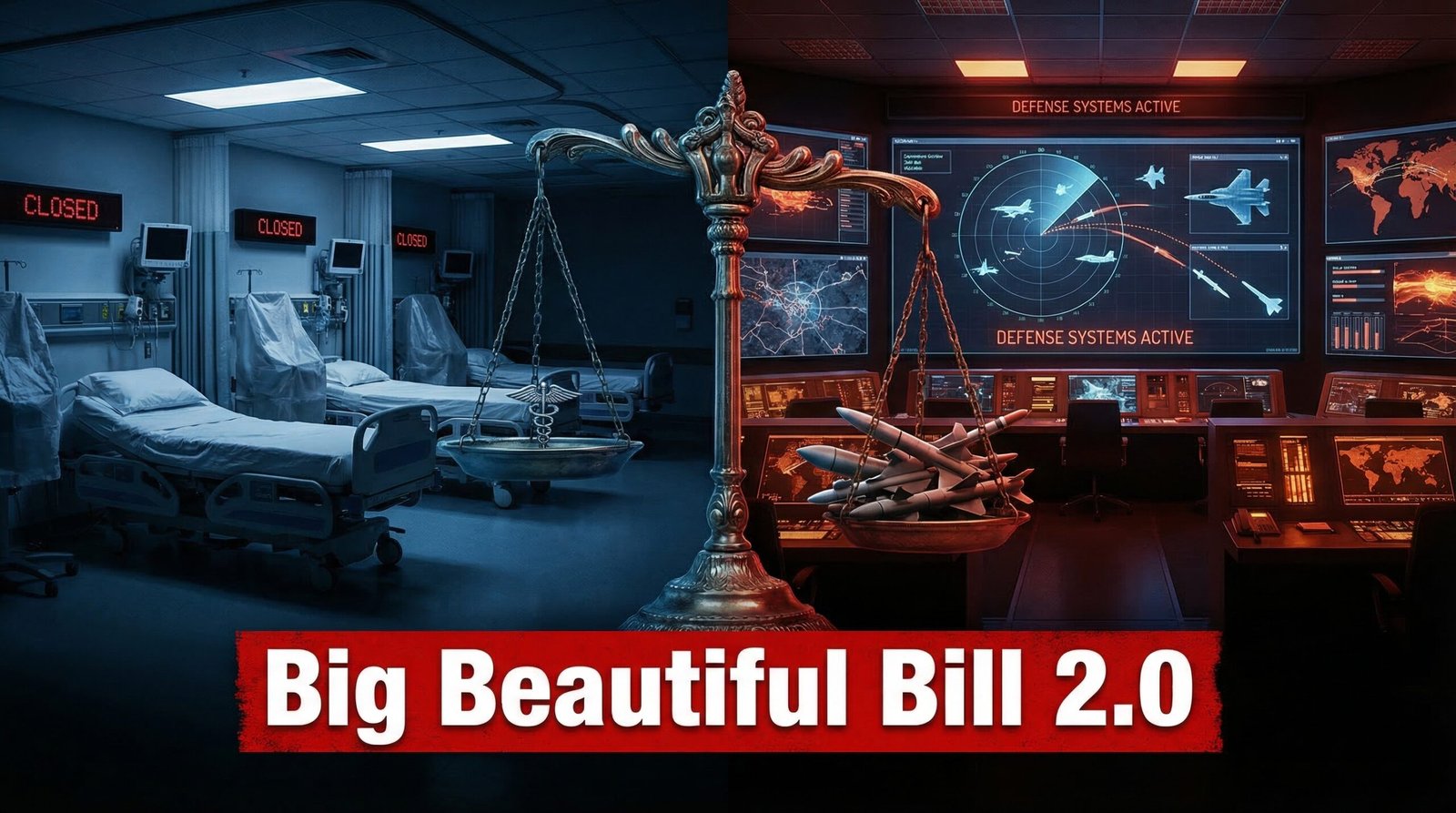

Big Beautiful Bill 2.0 is a second Republican budget reconciliation package that House Speaker Mike Johnson announced at the party’s Doral, Florida retreat in early March 2026 — just eight months after the first Big Beautiful Bill was signed into law on July 4, 2025. The proposed legislation would use cuts to Medicaid, social programs, and domestic spending to offset the ballooning costs of the Iran war and fund additional Republican priorities. The first bill already eliminated $1 trillion from healthcare and safety-net programs. Round two is being designed to go further — targeting the same programs that younger Americans disproportionately depend on, to pay for a war they didn’t vote for.
Key Takeaways
- House Republicans decided at their March 2026 Doral retreat to pursue a second reconciliation bill before the midterms, unofficially called Big Beautiful Bill 2.0.
- The Iran war has already cost $6 billion in its first week, with projections up to $95 billion for extended operations — and Congress needs offsets to fund it.
- The first Big Beautiful Bill (OBBBA, signed July 4, 2025) already cut $1 trillion from Medicaid, eliminated $300 billion from SNAP, and stripped ACA subsidies — leaving 7.5–10 million without coverage.
- BBB 2.0’s proposed framework, unveiled by the Republican Study Committee in January 2026, would cut Medicaid further by targeting immigrants, imposing site-neutral hospital payments, and eliminating coverage for gender-affirming care.
- 74 million Americans are currently enrolled in Medicaid — nearly half of all children and 40% of all births in the US.
- Millennials are the most underinsured generation in America. 3 in 10 young adults are already vulnerable to losing health care access from the first bill’s cuts.
- House leadership admits they have “no idea what will go in the package or how they are going to pay for it” — but they’re doing it anyway.
What Is Big Beautiful Bill 2.0?
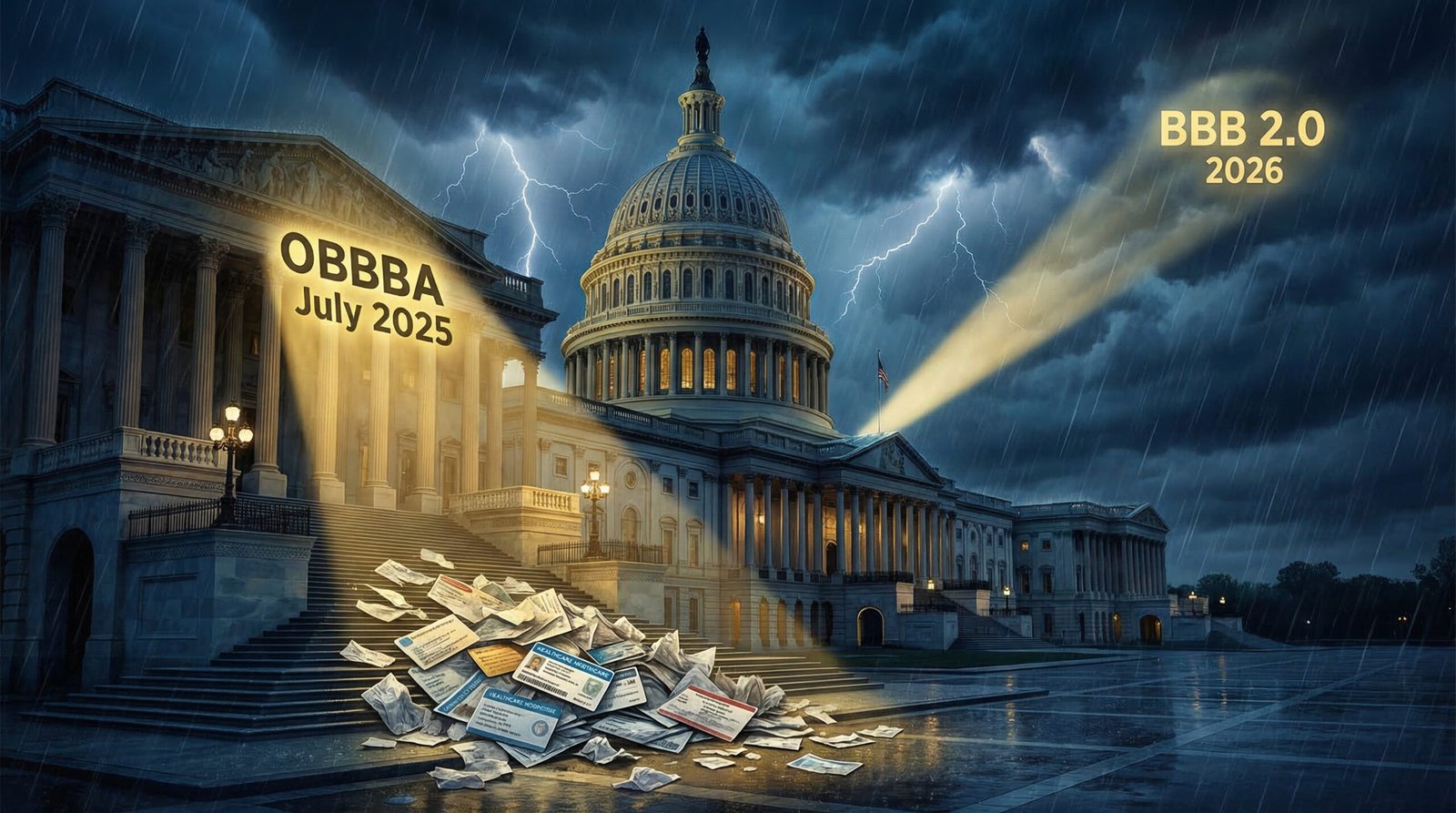
Big Beautiful Bill 2.0 is the informal name for a second budget reconciliation package that House Republican leaders greenlit at their party retreat at Trump’s Doral resort in early March 2026. Reconciliation is a procedural tool that allows Congress to pass certain budget-related legislation with a simple Senate majority — bypassing the filibuster — which is why Republicans used it to pass the first One Big Beautiful Bill Act in July 2025 without a single Democratic vote.
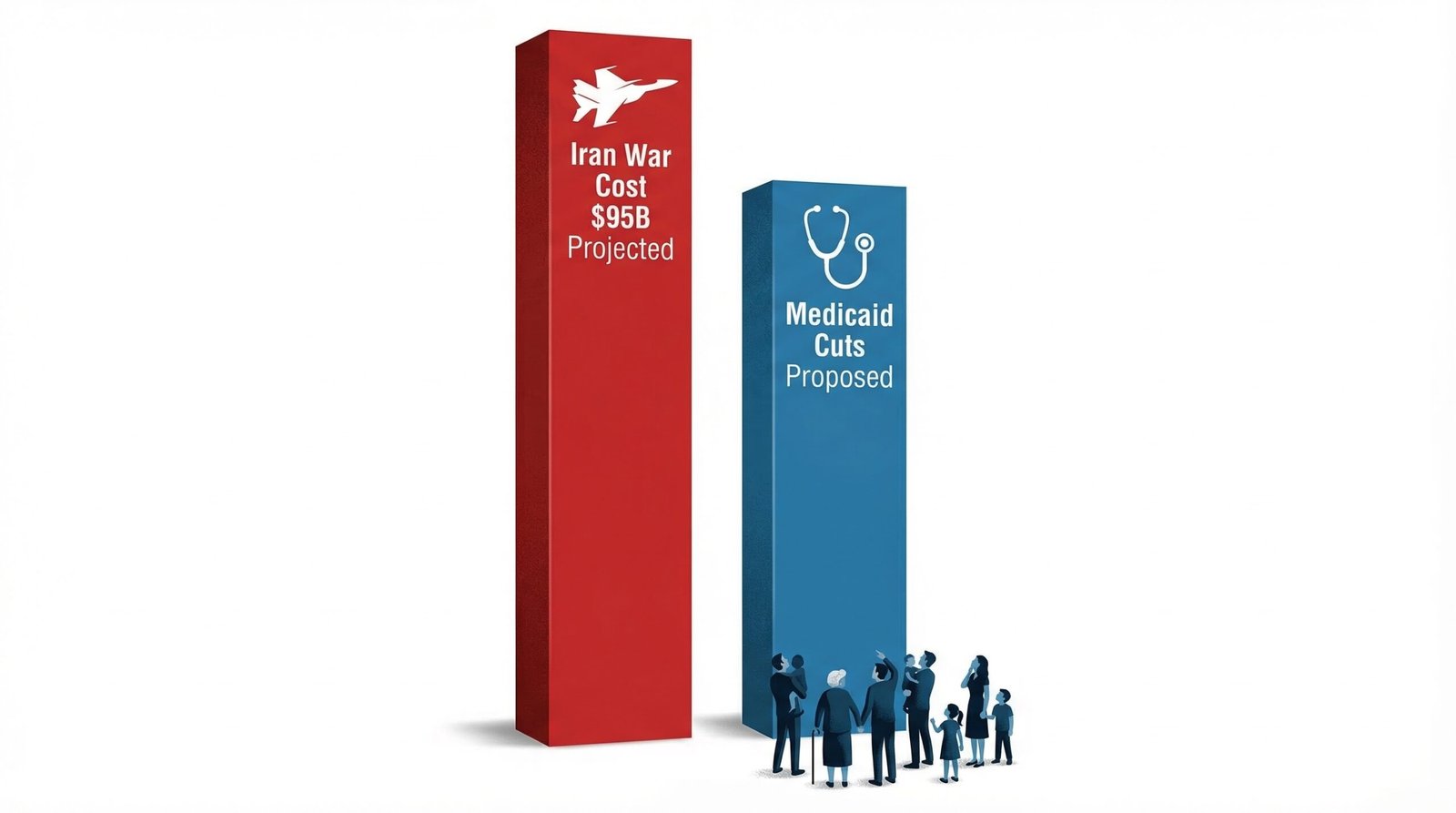
The push for a second bill is being driven by two overlapping pressures. First, the Iran war is expensive: $3.7 billion in the first 100 hours, $6 billion in the first week, with long-term projections reaching up to $95 billion according to CNN analysis — and Republicans have committed to finding “every penny” in domestic offsets. Second, the party wants to deliver additional legislative wins before the 2026 midterms, when the House majority is expected to face significant headwinds from an electorate increasingly alarmed by stagflation and rising gas prices.
The vehicle is reconciliation. The goal is another round of spending cuts targeted at the same programs the first bill already shredded. The stated rationale — fiscal responsibility — is, as New York Magazine’s Intelligencer put it, “just as the OBBBA’s Medicaid cuts were advertised as an effort to root out waste, fraud and abuse, so too will any new cuts be justified in Republican messaging.” The translation: they’ll call it efficiency. The impact will be felt in emergency rooms and insurance denials.
What Did the First Big Beautiful Bill Already Cut?
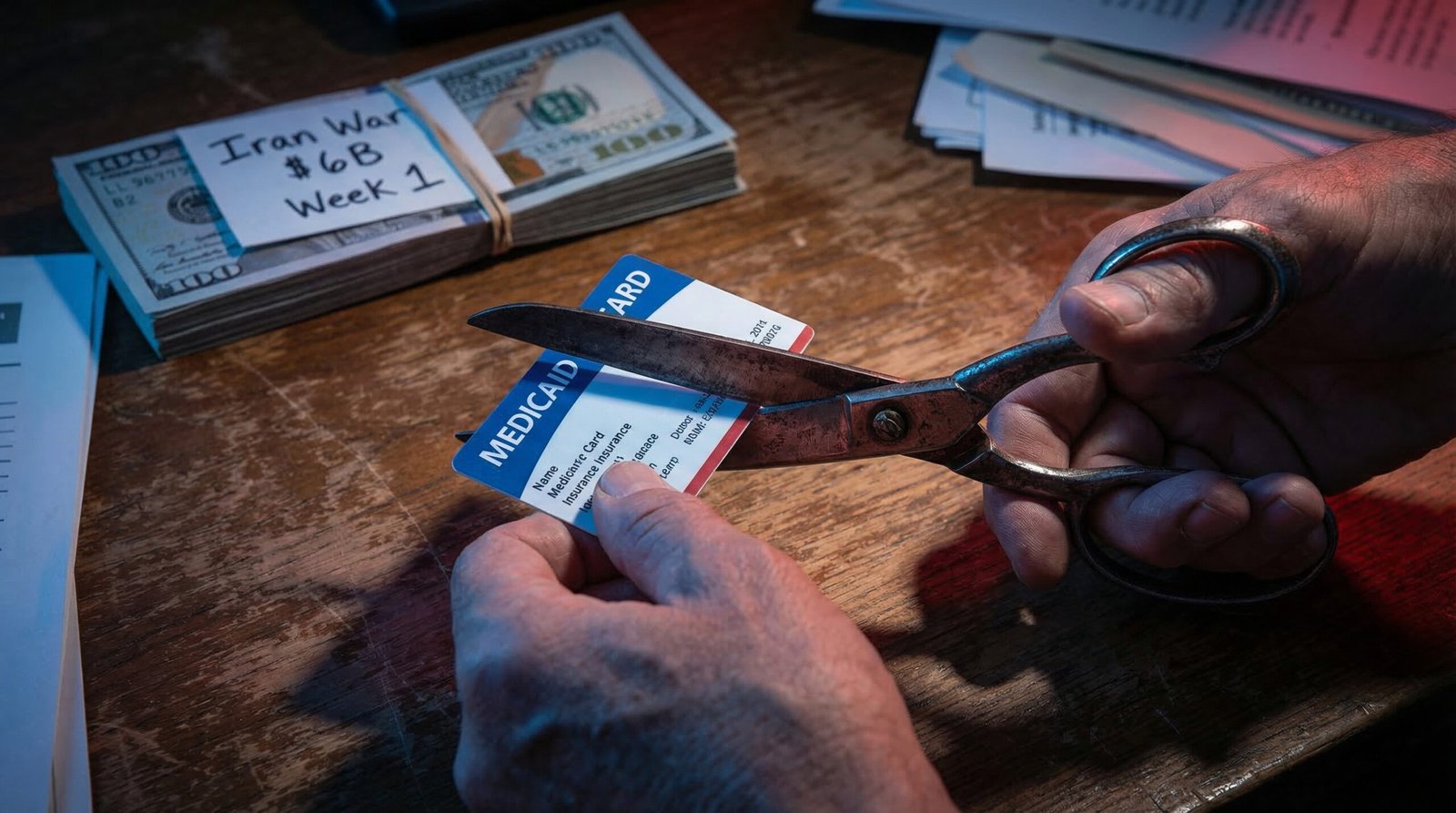
To understand what Big Beautiful Bill 2.0 means, you need to understand what the first one already did. Signed into law on July 4, 2025 — a date chosen with obvious theatrical intent — the One Big Beautiful Bill Act made the single largest cut to healthcare in American history. According to Johns Hopkins Bloomberg School of Public Health, it cut more than $1 trillion in health spending, a level described as “unprecedented.”
The specific damage: the OBBBA cut federal Medicaid funding by $863 billion and SNAP by $295 billion through 2034, according to the Commonwealth Fund. The Brookings Institution estimated 7.5 to 10 million low-income people would lose Medicaid coverage and 15 million would become uninsured. The Urban Institute found that 3 in 10 young adults were now vulnerable to losing health care access. That’s not projected future harm. That’s the baseline heading into round two.
The OBBBA also added Medicaid work requirements, eliminated the ACA’s enhanced subsidies (already covered at ACA Subsidy Cliff 2026), and imposed co-pays on Medicaid enrollees — a mechanism that Harvard T.H. Chan School of Public Health notes consistently causes low-income people to forgo necessary care. When people skip care, they don’t get better. They get sicker, then show up in emergency rooms, where the cost is five times higher. But that’s a future problem — one that lands on a different budget line and a different generation.
What Would Big Beautiful Bill 2.0 Actually Cut?
The formal blueprint for Big Beautiful Bill 2.0 was unveiled January 13, 2026, by the House Republican Study Committee (RSC), the 190-member conservative caucus that functions as the House’s ideological engine. The framework targets Medicaid through several overlapping mechanisms.
State matching rate penalties for immigrant coverage. States that use their own funds to cover undocumented immigrants or lawfully present immigrants through Medicaid would face a 20-percentage-point reduction in their federal matching rate — effectively tripling the cost of that coverage and forcing states to either abandon it or shoulder the full financial burden.
Elimination of reasonable opportunity period coverage. Currently, when citizenship verification systems can’t immediately confirm status — a process that can take weeks or months — Medicaid and CHIP provide coverage during that “reasonable opportunity” window. BBB 2.0 would eliminate federal matching for this period, leaving thousands in coverage limbo during bureaucratic delays they have no control over.
Hospital site-neutral payments. Requiring Medicaid to pay hospitals the same rate regardless of whether care is delivered in a hospital outpatient department or a private clinic sounds administratively neutral. It isn’t. It would sharply reduce Medicaid reimbursement rates for hospital-based care — which is where low-income patients disproportionately receive treatment — and further pressure rural hospitals that already operate on thin margins. As private equity-owned hospitals have already demonstrated, when reimbursements fall, staffing follows.
Full Medicaid ineligibility for non-citizens. The RSC’s blueprint would make all non-citizen foreign nationals ineligible for Medicaid, SNAP, housing assistance, and other public benefits — including low-income children and pregnant women who are legally present in the country. The Washington Monthly called it “cruel” and noted the policy would strip benefits from people who are in the US legally and paying taxes.
Codification of the “public charge” rule. This provision would give DHS officials virtually unlimited discretion to deny entry or legal status based on whether someone has used public benefits — a chilling effect that would discourage legal immigrants from accessing health care, food assistance, or housing programs they’re legally entitled to, for fear of jeopardizing their immigration status.
The RSC framework is not the final bill — House leadership says they still have “no idea what will go in the package.” But in Republican legislative strategy, the RSC blueprint is typically the floor, not the ceiling.

Who Gets Hurt: The Generational Math
Medicaid is not an elderly program. The persistent political framing — that Medicaid is a nursing-home program for the old and infirm — is one of the most successful pieces of misdirection in American domestic policy. The reality: Medicaid covers nearly half of all children in the United States and finances over 40% of all births. It is the largest single source of healthcare funding for people with low income in the country, with 74 million people enrolled. Nearly a third of all Americans receive Medicaid or CHIP benefits.
The generational breakdown is stark. Millennials — already the most financially squeezed generation in modern American history — are also the most underinsured. An estimated 47% of Millennials need more or any life insurance coverage. Millennials and Gen Z are filing health insurance claims at a faster rate than any previous generation at equivalent ages, driven by rising rates of mental health conditions, chronic illness, and deferred preventive care. And they are disproportionately enrolled in Medicaid precisely because the wage stagnation of the past 30 years has kept incomes in the Medicaid eligibility range for tens of millions of working adults.
Meanwhile, the generation whose political choices produced both the Iran war and its proposed domestic financing mechanism is largely insulated. Boomers are enrolled in Medicare. They own the energy stocks and defense contractor shares that soared when the war started. They built and protected the home equity that makes Medicaid enrollment irrelevant to their healthcare calculus. The bill for the war — fiscal and physical — is being handed to the people who had the least say in starting it.
A new analysis from the USC Keck School of Medicine found that reductions in Medicaid access are expected to increase deaths and cause significant financial hardship to people currently covered. The CBPP estimates that Medicaid work requirements alone could put 36 million people at risk of losing health coverage. The Joint Economic Committee of the US Senate projects 16 million people would lose health insurance from the Medicaid cuts already in the first bill. Big Beautiful Bill 2.0 is designed to go further.
Can Big Beautiful Bill 2.0 Actually Pass?
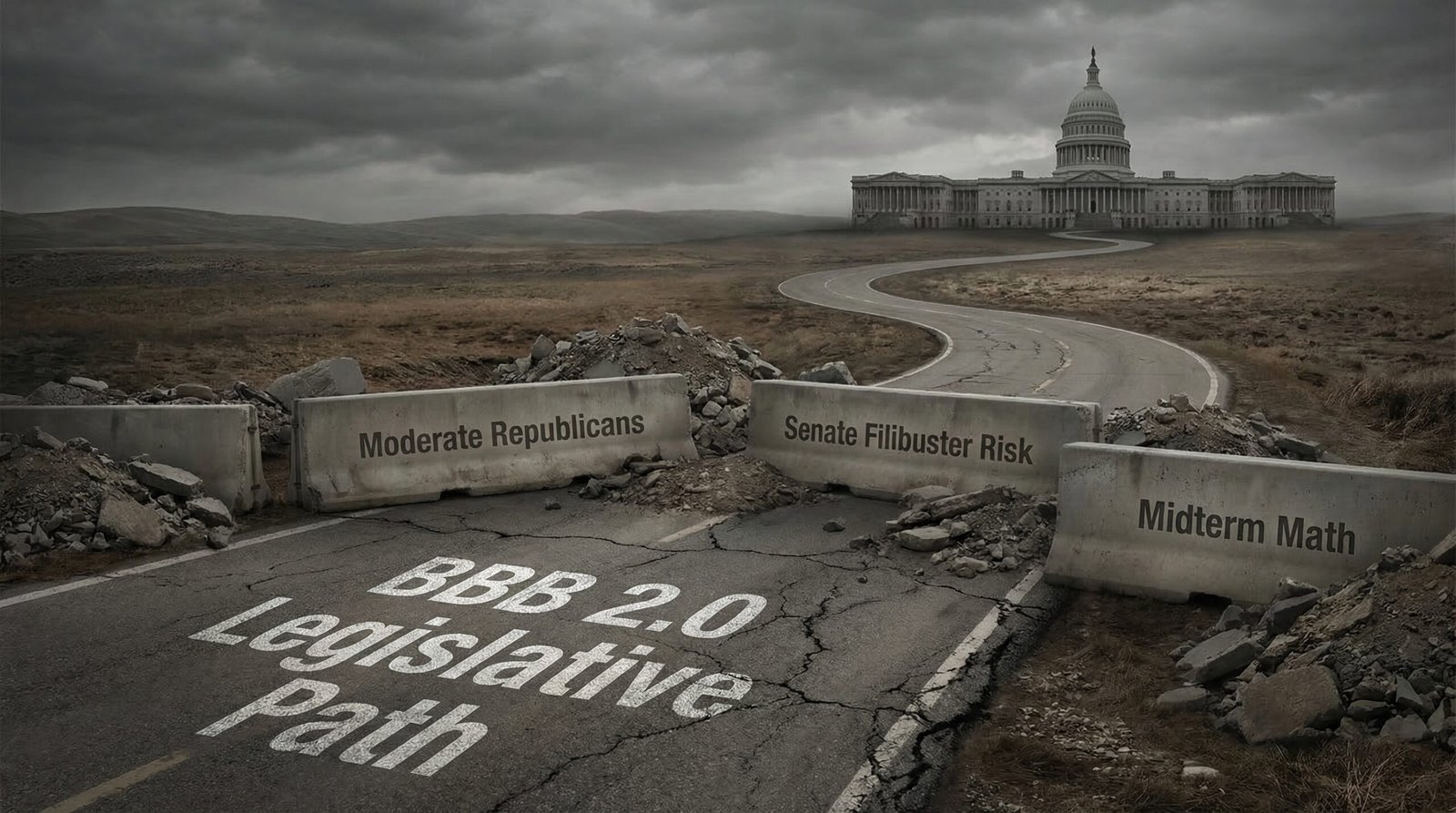
Probably, eventually. Republicans have a demonstrated willingness to push through deeply unpopular legislation using procedural tools, and the midterm pressure makes action more likely, not less. But the path is genuinely harder this time.
The first Big Beautiful Bill barely passed — it went through multiple near-collapses as moderate Republicans in swing districts blanched at the scale of the Medicaid cuts. Several members who voted yes are now in districts where the cuts are visibly hitting constituents. Adding another round of Medicaid cuts, on top of the Iran war’s economic damage — 92,000 jobs lost in February, gas above $5, oil now crossing $100 a barrel — is a harder vote to take home.
Senate dynamics present a separate problem. The reconciliation process requires the bill to comply with the Byrd Rule — every provision must have a budgetary impact, not merely incidental to policy. The RSC’s immigration-related Medicaid cuts could face Byrd Rule challenges in the Senate parliamentarian’s office. And while Republicans have 53 Senate seats, the margin for defections is thin.
Bloomberg reported in September 2025 that “if it were popular spending cuts or popular tax increases it would’ve been done already” — a rare moment of candor about why the second bill faces a steeper climb than the first. The lobbying infrastructure that helped push OBBBA through will be deployed again. Hospital associations, Medicaid advocacy groups, and state health departments — all of which opposed round one — will be better organized for round two. They lost last time. History suggests they’ll lose again.
The Counter-Argument: Offsets Are Necessary
The fiscal-responsibility argument for Big Beautiful Bill 2.0 deserves a fair hearing, not because it’s correct, but because understanding it reveals the ideological scaffolding underneath.
The argument goes: the Iran war is being fought, the cost is real, the national debt is $36 trillion and rising, and Congress has a responsibility to find offsets rather than simply borrowing more. The Cato Institute published a piece in January 2026 arguing that “Republicans should build on [OBBBA] with a second reconciliation bill that focuses on where Congress can move the needle most: health care.” The framing is one of fiscal discipline.
The problem with this argument is not that offsetting war costs is wrong. It’s the asymmetry of who is doing the offsetting. The Iran war was authorized without a formal vote, its costs were not submitted for congressional approval before operations began, and its primary beneficiaries — defense contractors, energy companies, stockholders in Lockheed and Raytheon and Valero — are not the ones being asked to offset anything. The people being asked to offset the war are the ones most likely to lose their healthcare as a result of it. That is not fiscal responsibility. That is a transfer.
There is also an internal contradiction in the Republican fiscal argument worth noting: the OBBBA simultaneously cut $1 trillion in spending and added trillions to the national debt through tax cuts that disproportionately benefited the wealthiest Americans. Big Beautiful Bill 2.0 appears structurally identical. The spending cuts pay for the tax cuts and the war. The debt grows regardless. Younger Americans inherit both.
Frequently Asked Questions
What is the difference between the One Big Beautiful Bill and Big Beautiful Bill 2.0?
The One Big Beautiful Bill Act (OBBBA) was signed into law July 4, 2025. It cut $1 trillion from Medicaid and $300 billion from SNAP, eliminated ACA enhanced subsidies, and enacted major tax cuts. Big Beautiful Bill 2.0 is a proposed second reconciliation bill announced in early March 2026, designed to make additional Medicaid cuts to offset the costs of the Iran war and other Republican priorities.
How much would Big Beautiful Bill 2.0 cut from Medicaid?
No final figure has been released — House leadership acknowledged in early March 2026 that they still had “no idea what will go in the package.” The RSC framework would include new immigrant eligibility restrictions, hospital site-neutral payments, and removal of coverage during citizenship verification delays. The total impact would be on top of the $863 billion already cut from Medicaid in the first bill.
Who uses Medicaid most, Boomers or younger generations?
Medicaid covers 74 million Americans, with nearly half of all US children and over 40% of all births funded through the program. While Medicaid does provide nursing home coverage for elderly Americans, the working-age and child populations represent the majority of enrollees. Millennials and Gen Z are disproportionately enrolled because wage stagnation has kept incomes within Medicaid eligibility ranges — and they are the generation most exposed to the cuts.
Can the Senate block Big Beautiful Bill 2.0?
Reconciliation only requires a simple majority in the Senate (51 votes), bypassing the 60-vote filibuster threshold. Republicans hold 53 Senate seats, giving them a 2-seat margin. If 3 or more Republicans defect, the bill fails. Moderate senators in states heavily dependent on Medicaid funding — and facing 2026 re-election campaigns in a difficult environment — represent the most likely point of failure. But the first bill survived similar political dynamics.
Sources & Methodology
This article draws on reporting and analysis from: New York Magazine/Intelligencer (BBB 2.0 framework reporting); Punchbowl News (House Republicans’ Doral retreat decisions); Georgetown Center for Children and Families (RSC framework analysis); Urban Institute (3 in 10 young adults at risk); Brookings Institution (7.5–10M coverage losses); Commonwealth Fund ($863B Medicaid, $295B SNAP cuts); Johns Hopkins Bloomberg School ($1T health cuts unprecedented); Harvard T.H. Chan School of Public Health (co-pay impact on utilization); Center on Budget and Policy Priorities (36M at risk from work requirements); American Hospital Association (Medicaid enrollment facts); USC Keck School of Medicine (Medicaid cuts and mortality); CNN (Iran war $95B projection); Daily Sabah/Pentagon ($6B first week); Washington Monthly (RSC immigration cuts analysis); World Population Review (74M Medicaid enrollment).