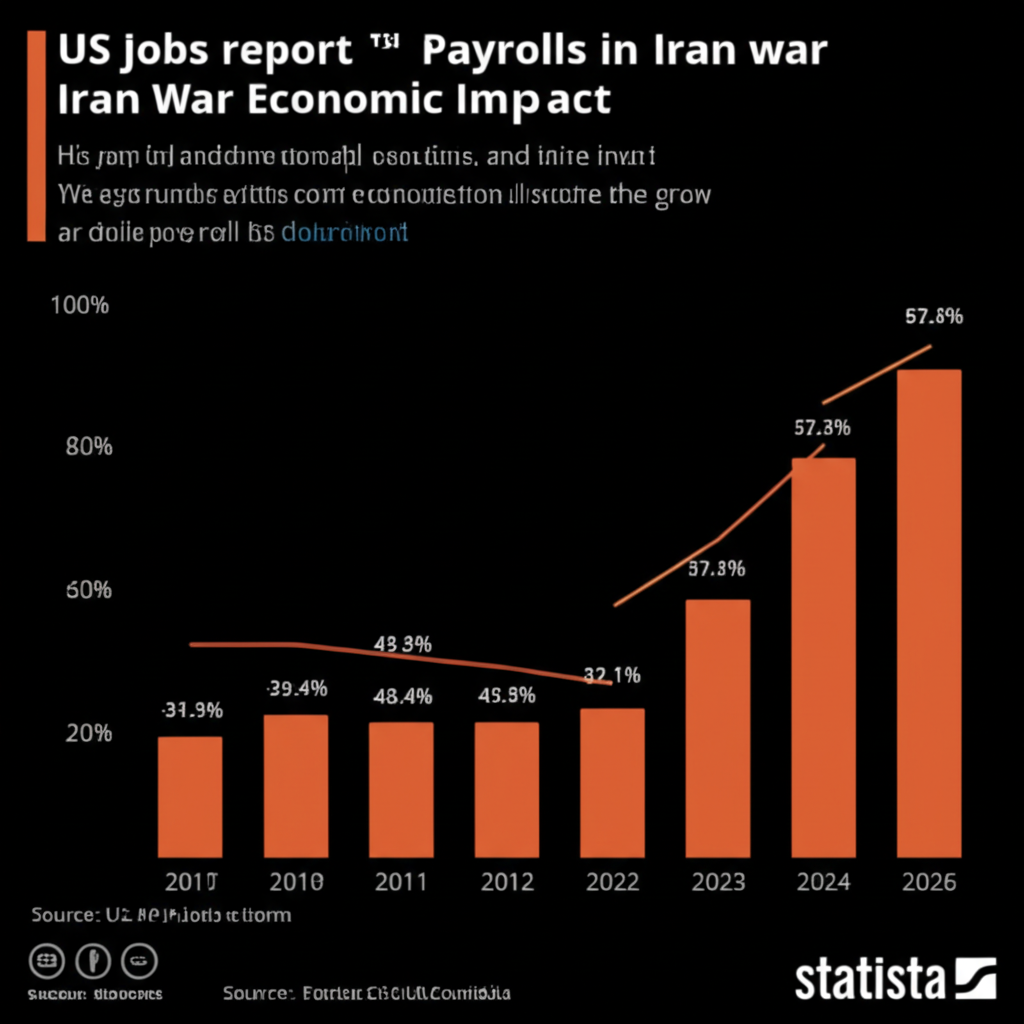
The Iran war is now costing American workers their jobs. February’s jobs report — released Friday — showed the U.S. economy lost 92,000 positions last month, unemployment ticked up to 4.4%, and prior months were revised down by another 69,000, trapping the Federal Reserve in a stagflation nightmare at exactly the moment millions of younger Americans needed relief.
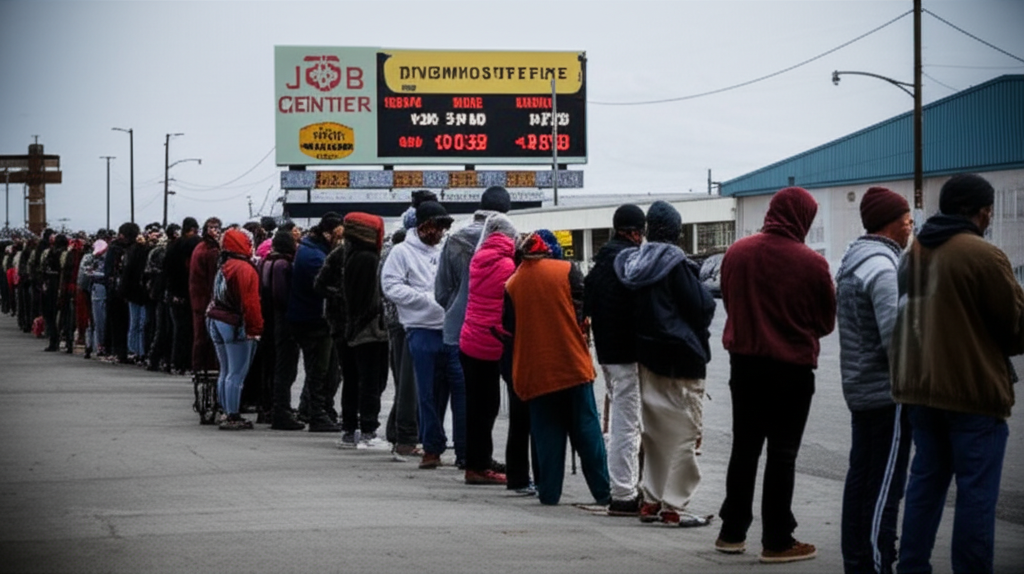
The economic bill for the Iran war is arriving — and as usual, it’s being handed to the people least equipped to pay it. Workers are losing jobs, gas prices are spiking at the pump, and the Fed is frozen, unable to cut rates because the same war that’s eliminating payroll jobs is also stoking the inflation that keeps interest rates painfully high. For Millennials and Gen Z already stretched thin by years of unaffordable housing, record student debt, and stagnant wages, this is stagflation arriving at the worst possible time.
Key Takeaways
• U.S. economy lost 92,000 jobs in February 2026 — economists expected +50,000
• Prior months revised down an additional 69,000; total 2025 revisions: -403,000 jobs
• Unemployment rate ticked up to 4.4%
• Gas prices hit $3.41/gallon nationally — up 43 cents in one week
• Goldman Sachs warns crude could top $100/barrel if Strait of Hormuz stays disrupted
• Fed trapped: can’t cut rates with inflation at 2.4% and rising energy costs
• Defense contractors asked to quadruple weapons production — their stocks are soaring
The February Jobs Disaster Nobody Saw Coming
Economists surveyed by Dow Jones had penciled in 50,000 new jobs for February. The actual number: negative 92,000. That’s not a miss — that’s a different planet.
Health care and information sectors were among the hardest hit. The civilian labor force itself shrank by 1.42 million people — meaning these aren’t just job-seekers giving up, they’re being pushed out of the economic picture entirely. And the revisions made things worse: December was cut from 65,000 to negative 17,000, and January’s 130,000 was trimmed to 126,000. Combined, Bureau of Labor Statistics revised away 69,000 jobs that were never really there.
Zoom out further: the full-year 2025 revisions stripped out 403,000 jobs that had been counted in the original reports. The labor market has been weaker — for longer — than anyone admitted at the time. Gig work and part-time arrangements were masking the rot.
“The -92,000 jobs is significant, especially as it visually seems to be part of a long-term slide from the peak of the pandemic job recovery,” wrote Forbes economist Erik Sherman. The slide started in mid-2020 — long before the Iran war, long before the latest round of tariffs. The war just lit the fuse on a powder keg that was already packed.

Gas at $3.41 and Climbing — Who Gets Hurt Most
The national average for gasoline hit $3.41 a gallon on Saturday, according to AAA — a jump of 43 cents in just seven days. That’s the fastest single-week spike in years, and analysts say it’s nowhere near its ceiling.
The mechanism is straightforward: Iran has effectively closed the Strait of Hormuz, the narrow chokepoint through which roughly one-fifth of the world’s oil supply flows. Crude oil just logged its biggest weekly gain in data going back to 1983. Goldman Sachs warned that crude prices carry “growing upside risks” and could climb above $100 per barrel if shipping disruptions persist.
Every $1 increase in crude translates to roughly $0.02–$0.03 per gallon at the pump. At $91/barrel on Friday and heading higher, that math gets ugly fast.
Ask yourself who this hurts the most. Not the Boomers who paid off their mortgages and own their cars outright. It’s the 28-year-old nurse’s aide commuting 40 miles each way because she can’t afford to live near the hospital. It’s the 24-year-old warehouse worker whose entire food budget is now being clawed back by the gas tank. Gas prices are a regressive tax — and this one is arriving on top of a jobs wipeout.
The Stagflation Trap: Why the Fed Can’t Save You
In a normal recession — jobs falling, economy contracting — the Federal Reserve cuts interest rates to stimulate borrowing, spending, and hiring. That’s the textbook. The Iran war has torn the textbook in half.
Inflation is currently running at 2.4%, above the Fed’s 2% target. With oil prices surging and the Strait of Hormuz effectively closed, energy costs are going to push that number higher — not lower. The Fed cannot cut rates into rising inflation without risking a full-blown inflationary spiral. But it also can’t keep rates high while the labor market bleeds out.
“The February report and latest geopolitical developments complicate the Fed’s job by raising risks on both sides of the dual mandate,” said Gregory Daco, chief economist at EY. “The sharp pullback in payrolls raises concerns about downside to growth and employment, while the conflict in the Middle East raises inflation risk.”
San Francisco Fed President Mary Daly called it “a balance of risks calculation.” That’s economist-speak for: we’re stuck. High interest rates have already obliterated the dream of affordable homeownership for younger Americans. Now they stay high for longer — because a war in the Middle East is making energy expensive — while the same war kills the jobs that were supposed to help people build savings.
“The risk of stagflation permeates,” said Joe Brusuelas, chief economist at RSM. “And all eyes will continue to be focused on the direction of energy prices.” Translation: don’t hold your breath for rate cuts anytime soon.
While Workers Lose, Defense Contractors Win
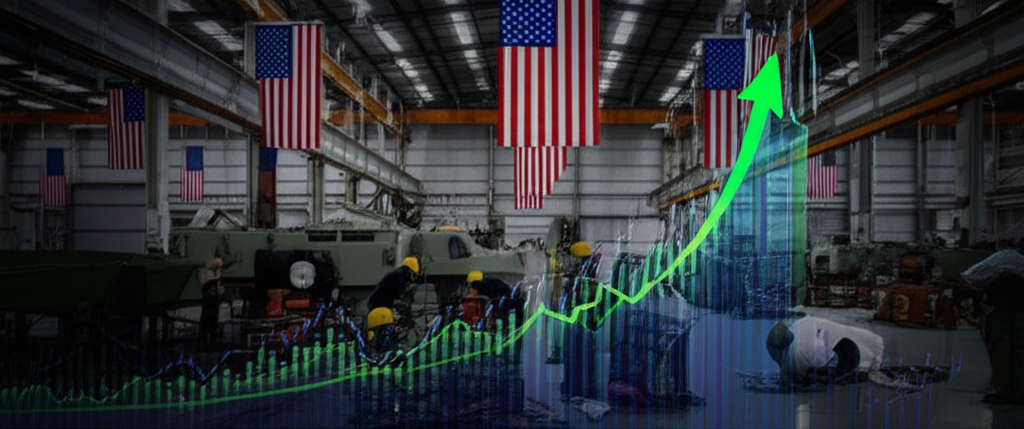
Here’s the part that doesn’t make the front page of the business section: while the February jobs report was a “surprise disaster” (Forbes), Trump simultaneously announced that several defense contractors had agreed to quadruple weapons production “as rapidly as possible.”
Raytheon, Lockheed Martin, General Dynamics, Northrop Grumman — these companies are not losing jobs. Their shareholders, disproportionately from the wealthiest and oldest Americans who hold the bulk of stock market wealth, are watching their portfolios balloon while everyone else watches their paychecks shrink against $3.41 gas.
This is the generational wealth transfer in real time: a war starts, young service members die (six U.S. troops killed, remains returned to Dover on Saturday), young workers lose jobs as the civilian economy contracts, and the financial gains flow upward to asset-holders who were already wealthy before the first bomb dropped.
Wealth inequality between generations didn’t create this war. But the structure of the American economy ensures that, as always, the costs are socialized and the profits are privatized — and the split falls almost perfectly along generational lines.
“But It’s Temporary” — The Counterargument
To be fair, there is a counterargument — and it’s not stupid.
Fed Governor Christopher Waller said policymakers are “unlikely to overreact to higher gas prices in the near term,” suggesting the Fed views energy shocks as transitory until proven otherwise. Trump himself brushed off the pump prices: “They will drop very rapidly when this is over.”
If the war ends in 4–5 weeks as Trump suggested, crude could fall back below $80, gas prices normalize, and the February jobs figure looks like a temporary war-shock blip rather than a structural collapse. Markets have priced in shorter wars before.
The problem: the Iran war is now in its second week with no peace talks, Trump explicitly rejecting negotiations, and the IRGC launching its 27th major strike wave as of Saturday night. “Temporary” has a way of becoming “permanent” when the shooting keeps going. The job revisions stripping 403,000 positions from 2025 aren’t a war effect — they’re structural. The war simply arrived on top of an economy that was already quietly deteriorating.
FAQ
How many jobs did the US lose in February 2026?
The U.S. economy lost 92,000 jobs in February 2026, according to the Bureau of Labor Statistics. Economists had expected a gain of 50,000. Prior months were also revised down by a combined 69,000.
Why are gas prices rising during the Iran war?
Iran has effectively shut down the Strait of Hormuz, through which about 20% of global oil supply flows. With the waterway disrupted, crude oil logged its biggest weekly gain on record (data back to 1983), pushing national gas prices to $3.41/gallon as of March 7, 2026 — up 43 cents in one week.
Why won’t the Federal Reserve cut interest rates to help the economy?
The Fed is caught in a stagflation trap. Normally it would cut rates in response to job losses, but the Iran war is pushing energy costs higher, threatening to raise inflation above the already-elevated 2.4% rate. Cutting rates into rising inflation risks making things worse. The Fed is paralyzed.
Who benefits economically from the Iran war?
Defense contractors are the clearest winners. Trump announced multiple companies agreed to quadruple weapons production. These firms’ shareholders — disproportionately older, wealthier Americans — are seeing stock gains while younger workers absorb job losses and higher energy costs.
Sources & Methodology
Data and reporting sourced from: NBC News — Iran war economy/Fed analysis (March 7, 2026); Forbes — Erik Sherman, February jobs analysis; Bureau of Labor Statistics (February 2026 jobs report); NBC News — AAA gas price data; Goldman Sachs crude forecast via NBC News; FinanceCharts — market data. All statistics cited reflect data available as of March 7, 2026.