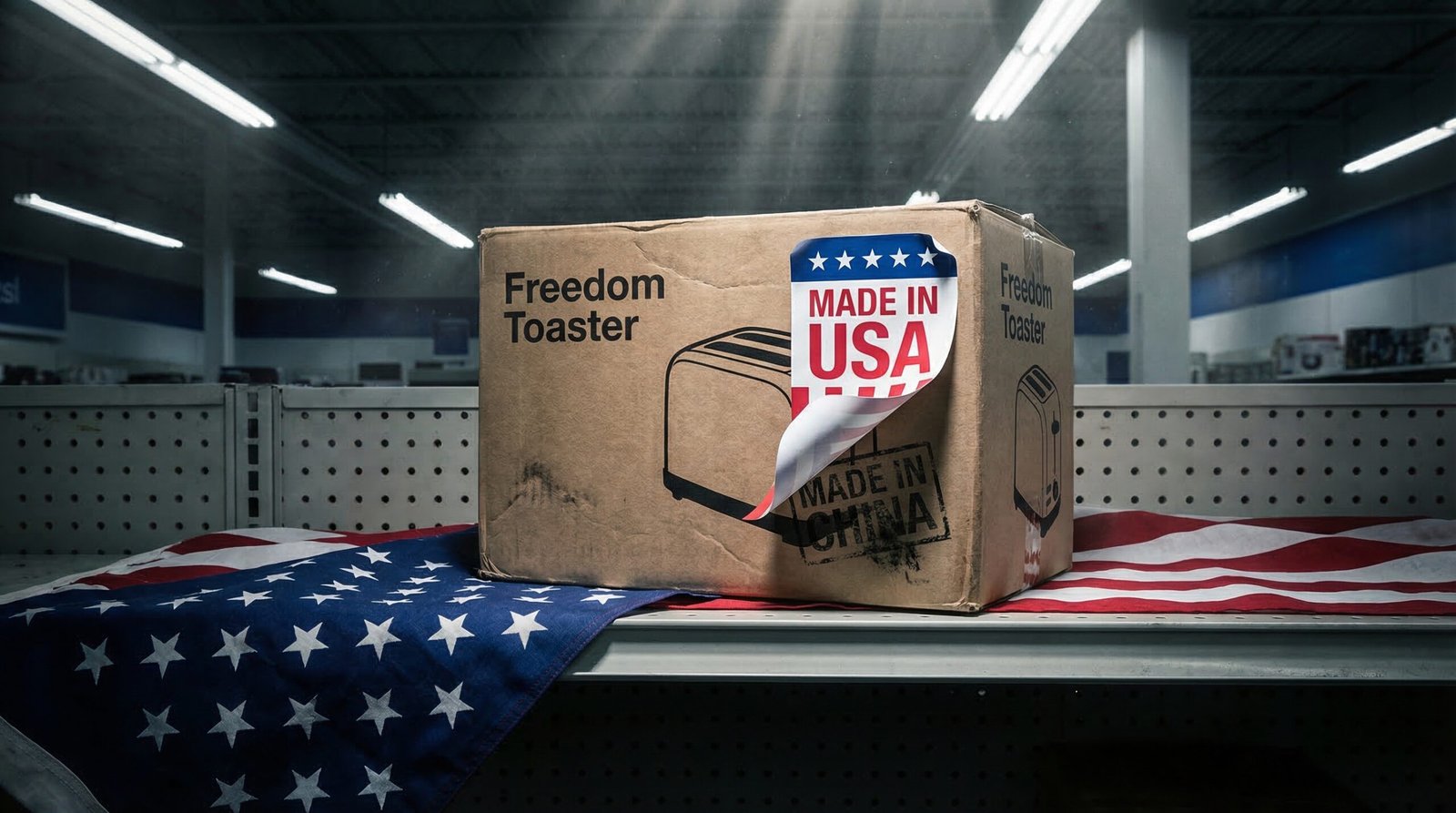
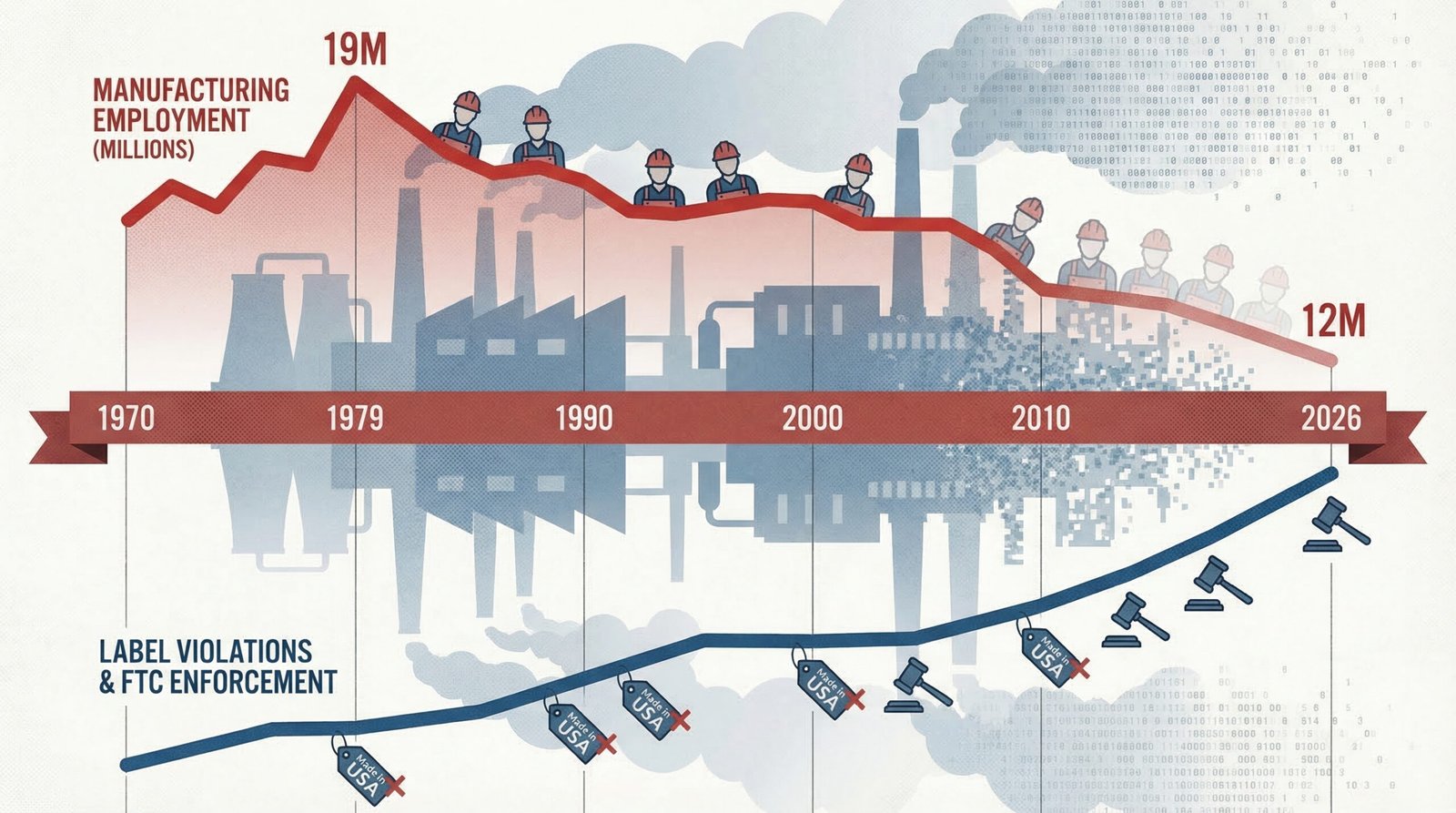
Made in USA labeling fraud is a documented, widespread, and systematically under-punished scam in which corporations slap an American flag on foreign-made goods, charge a patriotism premium, and pocket the difference. The Federal Trade Commission’s “all or virtually all” standard requires that a product’s final assembly, all significant processing, and all or virtually all components be domestic — but enforcement is so light that Williams-Sonoma violated an FTC order, got fined $3.175 million in 2024 (a “record”), and made far more than that selling fake-American products. Meanwhile, U.S. manufacturing employment has collapsed from 19 million workers in 1979 to roughly 12 million today — and the companies cashing in on patriotic marketing helped hollow it out.
Key Takeaways
- The FTC’s “all or virtually all” standard for Made in USA claims sounds strict — but enforcement is so weak that the same companies get caught repeatedly.
- Williams-Sonoma paid a record $3.175 million civil penalty in April 2024 — for violating a 2020 FTC order. It had already been caught once.
- Kubota North America paid $2 million in January 2024 for false Made in USA claims — its third FTC violation (prior violations in 1999 and 2019).
- Pyrex (Instant Brands) sold 110,000+ Chinese-made measuring cups as “Made in USA” — consumers got $88,000 total in refunds. That’s less than $9 per person.
- Class action lawsuits over fake American-made claims surged to 13 in the first half of 2025, up from 7 in H1 2024. Reynolds Wrap, Goya, PepsiCo, and McCormick are defendants.
- The FTC’s enforcement authority rests on consumer perception surveys from 1991 and 1995 involving only 400 respondents. The legal foundation is, charitably, creaky.
- American manufacturing employment: 19 million workers in 1979. Approximately 12 million today. “Made in USA” marketing boomed as the factories died.
What Does ‘Made in USA’ Actually Mean — Legally?
The FTC has enforced “Made in USA” claims for decades through Section 5 of the FTC Act, which prohibits deceptive advertising. In 2021, the agency finally codified this into a formal rule — the Made in USA Labeling Rule — which applies civil penalties to violations for the first time. Prior to 2021, the FTC could only issue cease-and-desist orders; now it can extract money.
The core legal standard is called “all or virtually all.” To make an unqualified “Made in USA” claim, a product must meet all three tests:
- Final assembly or processing occurs in the United States
- All significant processing takes place domestically
- All or virtually all ingredients and components are made and sourced in the U.S. — meaning negligible foreign content
If a product doesn’t fully qualify, companies can make qualified claims like “Made in USA of U.S. and imported parts” or “Assembled in USA.” These are legal — and corporations use them strategically, burying the qualifier in small print or dropping it entirely when no one’s looking.
The rule applies to consumer-facing labeling, advertising, and marketing. It does not apply to automobiles (governed by the American Automobile Labeling Act) or food products regulated by USDA. Defense and government contracts fall under the separate Buy American Act framework — which has its own, equally porous enforcement problems.
Here’s the catch nobody talks about: the FTC’s entire “all or virtually all” standard is built on decades-old consumer perception surveys from 1991 and 1995. Those surveys involved only 400 respondents across 2 product categories — and even the FTC’s own 2020 review acknowledged the evidence is outdated and inconsistent across industries. The legal foundation for the rule that’s supposed to protect you from being lied to is, in technical terms, held together with twine and a shared belief that courts won’t look too closely.
The Biggest Made in USA Fraud Cases: Williams-Sonoma, Kubota, Pyrex
The Made in USA labeling fraud hall of shame is a roster of household brands whose marketing departments apparently treated FTC fines as a cost of doing business — because for many of them, that’s exactly what they were.
Williams-Sonoma: $3.175 Million (April 2024) — A Record for Repeat Offending
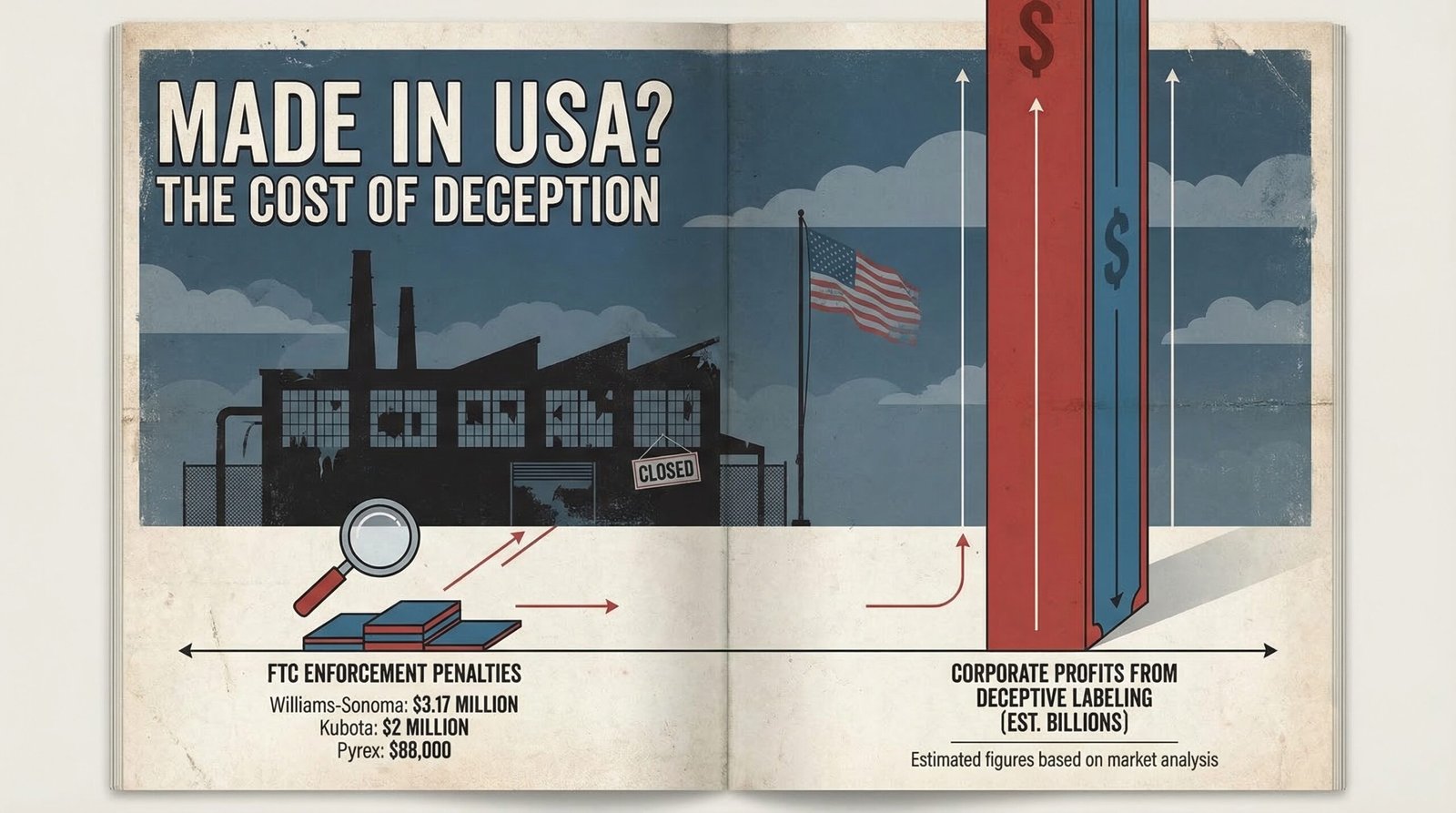
In April 2024, the FTC hit Williams-Sonoma with the largest civil penalty in Made in USA enforcement history: $3.175 million. The reason it’s a record isn’t the scale of the fraud — it’s that Williams-Sonoma had already been caught. In 2020, the company signed an FTC order agreeing to stop making false American-made claims. It then violated that order.
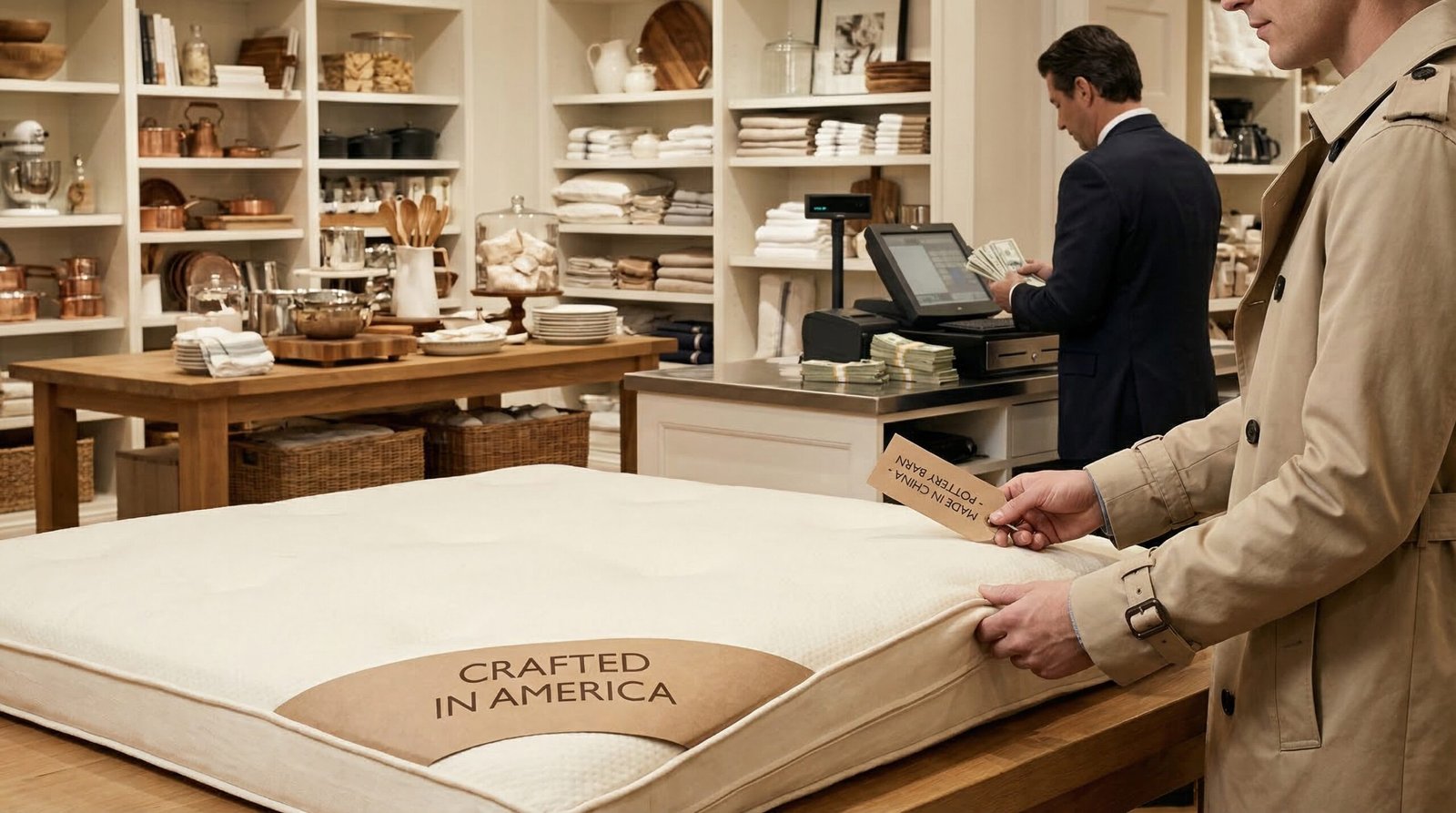
The specific violation: Williams-Sonoma marketed mattress pads as “Crafted in America from domestic and imported materials” when they were made in China. The FTC also found six additional products across Williams-Sonoma’s family of brands — including Pottery Barn and Rejuvenation — with deceptive American-origin claims. Williams-Sonoma’s annual revenue is approximately $7.7 billion. The $3.175 million fine is 0.04% of annual revenue.
Kubota North America: $2 Million (January 2024) — Third Strike
Tractor manufacturer Kubota North America paid a $2 million civil penalty in January 2024 for falsely labeling replacement parts as “Made in USA” when they were manufactured overseas. This was Kubota’s third FTC violation — with prior actions in 1999 and 2019. The company’s approach to regulatory compliance appears to be: sign the order, wait, do it again. Kubota’s parent company Kubota Corporation had 2024 revenues of approximately $20 billion. The $2 million fine is 0.01% of revenue.
Pyrex (Instant Brands): $88,000 in Consumer Refunds (2024)
Pyrex’s parent company, Instant Brands, sold over 110,000 Chinese-made glass measuring cup sets while marketing them as “Made in USA” and proudly citing the brand’s “Made in USA heritage.” The FTC finalized an order in January 2023. By October 2024, the FTC sent refund checks to 10,259 consumers — totaling $88,000. Average consumer refund: approximately $8.57. Notably, Instant Brands filed for bankruptcy in 2023. The fraud was more profitable than the company.
Other recent defendants: Bates Accessories ($191,481 penalty in 2023 for false clothing claims), Reynolds Wrap (class actions challenging its “Foil Made in USA” claims when nearly all bauxite is sourced outside the U.S.), Goya Foods, PepsiCo, and McCormick & Company (lawsuits over deceptive “Made in USA” marketing with foreign-sourced ingredients). The list is not shrinking.
The Loopholes Corporations Exploit to Fake American-Made
The “all or virtually all” standard sounds airtight. In practice, it has more holes than a Wisconsin cheese factory. Here’s how corporations exploit the system:
1. The “Assembled in USA” Dodge
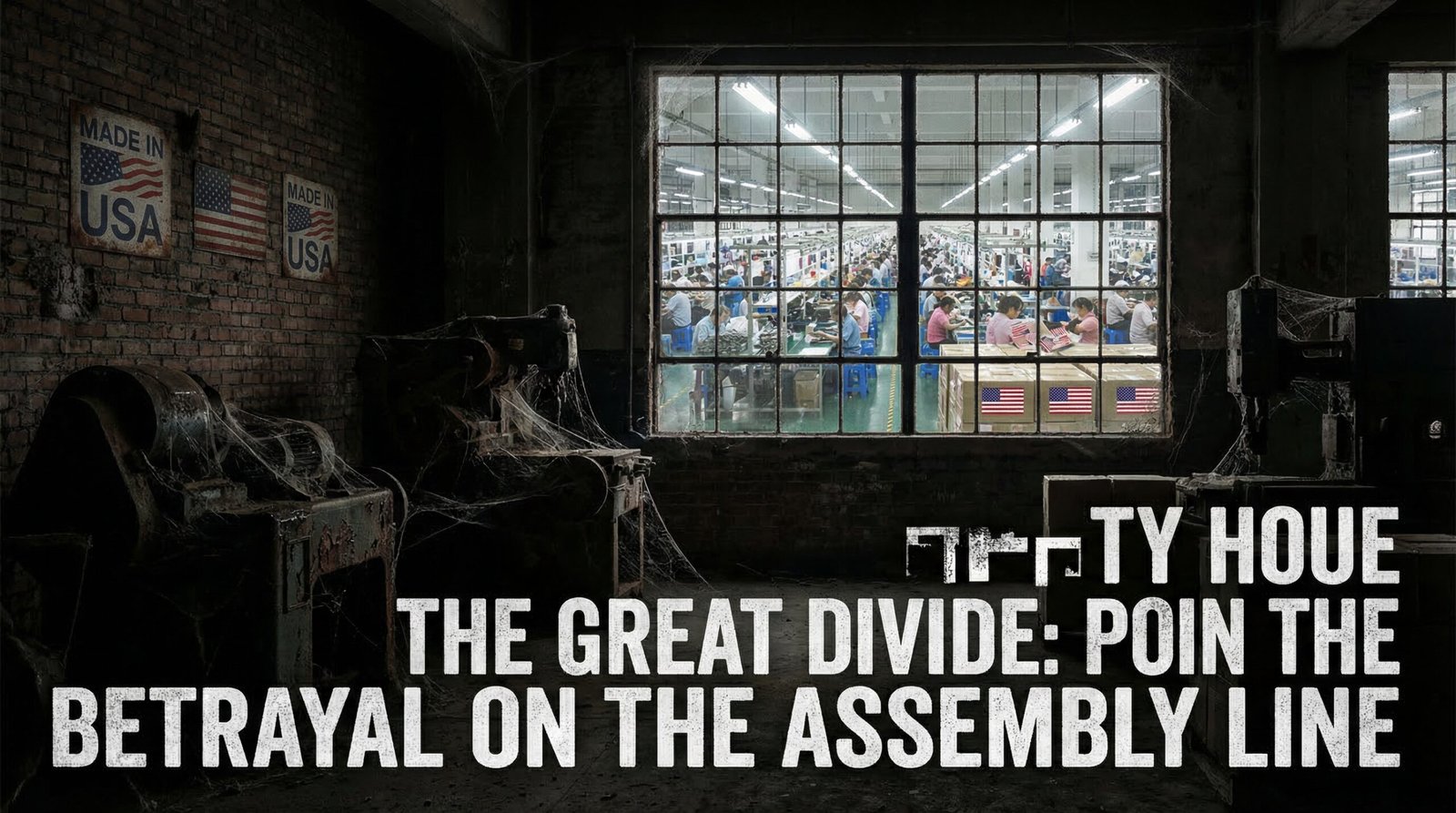
A company can legally say “Assembled in USA” even if every single component was manufactured in China, Vietnam, or Bangladesh — as long as the final screwing-together happened in a domestic facility. Some companies use this label with one domestic employee, a table, and a box of screws. The visual effect for a consumer is indistinguishable from a product actually made here. The jobs that left under PNTR — 3 million of them — are not coming back because someone assembled the pieces in New Jersey.
2. Patriotic Imagery Without Explicit Claims
Some courts — notably the Tenth Circuit — have ruled that patriotic symbols (American flags, bald eagles, red-white-and-blue packaging) are too “ambiguous” to constitute literally false claims under the Lanham Act. This creates a safe harbor for companies that want to imply American-made without technically claiming it. The consumer sees the flag. The corporate lawyers see plausible deniability.
3. Online Marketplace Invisibility
In July 2025, the FTC sent warning letters to Amazon and Walmart, citing concerns about deceptive “Made in USA” claims made by third-party sellers on their platforms. The FTC urged both companies to take “corrective action.” Amazon and Walmart host millions of third-party listings — the FTC cannot individually review them all, and the platforms had no legal obligation to police claims made by their merchants. The 2025 letters were a warning, not an enforcement action.
4. The “Heritage” Gambit
Pyrex’s approach — touting the brand’s “Made in USA heritage” while selling Chinese-made products — illustrates a softer version of the fraud. The brand was once genuinely American-made; the company uses that history as a marketing asset while the manufacturing has moved overseas. It’s technically not a false claim about current production. It’s a false implication — and it works.
The FTC’s July 2025 batch of warning letters to four companies — following its designation of July as “Made in the USA Month” — demonstrated the agency’s ongoing awareness of the problem. It also demonstrated that awareness and enforcement are not the same thing.

Why the Fines Are a Joke
Let’s do the math that the FTC press releases omit.
Williams-Sonoma’s “record” $3.175 million fine represents approximately 0.04% of annual revenue. If you made $50,000 a year and got caught defrauding customers, the equivalent fine would be $20. The “record” fine is record-setting only because previous penalties were even smaller — making it the tallest of very short people.
Kubota’s $2 million fine — its third violation in 25 years — is 0.01% of its parent company’s annual revenue. Three violations. Three fines. The math clearly does not deter.
The structural problem is that the FTC’s civil penalty cap under the Made in USA Labeling Rule is tied to a per-violation formula that was set without accounting for the scale of modern corporate revenues. A company that sells millions of falsely labeled units doesn’t face a fine proportional to its fraud — it faces a flat fine that was likely priced into the marketing budget.
Meanwhile, the consumers defrauded by Pyrex got $8.57 each. That’s not restitution — that’s a rounding error with a postage stamp. The FTC’s companion consumer protection agency, the CFPB, was simultaneously being gutted in 2025-2026, removing the one other federal body with meaningful authority to pursue corporate consumer fraud at scale.
The class action surge — 13 lawsuits in the first half of 2025, up from 7 in H1 2024 — reflects private litigants filling the enforcement gap the FTC leaves open. Reynolds Wrap, Goya, PepsiCo, McCormick — these cases move through courts slowly and settle quietly. The deterrent effect is marginal. The brand equity effect of the “Made in USA” claim continues to justify the risk.
The Buy American Act: How the Federal Government Gets Defrauded Too
The Buy American Act (BAA) of 1933 requires the federal government to prefer domestic goods in its procurement — products where at least 60% of the cost of components is domestic (raised to 75% under Biden-era rules). The intent: when taxpayer dollars buy something, they should buy American-made things built by American workers.
The reality: government contractors routinely defraud this system, substituting foreign-made components for domestic ones while certifying BAA compliance to collect federal contracts. The False Claims Act (FCA) allows whistleblowers to sue on the government’s behalf and collect a portion of recovered funds. The Department of Justice recovered a record $6.8 billion in False Claims Act settlements in fiscal year 2025 — a significant portion involving Buy American Act violations.
A December 2025 case: DOJ announced a $54.4 million settlement with Ceratizit USA, LLC — a distributor of cutting tools — for falsely certifying that its products met Buy American requirements when they were manufactured in Austria and China. The company had been billing the U.S. government for years under fraudulent domestic origin certifications.
This is not a niche problem. Government contracts for defense, infrastructure, and general services regularly involve components sourced in ways that violate BAA requirements — often because supply chains are opaque enough that prime contractors don’t know (or claim not to know) the actual country of origin for subcomponents. The infrastructure spending Congress authorized in recent years carried Buy American requirements — but enforcement of those requirements depends on contractors self-certifying compliance, audited by agencies that lack the resources to verify.
The irony: every politician who has ever stood at a ribbon-cutting ceremony for a “Made in America” infrastructure project has signed off on procurement systems that routinely produce false documentation about where the steel, the components, and the materials actually came from.
The Counter-Argument: Enforcement Is Actually Getting Stronger
The honest counterpoint: the 2021 Made in USA Labeling Rule was a genuine improvement. Prior to it, the FTC could only issue cease-and-desist orders — no monetary penalties. The rule created, for the first time, a civil penalty mechanism. The Williams-Sonoma $3.175 million fine, however small relative to revenue, was actually impossible before 2021.
Class action litigation is also accelerating. The surge to 13 lawsuits in H1 2025 from 7 in H1 2024 — targeting Reynolds Wrap, PepsiCo, McCormick, and others — creates real legal cost and brand risk that goes beyond FTC fines. Private litigation doesn’t require a commission vote or a constrained enforcement budget.
California has enacted its own state-level Made in USA law that is more aggressive than the federal standard — requiring that a product be “made, manufactured, or produced” in California with U.S. components to carry an unqualified state-level claim. Mintz law noted in December 2025 that California and FTC enforcement are compounding, not duplicating, creating additional liability exposure for companies operating in both frameworks.
Where the counter-argument breaks down: “Getting stronger” is relative to a baseline of almost nothing. The FTC’s legal foundation — based on surveys from 1991 and 1995, with 400 respondents — has never been properly updated. A resourced corporate legal team can challenge the FTC’s evidentiary basis, and at least one federal circuit has shown willingness to narrow the rule’s reach via the “ambiguous imagery” carve-out. Meanwhile, tariff rhetoric from both parties has created strong commercial incentives to claim American-made status that far outpace the enforcement resources to police it. In an environment where “Made in USA” commands a premium, the fraud is more profitable than ever — and the penalty structure hasn’t kept up.
FAQ: Made in USA Labeling Fraud
What does “Made in USA” legally require?
Under FTC rules, an unqualified “Made in USA” claim requires that a product be “all or virtually all” made in the United States — meaning final assembly, all significant processing, and all or virtually all components must be domestic. “Assembled in USA” is a weaker qualified claim that permits foreign components. The FTC’s Made in USA Labeling Rule (2021) now allows civil penalties for violations.
What was the largest Made in USA fraud fine ever?
As of 2024, the largest civil penalty under the FTC’s Made in USA Labeling Rule is $3.175 million, paid by Williams-Sonoma in April 2024 — for violating a 2020 FTC order. Williams-Sonoma had previously agreed to stop making false American-origin claims; it violated that agreement. The company’s annual revenue is approximately $7.7 billion.
How do I know if a product is actually made in the USA?
Look for the qualified claim version: “Made in USA of U.S. and imported parts” is legally required if the product doesn’t fully qualify. Avoid relying on patriotic imagery alone — courts have ruled that flags and eagles are too “ambiguous” to constitute an explicit origin claim. For electronics and complex products, full domestic manufacturing is rare; “assembled in USA” with foreign components is far more common than pure domestic production.
What is the Buy American Act and how is it enforced?
The Buy American Act (1933) requires the federal government to prefer domestically-made goods in procurement. The threshold has been raised to 75% domestic component cost under recent rules. Enforcement relies primarily on contractor self-certification and False Claims Act whistleblower lawsuits. The DOJ recovered a record $6.8 billion in False Claims Act settlements in fiscal year 2025, including significant Buy American Act fraud cases.
How many American manufacturing jobs have been lost since 1979?
U.S. manufacturing employment peaked at approximately 19.4 million workers in June 1979. By 2026, it stands at roughly 12 million — a loss of more than 7 million jobs over four decades. The decline accelerated sharply after China’s PNTR status in 2000, which the site has documented eliminated approximately 3 million manufacturing jobs. The companies now selling “Made in USA” branded goods largely offshored the production that created those jobs.
Sources & Methodology
Primary sources: FTC Williams-Sonoma $3.175M civil penalty announcement (April 2024); FTC Kubota $2M penalty announcement (January 2024); FTC Pyrex consumer refund announcement (October 2024); FTC Made in USA Labeling Rule (2021); FTC enforcement policy statement on U.S. origin claims; Rain Intelligence class action surge analysis (2025); Reuters FTC Amazon/Walmart warning letters (July 2025); DOJ False Claims Act record $6.8 billion recovery announcement (January 2026); Bureau of Labor Statistics manufacturing employment historical data; FTC business guidance “Complying with the Made in USA Standard.” Legal analysis of FTC enforcement authority limitations from Competition on the Merits (Substack). California state Made in USA law analysis from Mintz LLP (December 2025) and DLA Piper (January 2026).