PFAS forever chemicals are in the tap water of at least 151 million Americans, and 97% of the US population already has these synthetic compounds in their blood — thanks to decades of corporate manufacturing and military use with zero accountability. The contamination was caused almost entirely by decisions made and covered up by corporations and federal agencies run by Boomers, and the cleanup bill — estimated in the trillions — will be paid by Millennials and Gen Z through higher water rates, taxes, and out-of-pocket filtration costs. Your crumbling infrastructure didn’t just neglect roads — it poisoned the water supply and handed the cleanup to the next generation.
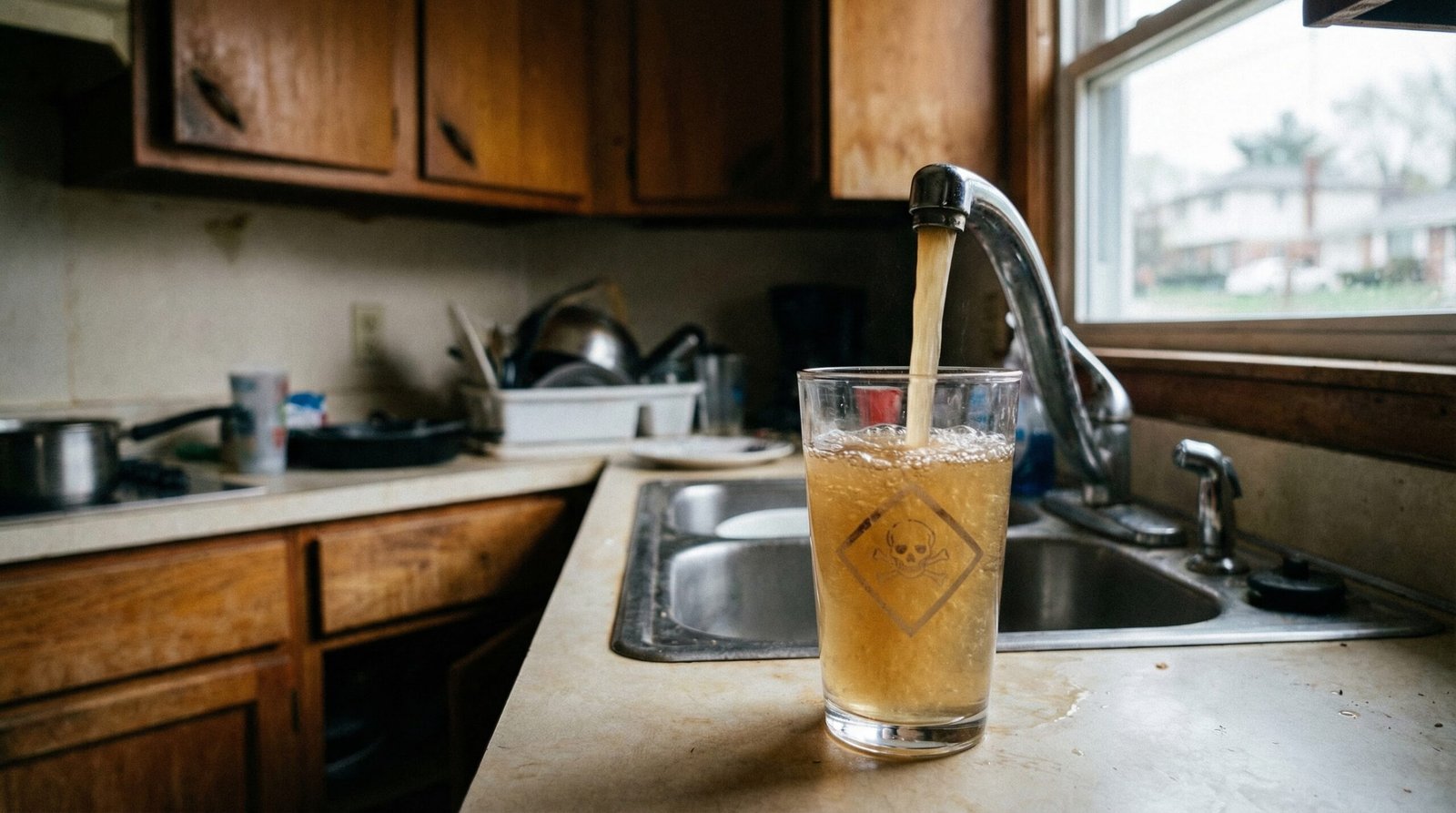
Key Takeaways: 151 million Americans served by water systems with detectable PFAS. 52 million (1 in 7) served by systems exceeding EPA limits. 97% of Americans have PFAS in their blood. EPA set the first-ever PFAS drinking water limits in April 2024 — but compliance isn’t required until 2031. Cleanup costs are estimated in the trillions. 3M settled for $10.3–$12.5 billion; DuPont/Chemours settled for $1 billion+. Low-income and communities of color face disproportionate exposure. A home reverse-osmosis filter costs ~$500 — a luxury that the contaminating corporations and regulators who let this happen will never pay for.
What Are PFAS Forever Chemicals — and Why Are They in Your Tap?
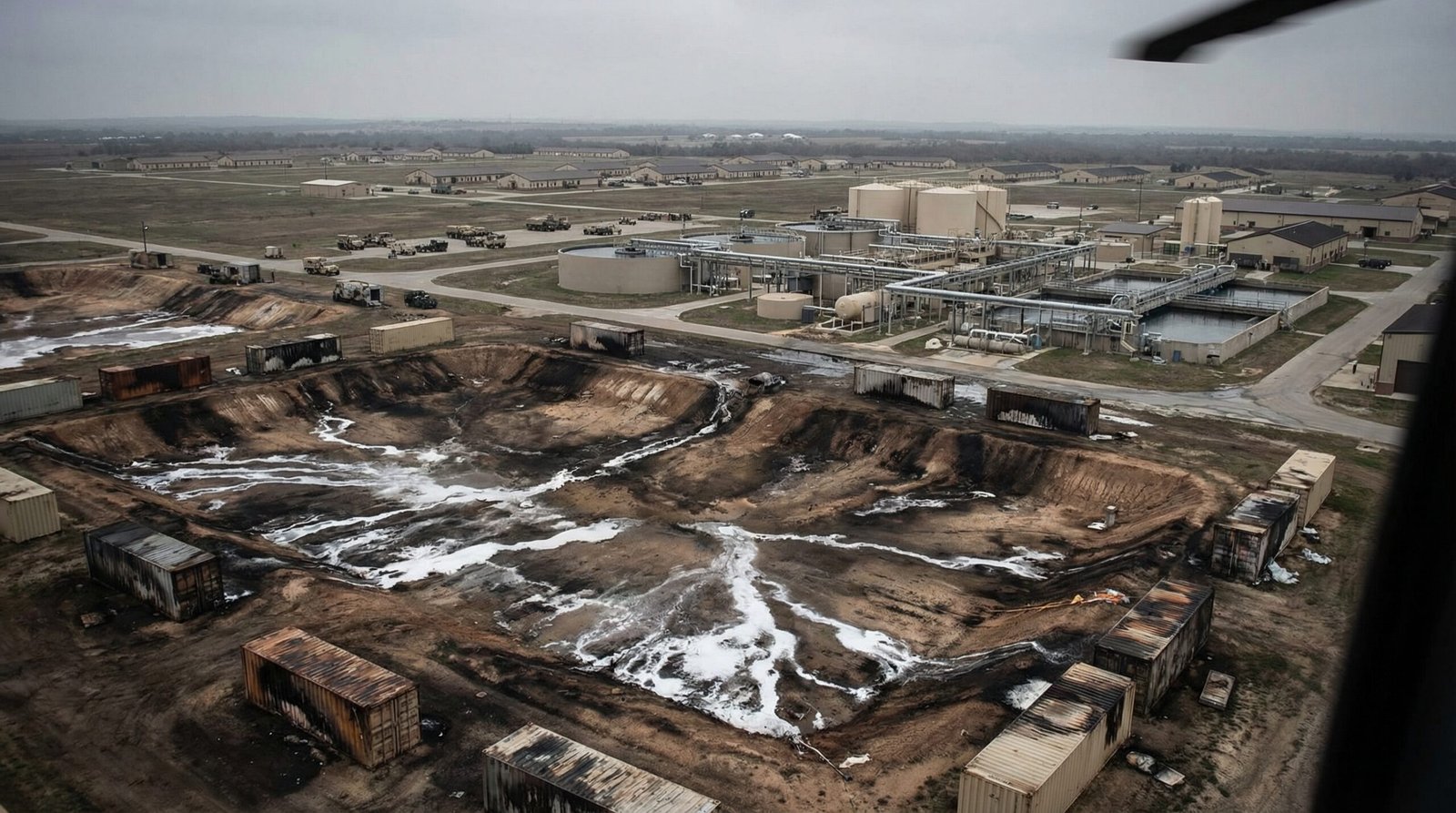
PFAS — per- and polyfluoroalkyl substances — is a family of more than 12,000 synthetic chemicals that have been used since the 1940s in everything from non-stick cookware and food packaging to firefighting foam and waterproof clothing. The reason they’re called “forever chemicals” is not marketing — it’s chemistry. The carbon-fluorine bond in PFAS is one of the strongest in organic chemistry. These compounds do not break down in the environment, in water, or in the human body. They accumulate.
They ended up in drinking water primarily through two pathways: industrial manufacturing sites that discharged PFAS into waterways for decades, and military bases where AFFF (aqueous film-forming foam) — a PFAS-saturated firefighting product — was used in training exercises and sprayed directly onto soil and into groundwater for 50+ years. The infrastructure that was supposed to protect American water supplies had no PFAS regulations at all until 2024.
The health effects are not theoretical. PFAS exposure is linked to kidney and testicular cancer, thyroid disease, immune suppression, elevated cholesterol, high blood pressure during pregnancy, low birth weight, preterm birth, and reduced effectiveness of childhood vaccines. A February 2026 EWG study found that prenatal PFAS exposure is even more dangerous than previously understood, with effects on fetal immune system development appearing at concentrations well below what regulators previously considered safe. The EPA’s own health-based goal for PFOA and PFOS is zero — meaning there is no level of exposure without health risk.
As of February 2026, EPA data shows over 1,050 water systems reporting average PFAS levels above the new limits, with more than 100 new violations added since November 2025 alone. The contamination is not stable — it’s spreading, as PFAS continues to migrate through groundwater from existing contamination sites. Privatized water systems have even less incentive to invest in filtration than public utilities.
The Military Made This Mess — and Won’t Clean It Up
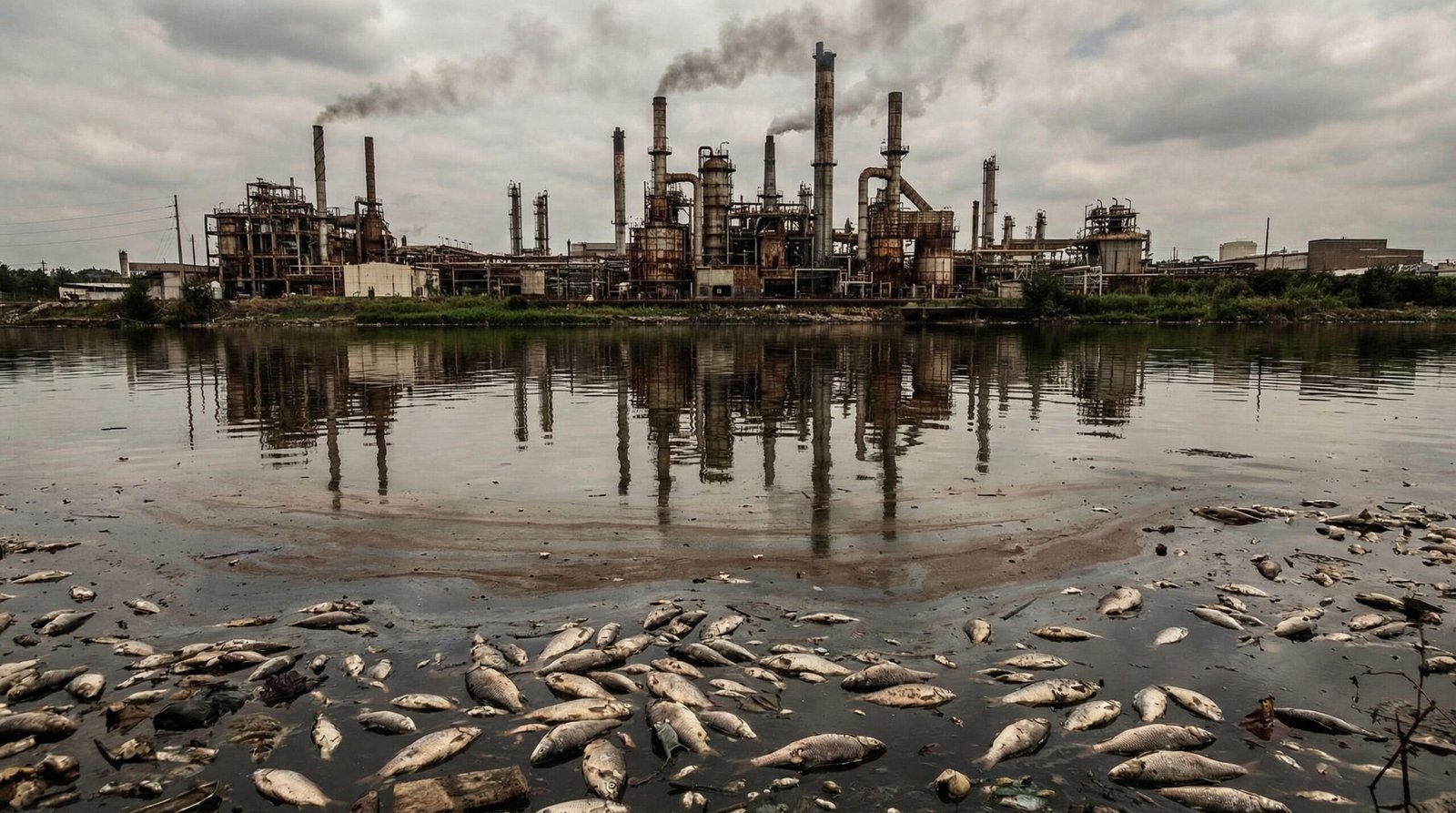
AFFF firefighting foam — which contains massive concentrations of PFAS — was used at more than 80% of active and decommissioned US military bases. The Pentagon knew for decades that AFFF was contaminating groundwater near bases. It didn’t matter. Training exercises continued. Foam was sprayed. And the contamination spread into the drinking water of communities living near virtually every major US military installation.
The Pentagon now estimates it will cost $7 billion per year to clean up PFAS at military sites — with the process taking decades. In September 2025, the Defense Department formally delayed its cleanup timeline, citing cost and complexity. There is no firm completion date. The New York Times reported that the Pentagon’s own internal assessments describe the scope as effectively open-ended.
Meanwhile, Congress has been actively expanding PFAS contamination risk at military sites. An EWG analysis in December 2025 found that a defense authorization provision opened the door to more PFAS contamination by rolling back restrictions on AFFF alternatives. The military gets a new war budget every year. The communities drinking the water it contaminated get a promise that cleanup will happen — eventually. The same pattern of externalizing military costs onto future generations and working-class communities applies here too.
There’s also a veterans angle that’s received almost no attention. HR 3639 — the VET PFAS Act — was introduced in the 119th Congress to provide VA eligibility for veterans exposed to PFAS on military bases. It hasn’t passed. The same government that used PFAS foam at VA-defunded veterans’ expense is now also cutting the healthcare system those veterans would need to treat PFAS-related cancers.
3M and DuPont Knew for Decades — Then Lobbied to Delay the Reckoning

Internal documents obtained in litigation show that both 3M and DuPont knew about PFAS toxicity as far back as the 1960s. 3M’s own researchers found PFOS accumulating in the blood of workers and in wildlife. DuPont’s internal studies from the 1980s showed that PFOA caused cancer in lab animals. Both companies suppressed the findings, continued manufacturing, and lobbied to prevent regulation for decades. This is not a conspiracy theory — it’s the documented factual record from the lawsuits that eventually extracted billions in settlements.
The tab so far: 3M settled for $10.3–$12.5 billion (payable over 13 years) with public water systems. DuPont, Chemours, and Corteva settled for $875 million over 25 years with New Jersey alone, plus a remediation fund of up to $1.2 billion. A separate Hoosick Falls, NY settlement with DuPont added $27 million, bringing that case’s total recovery to $92 million. These sound like massive numbers — and they are — but they cover only a fraction of the actual contamination. The same financialized logic that let banks externalize risk applies: corporations captured decades of profit from PFAS products, then negotiated settlements that represent a small fraction of actual damage costs.
Congress also quietly passed H.R. 1267 — the Water Systems PFAS Liability Protection Act — in the 119th Congress, which provides liability protection to water utilities (not manufacturers) that don’t meet PFAS limits. The revolving door between the chemical industry and federal regulators is well-documented: EPA’s PFAS office has cycled through industry lawyers and lobbyists for decades, which explains how a known carcinogen stayed unregulated in drinking water until 2024.
Who Gets Poisoned First? The Racial and Economic Disparity
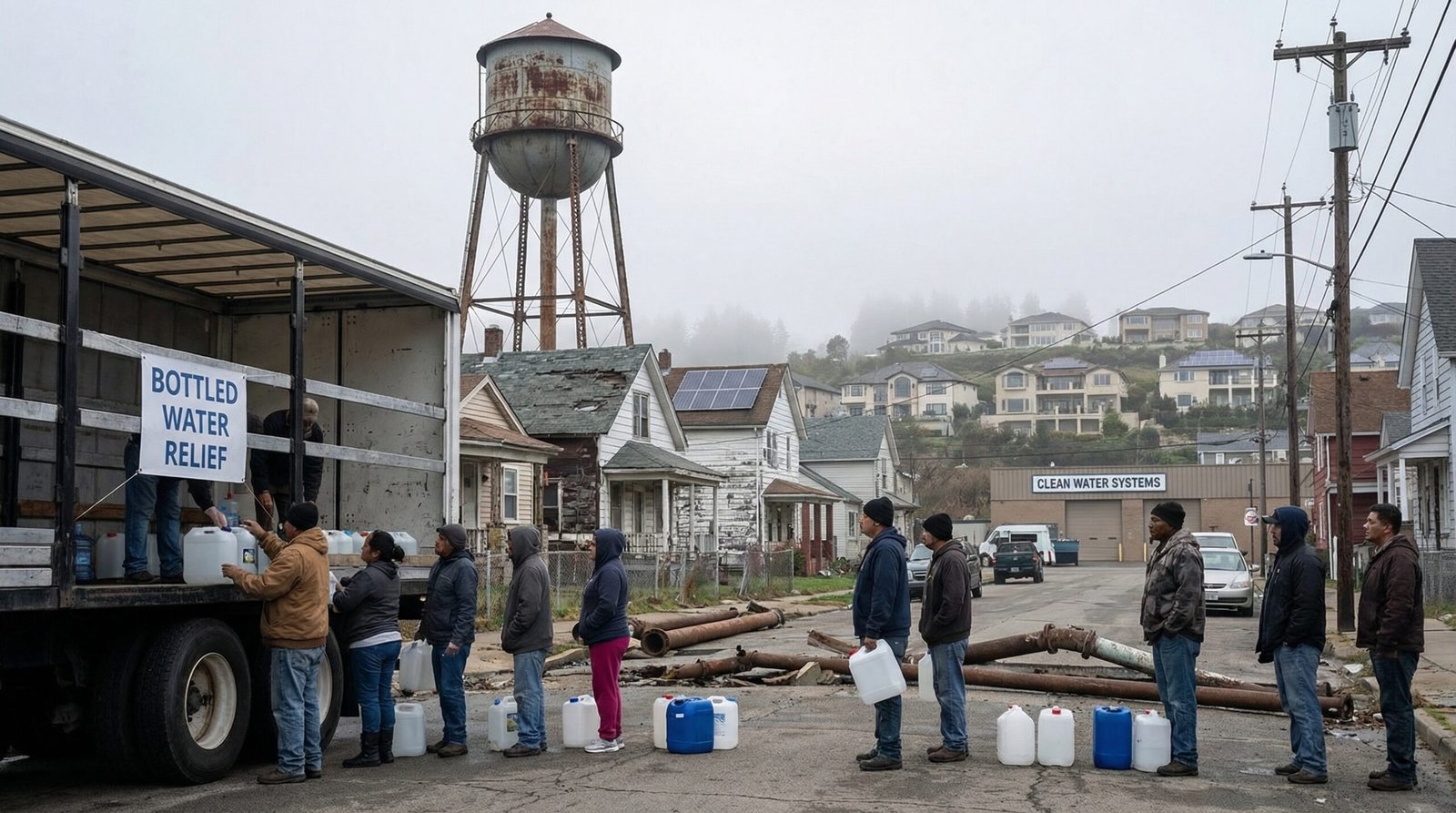
PFAS contamination is not distributed randomly. A Harvard T.H. Chan School of Public Health study found that communities of color face disproportionately high PFAS exposure in drinking water, with Black and Hispanic communities significantly overrepresented among those served by the most contaminated systems. A separate peer-reviewed study found that water systems serving higher proportions of residents below the federal poverty line consistently show higher PFAS levels.
The disparity compounds downstream. The household-level solution to PFAS contamination — a reverse osmosis under-sink filter — costs approximately $500 upfront plus $50–$100 annually for maintenance. A whole-house filtration system costs several thousand dollars. For families already stretched by rent burdens, medical debt, and stagnant wages, that’s not a purchase — it’s an impossible ask. Affluent households in contaminated areas install filters. Low-income households keep drinking the water.
The health consequences track income with grim precision. PFAS-linked conditions — thyroid disease, kidney cancer, elevated cholesterol, pregnancy complications — are all more prevalent in lower-income communities already bearing higher baseline health burdens. Early-life exposure is particularly concerning: a February 2026 EWG analysis found that babies are exposed to significantly more PFAS than previously understood, with maternal transfer during pregnancy and breastfeeding delivering concentrated doses to the most vulnerable developing systems.
The EPA Rule That Might Save You — If It Survives

In April 2024, the EPA finalized the first-ever National Primary Drinking Water Regulation for PFAS — setting maximum contaminant levels (MCLs) for six PFAS chemicals. The limits are stringent: 4 parts per trillion for PFOA and PFOS — the most common and most studied — which is the equivalent of four drops in a billion liters of water. The EPA explicitly set health-based goals of zero for both, acknowledging no safe level of exposure exists.
The rule sounds decisive. The timeline is less so. Public water systems must start monitoring immediately but don’t have to comply until 2031. They must notify the public of violations starting in 2029. That’s five more years of drinking PFAS-contaminated water for the 52 million Americans currently served by systems exceeding limits — with no legal recourse against the utility until the grace period expires.
In May 2025, the EPA announced it would keep the PFOA and PFOS limits but was reviewing the rules for other PFAS chemicals, with a proposed revision due fall 2025 and finalization in spring 2026. The chemical industry and water utilities have both challenged aspects of the rule in federal court, arguing the limits are technically infeasible and prohibitively expensive for smaller systems. The same regulatory capture dynamic that gutted the CFPB is being applied here: industry argues that protecting consumers is too expensive, while the cost of not protecting them — in cancer, reproductive harm, and developmental damage — doesn’t appear in any balance sheet.
New Jersey enacted a comprehensive PFAS ban (S 1042) in January 2026. That’s one state. Forty-nine states remain without comprehensive bans, and the federal legislative picture on PFAS is cluttered with half-measures: the PFAS Research and Development Reauthorization Act of 2025 funds research but doesn’t mandate cleanup. The same Congress that can’t find the political will to regulate monopoly broadband pricing can’t find the will to mandate that corporations clean up a known carcinogen they deliberately put in the water supply.
What Can You Actually Do About PFAS in Your Water?
First: check your water system. The EPA’s PFAS lookup tool and EWG’s interactive contamination map let you search by zip code. If your system has reported PFAS above limits — or even close to them — here are the options that actually work:
- Reverse osmosis (RO) filter: The gold standard. Under-sink RO systems remove 90%+ of PFAS. Cost: ~$150–$500 for the unit, $50–$100/year in filter replacements. Pitcher-style carbon filters (like Brita) do NOT effectively remove PFAS — don’t rely on them.
- Activated carbon whole-house filters: More expensive ($1,000–$3,000+) but treat all water in the home. Most effective with granular activated carbon or activated carbon block.
- Bottled water: Works but costs $1,200–$2,000+ per year per household and creates enormous plastic waste. Not a long-term solution.
- Check your utility’s PFAS testing results: Under the 2024 rule, all public water systems serving 10,000+ people must test and report. Smaller systems have less stringent requirements — if you’re on a small system near a military base or industrial site, assume contamination until proven otherwise.
The infuriating reality: you shouldn’t have to pay $500 for a filter to safely drink your tap water. The corporations that contaminated the water collected decades of profit. The regulators who let it happen are largely retired on the same pension system that younger taxpayers are now being asked to bail out. The Superfund program — theoretically designed to force polluters to pay for cleanup — has a multi-decade backlog and a funding mechanism that was gutted in 1995 when Congress let the chemical industry’s Superfund tax expire.
FAQ
What are PFAS forever chemicals?
PFAS (per- and polyfluoroalkyl substances) are a family of 12,000+ synthetic chemicals used in non-stick cookware, food packaging, waterproof clothing, and firefighting foam since the 1940s. They are called “forever chemicals” because they don’t break down in the environment or the human body. They have been linked to cancer, thyroid disease, immune suppression, and reproductive harm.
How many Americans have PFAS in their drinking water?
EPA data from February 2026 shows at least 151 million Americans are served by water systems with detectable PFAS. Over 52 million — 1 in 7 Americans — are served by systems where PFAS levels exceed the new EPA limits set in April 2024. 97% of Americans already have PFAS in their blood.
What water filter removes PFAS?
Reverse osmosis (RO) filters are the most effective home solution, removing 90%+ of PFAS. Under-sink RO systems cost approximately $150–$500. Standard pitcher filters like Brita do NOT effectively remove PFAS. Activated carbon block filters offer partial removal and are most effective as a secondary stage in a multi-filter system.
Who is responsible for PFAS contamination in drinking water?
3M and DuPont are the primary corporate defendants — both companies have internal documents showing knowledge of PFAS toxicity dating back to the 1960s. The US military is responsible for contamination at 80%+ of active and decommissioned bases. Federal regulators failed to act for decades despite available evidence, in part due to chemical industry lobbying and revolving-door employment relationships with the EPA.
Sources & Methodology
USA Today / EPA Data — Are PFAS forever chemicals in your drinking water? (Feb 2026)
EPA — PFAS National Primary Drinking Water Regulation (April 2024 / May 2025 update)
New York Times — Defense Department Delays PFAS Cleanup (Sept 2025)
Harvard T.H. Chan School of Public Health — Communities of Color and PFAS Disparities
EWG — PFAS Contamination Crisis Interactive Map
EWG — New Science on Infant PFAS Exposure (Feb 2026)
3M — $10.3–$12.5 Billion PFAS Settlement Press Release
The Guardian — DuPont/Chemours/Corteva $875M NJ Settlement (Aug 2025)
University of New Hampshire — Home PFAS Filtration Cost Effectiveness Study
EWG PFAS Contamination Map — 9,728 known contaminated sites (2026 update)