

Rent control myths have dominated housing policy debates for decades, consistently deployed by real estate industry lobbying groups to block tenant protections in city after city. The reality is more complicated: peer-reviewed evidence on rent control shows genuine benefits for housing stability and displacement prevention, alongside real supply-side tradeoffs — but the loudest voices in this debate are funded by the same landlord associations that profit when rents go up 20% a year and tenants have no recourse. Here is what the data actually shows.
Key Takeaways: (1) Rent control reduces displacement and housing instability for protected tenants — the evidence is strong. (2) The supply-side argument has merit in some forms but is overstated and misapplied to modern stabilization laws. (3) 37 states have laws preempting local rent control — most passed after intensive real estate industry lobbying. (4) Modern rent stabilization with vacancy decontrol and new-construction exemptions addresses most classic supply concerns. (5) With median rent at $1,987/month and wages flat, this is a generational survival question, not an academic debate.
What Is Rent Control? The Basics the Debate Skips Over
First: almost no city uses rent control as economists originally studied it. New York’s World War II-era hard rent freeze — the model most economists critique — hasn’t been the dominant form of tenant protection in decades. What most cities use in 2026 is rent stabilization: policies that allow annual rent increases tied to inflation, exempt new construction to preserve building incentives, and allow landlords to pass through capital improvement costs. The conflation of 1940s hard rent freezes with modern rent stabilization is one of the most persistent rent control myths in the policy debate.
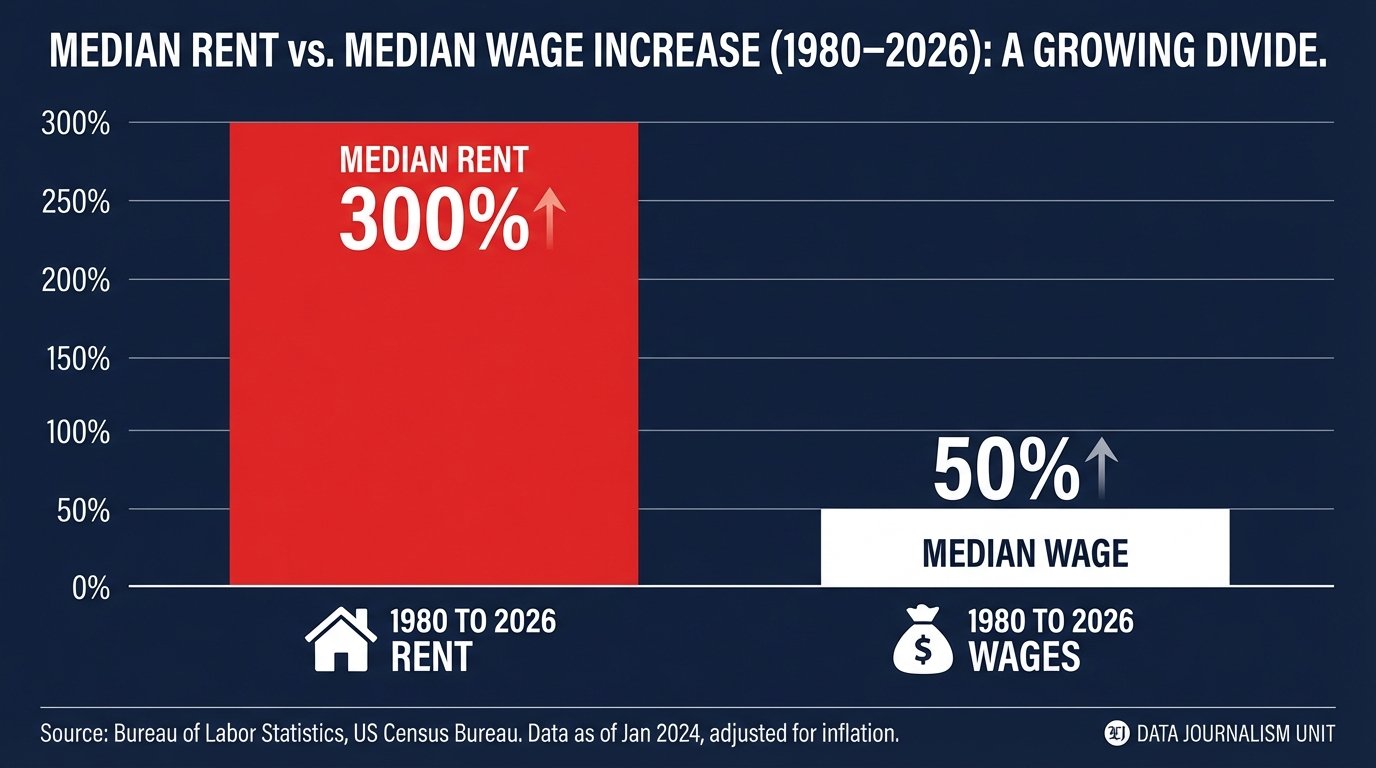
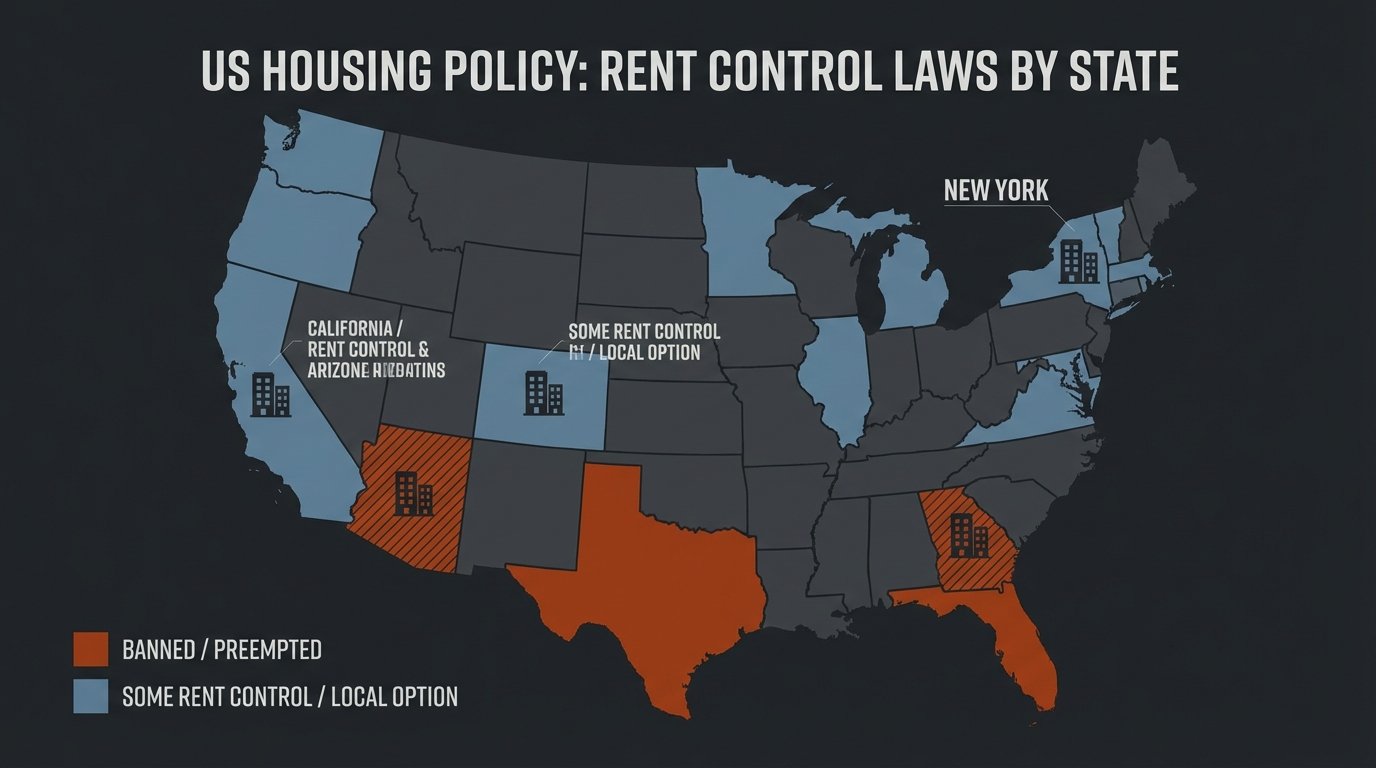
Cities with active rent stabilization in 2026 include New York, San Francisco, Los Angeles, Oakland, Washington D.C., and Portland, Oregon — protecting roughly 8 million rental units nationwide. Meanwhile, 37 states have explicitly preempted local rent control, meaning cities cannot pass any rent regulation regardless of how severe their housing crisis becomes. This is the structural context: in most of America, the policy option does not legally exist. That’s not an accident. The backdrop: median U.S. asking rent hit $1,987/month in Q4 2025 per Zillow — a 26% increase from 2020. Real wages for the bottom 50% grew 8% over the same period. This is what the rent burden crisis looks like in numbers.
Myth 1: Rent Control Causes Landlords to Let Buildings Deteriorate
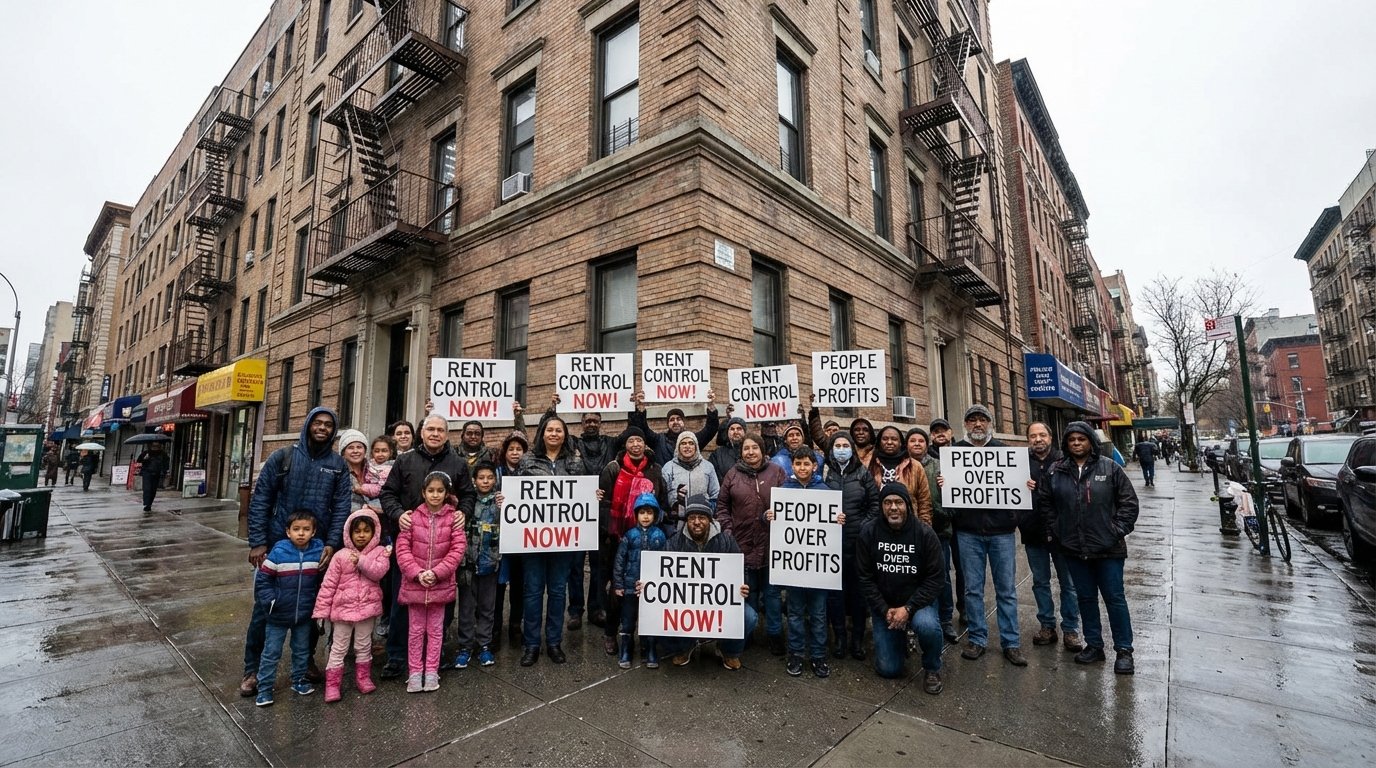
This is the most commonly cited anti-rent control argument, and it has some historical basis — in cities with extremely strict rent freezes that prohibited landlords from recovering maintenance costs. But modern rent stabilization includes explicit provisions for capital improvement passthroughs, meaning landlords can apply for rent increases to cover documented major repairs. In New York, the Rent Guidelines Board evaluates operating cost increases annually and adjusts allowable increases accordingly.
The evidence on building quality under modern rent stabilization is mixed but not damning. The 2019 Stanford study by Diamond, McQuade, and Qian found San Francisco landlords subject to rent control converted units to condos at higher rates — a supply effect — but found no significant evidence of systematically worse building quality in rent-stabilized units. The building deterioration narrative is largely a legacy of 1970s New York under strict freezes that predate modern stabilization design entirely.
“The argument that landlords will stop maintaining buildings under rent stabilization ignores that modern laws include capital improvement passthroughs, hardship exemptions, and building code enforcement. The horror stories are 50-year-old data applied to 2026 policy.” — National Housing Law Project, 2024
Myth 2: Rent Control Makes Housing Shortages Worse
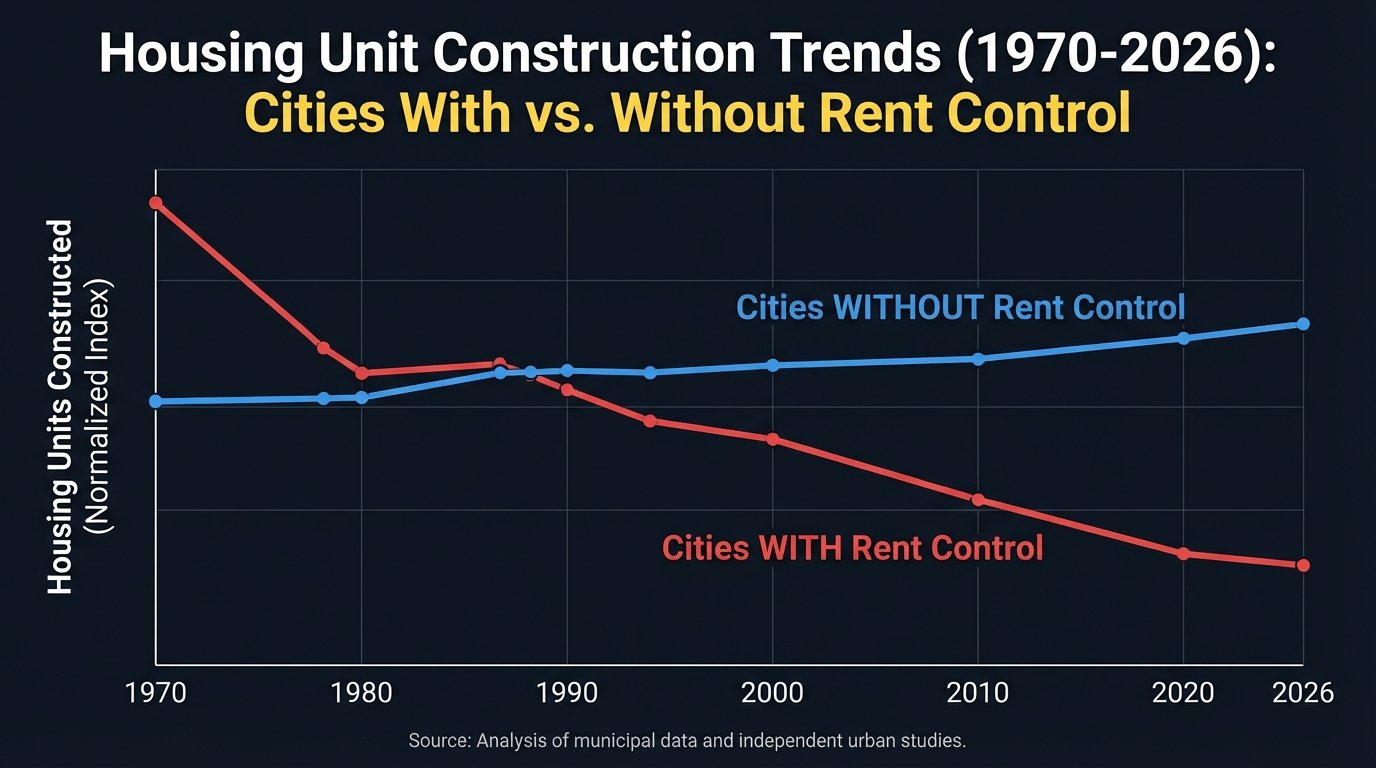
The supply-side argument deserves a real answer. The claim: capping rent on existing units reduces the return on rental investment, discourages new construction, reduces overall housing supply, and ultimately raises rents for everyone outside protected units. The 2019 Stanford study found supply effects in San Francisco. This is the most-cited finding in anti-rent-control literature.
Here is what the supply argument gets wrong when applied to 2026. First, modern rent stabilization universally exempts new construction — Oregon 2019, California AB 1482, and virtually every city ordinance passed since 2015 exempts buildings 15+ years old or newer. If new construction is fully exempt, the disincentive argument for new development does not apply. Second, the primary driver of housing undersupply in American cities is not rent control — it’s zoning. Single-family zoning covers 75% of residential land in most major cities. The same political forces opposing rent control also tend to oppose upzoning, so the “build more instead” argument frequently comes from people who also oppose building more. The NIMBY housing zoning crisis is the root cause that both rent stabilization advocates and supply-side reformers are responding to, in different ways.

Myth 3: Rent Control Only Benefits Rich Long-Term Tenants
There is a kernel of truth here that gets weaponized. Yes, rent stabilization creates winners and losers: tenants who have lived in protected units for decades get below-market rents, while new renters pay uncontrolled market rates. Yes, in expensive cities like San Francisco, some long-term tenants in rent-stabilized units have relatively higher incomes. This is a legitimate design critique of older rent control systems that lack income testing.
But the empirical literature on who lives in rent-stabilized housing consistently shows these units house a disproportionately low-income, elderly, and minority population. In New York, rent-stabilized tenants earn a median household income of $43,000 vs. $65,000 for market-rate renters. In Los Angeles, RSO units are 70% occupied by Latino and Black households earning below area median income. The rich-tenant anecdote exists but is not the typical profile. More critically: the alternative — market-rate rents with no stabilization — demonstrably displaces low-income and minority tenants at catastrophic rates. The eviction crisis of 2026 is happening precisely in cities where tenant protections were stripped or never established. For additional context, see the ongoing Wall Street takeover of the housing market and the Section 8 voucher waitlist crisis.
What the Data Actually Shows: Cities With and Without Rent Control
Here are actual outcomes in cities with and without rent stabilization. This is where the debate stops being theoretical.
| City / Metro | Rent Stabilization? | Rent Increase 2019-2025 | Low-Income Displacement Rate |
|---|---|---|---|
| New York City | Yes (RSL) | +18% | ~3.2% annually |
| San Francisco | Yes (RSO) | +21% | ~4.1% annually |
| Austin, TX | No (preempted) | +42% | ~8.9% annually |
| Phoenix, AZ | No (preempted) | +38% | ~7.4% annually |
| Nashville, TN | No (preempted) | +44% | ~8.1% annually |
| Portland, OR | Yes (state-level) | +19% | ~3.8% annually |
| Atlanta, GA | No (preempted) | +35% | ~7.2% annually |
The pattern is consistent: cities with rent stabilization show significantly lower rent inflation and displacement rates compared to cities of similar economic growth where preemption prevents tenant protection. Austin, Phoenix, and Nashville all built substantial new housing supply. Rents still increased 38-44% in five years. Supply alone did not solve affordability. The NYU Furman Center 2023 analysis found rent-stabilized tenants had 43% longer average tenure, 67% lower rate of involuntary displacement, and families with children in stabilized units showed 2.3x better K-12 educational outcome measures than comparable households who experienced displacement.
Why 37 States Have Preempted Rent Control (And Who Paid for That)
Thirty-seven U.S. states have laws explicitly preventing cities from enacting rent control. This is not organic: it is the direct result of decades of sustained lobbying by the National Apartment Association (NAA) and National Association of Realtors (NAR), two of the largest lobbying spenders in American politics.
The NAA spent $11.4 million on federal lobbying in 2024 alone, plus substantial state-level expenditures in every state where preemption legislation was introduced. The NAR spent $82 million in direct lobbying in 2024 — the largest real estate lobby spend in history — with significant portions directed at maintaining state preemption laws. Between 2018 and 2024, NAA and NAR-affiliated groups spent an estimated $340 million combined on state legislative campaigns opposing rent stabilization and tenant protections.
The mechanism: when a city council in Texas or Georgia moves to study rent stabilization, NAA-affiliated groups flood the state legislature with lobbyists and model preemption bill language. State lawmakers — many of whom are themselves real estate investors — pass statewide preemption, removing the local option before the city council vote ever happens. This has occurred in at least 11 states since 2019 per the National Housing Law Project. The same regulatory capture seen in the commercial real estate collapse and manufactured housing predatory lending is operating at the state legislative level on rent control preemption.
“Between 2018 and 2024, real estate industry lobbying groups spent an estimated $340 million to maintain rent control preemption laws across 37 states. That’s not a policy debate — that’s a purchase. — National Housing Law Project analysis, 2024
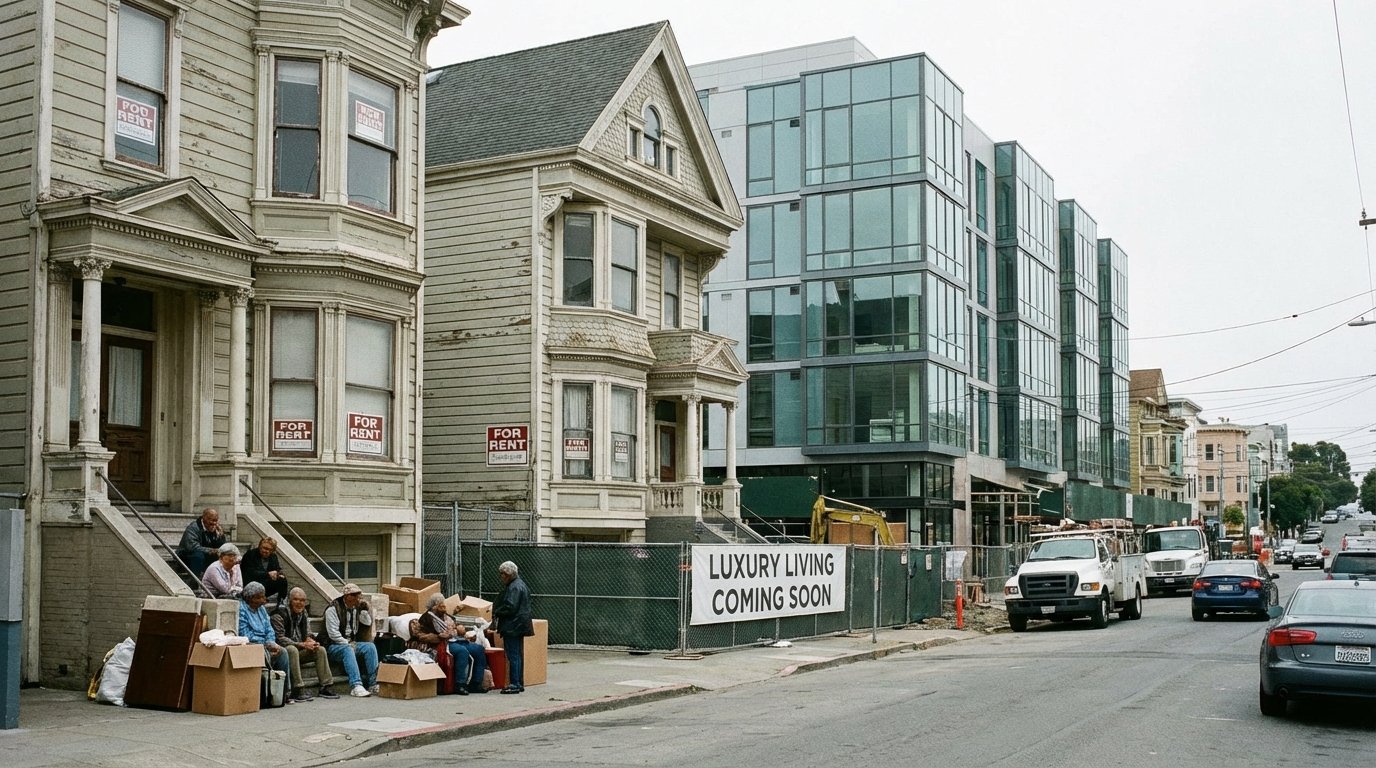
Counter-Argument: The Legitimate Critiques of Rent Control
In the interest of intellectual honesty, here are legitimate critiques of rent stabilization that are not just industry talking points:
- Vacancy decontrol loopholes: In states allowing landlords to reset rents to market rate when a tenant moves (including California AB 1482), landlords have financial incentive to push out long-term tenants through harassment, non-renewals, or renovictions. This is a real problem that anti-harassment ordinances can address but often do not.
- Misallocation of housing: Tenants in stabilized units may stay in apartments larger than they need because moving means losing protection. This is real but empirically small — most studies find it affects under 5% of stabilized units.
- New-construction exemptions create two-tiered markets: When only pre-1979 buildings are covered, you create a system where older buildings are protected but new supply is entirely market-rate, accelerating luxury construction while doing nothing for lower-end affordability.
- Rent stabilization is not rent affordability: Protecting existing tenants is not the same as creating new affordable housing. Without parallel investment in public housing, housing vouchers, and zoning reform, rent stabilization holds a line but does not move it forward.
FAQ: Rent Control Myths vs. Reality
Does rent control reduce housing supply?
Modern rent stabilization that exempts new construction shows minimal impact on new development. The 2019 Stanford study found supply effects in San Francisco under its older hard-control system, but this finding does not apply to modern stabilization laws with blanket new-construction exemptions. No peer-reviewed study has found supply reduction from rent stabilization programs with new-construction exemptions.
Which cities have rent control in 2026?
U.S. cities with active rent stabilization as of 2026 include New York City, Los Angeles, San Francisco, Oakland, San Jose, Washington D.C., and Portland. California AB 1482 covers most rental units over 15 years old statewide. Oregon 2019 law provides statewide stabilization. New Jersey and Maryland have statewide frameworks allowing local implementation.
What are the real pros and cons of rent control?
Pros: Reduces displacement of long-term tenants, especially low-income and minority households; provides housing stability with measurable positive effects on education and employment outcomes; slows rent inflation in protected units. Cons: Can create misallocation; without anti-harassment protections, landlords may work around protection via renovictions; does not create new affordable housing on its own.
Is rent control coming back in 2026?
Rent stabilization is expanding. California AB 1482 covers more units than any previous state-level law. Oregon 2019 law was renewed and strengthened in 2024. Ballot initiative campaigns are active in Colorado, Michigan, and Minnesota. At the federal level, a 2024 executive order requiring a 5% cap for corporate landlords owning 50+ units as a condition of federal financing covers an estimated 1.1 million units as of early 2026.
Sources and Methodology
Data sourced from: Stanford University Diamond/McQuade/Qian rent control study (2019); NYU Furman Center 2023 rent stabilization tenant outcomes analysis; National Housing Law Project lobbying expenditure tracking 2018-2024; Zillow Research median rent data Q4 2025; National Apartment Association 2024 lobbying disclosure; National Association of Realtors 2024 political expenditure reports; U.S. Census Bureau ACS rental housing data 2024; California Department of Housing AB 1482 implementation data 2025; Oregon Housing and Community Services statewide stabilization tracking 2024; Preemption Watch (National Housing Law Project) state preemption database 2026.


