The Ticketmaster DOJ settlement 2026 announced Monday resolves the Justice Department’s antitrust lawsuit against Live Nation Entertainment — without breaking up the company, without forcing a Ticketmaster sale, and almost certainly without lowering your concert ticket prices. After 14 years of monopoly power, Live Nation agreed to open parts of its ticketing technology to rivals, cap venue contracts at four years, and pay $280 million to participating states. What it did not agree to do is stop being Live Nation. The company that controls the venue, the promoter, the artist, and the ticket — all at once — stays exactly as it is. The same financial engineering that turned live entertainment into a price-extraction machine remains fully intact.
Key Takeaways
- The DOJ and Live Nation reached a settlement Monday, March 9, 2026 — one week into their federal antitrust trial in Manhattan.
- No breakup: Ticketmaster stays part of Live Nation. The core monopoly structure is untouched.
- Settlement terms: $280 million to participating states, open API for rival ticketers, 4-year contract caps on venues, divestiture of 10+ amphitheaters, service fee cap at outdoor venues.
- Multiple states — including New York, California, and D.C. — are refusing to settle and will continue litigating independently.
- Live Nation CEO Michael Rapino signed the outline on March 5; trial judge angrily ordered Rapino to appear in court Tuesday after learning the court was kept in the dark.
- Average concert ticket prices hit $135.92 in 2024 — up 41.3% since 2019. Industry analysts say the settlement will not lower prices, at least short-term.
- 37% of Gen Zers and 39% of Millennials spent $500–$5,000+ on live events in 2024 — a cost burden falling almost entirely on people who can least afford it.
What Is the Ticketmaster DOJ Settlement?
The Ticketmaster DOJ settlement 2026 is a consent decree reached between the U.S. Justice Department and Live Nation Entertainment during a live federal trial in Manhattan. The settlement was signed on March 5, 2026 — while trial proceedings were still actively underway — and announced publicly on March 9. U.S. District Judge Arun Subramanian, who was presiding over the trial, was reportedly not informed of the deal until March 9, calling the secrecy “absolute disrespect for the court, for the jury, for this entire process.” He has ordered Live Nation CEO Michael Rapino to appear before him Tuesday morning.
The DOJ filed the original lawsuit in May 2024 under the Biden administration, joined by more than two dozen states, alleging that Live Nation used “threats, retaliation, and other tactics to choke off competition” across every segment of the live entertainment industry — ticketing, venues, promotion, and artist management. The suit called for the forced sale of Ticketmaster, which Live Nation acquired in 2010. That merger, approved over objections from competition regulators who should have known better, created the monopoly flywheel that has squeezed fans, artists, and independent promoters for 16 years.
The deal that emerged — announced just one week into a trial that was supposed to decide the company’s fate — preserves that flywheel entirely. Ticketmaster is not being sold. Live Nation is not being broken up. The settlement instead focuses on behavioral remedies: opening the tech platform to rivals, limiting exclusivity contracts, and paying out $280 million to states that agreed to the terms. About 10 of the 39 states involved agreed. The rest didn’t.
How Did Live Nation Build Its Monopoly?
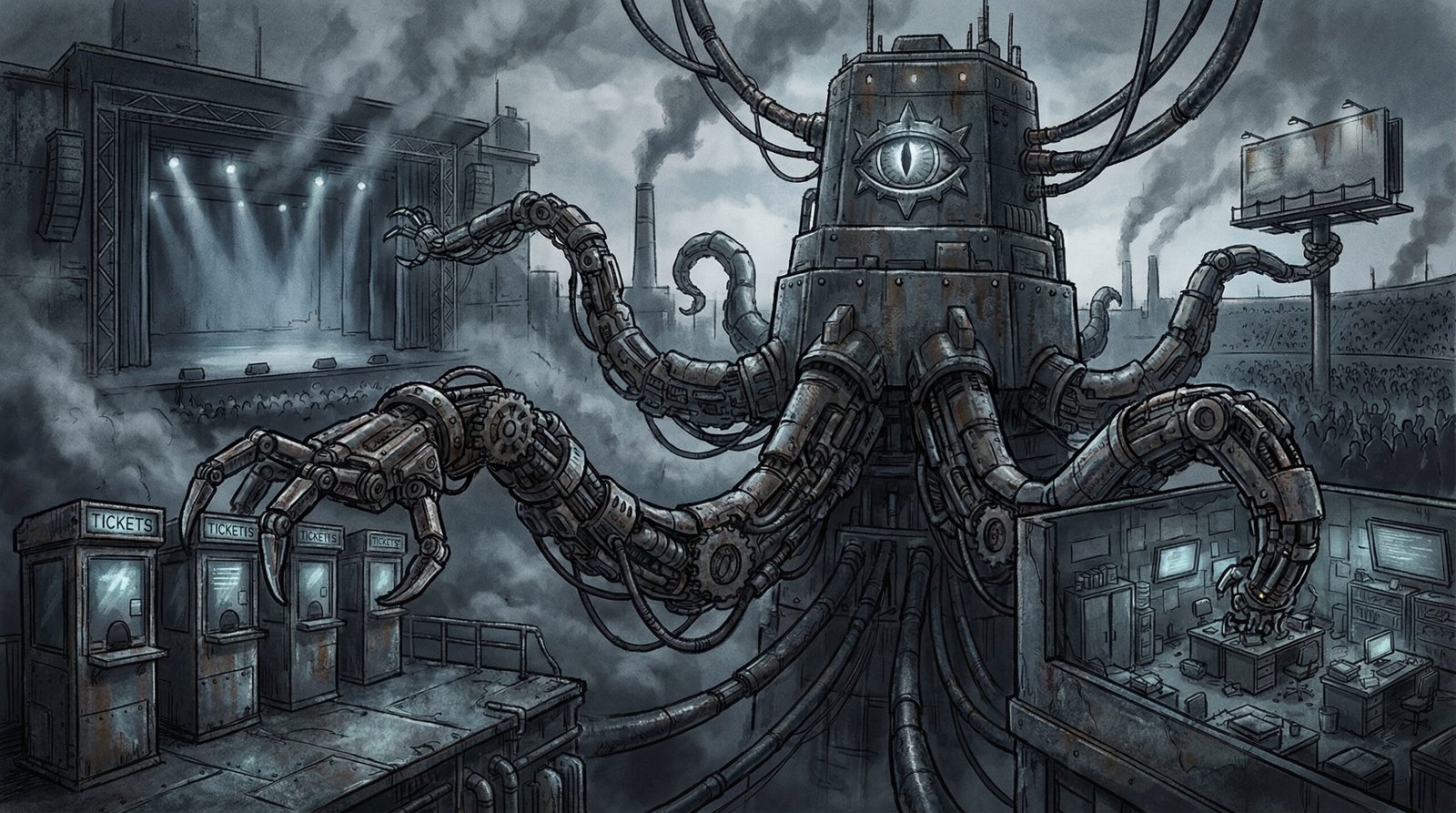
Live Nation’s grip on the live entertainment industry is what antitrust lawyers call a “flywheel” — a self-reinforcing loop where control in one segment generates control in every other. The company owns or operates approximately 265 venues, promotes roughly 40,000 events per year, manages hundreds of artists, and processes over 600 million tickets annually through Ticketmaster — roughly 70–80% of all major concert tickets sold in the United States.
The flywheel works like this: Live Nation controls the venue. If you want your artist to play that venue, you use Live Nation’s promotion arm. If you want promotion, you use Ticketmaster for ticketing — because Live Nation has locked venues into long-term exclusive contracts, some running a decade. Independent ticketers like SeatGeek or AXS can’t get into the building. Artists who try to work around the system find their tours mysteriously unable to book the best rooms. The DOJ complaint alleged Live Nation used explicit threats to enforce this structure — telling venues that lost revenue and access would follow if they worked with competitors.
The 2010 merger that created this structure was approved conditionally — the DOJ at the time required Live Nation to license Ticketmaster’s software to rivals and not retaliate against venues using competitors. Live Nation violated those conditions almost immediately. By 2019, the DOJ found the company had breached the consent decree at least three times. The response was to extend the decree, not enforce it. The revolving door between the entertainment industry, its lobbying arms, and the regulators who were supposed to police it kept spinning, and Live Nation kept growing.
By 2025, Live Nation reported record revenues of $25.2 billion — up 9% year-over-year — with 159 million fans attending its concerts globally. The monopoly wasn’t just surviving. It was thriving.
What Does the Settlement Actually Do?
The settlement’s key terms, as reported by the Wall Street Journal, Politico, and Hypebot:
- No divestiture of Ticketmaster. Live Nation keeps its ticketing subsidiary. The core monopoly structure — one company controlling venues, promotion, and ticketing — is untouched.
- Open ticketing API. Ticketmaster must open parts of its technology platform to competing ticketers, allowing rivals like SeatGeek and Eventbrite to list and sell tickets through Ticketmaster’s system. This is interoperability, not competition.
- Contract caps. Exclusive venue contracts will be limited to four years (down from indefinite multi-decade arrangements) and venues can allocate a portion of tickets to competing platforms.
- Amphitheater divestitures. Live Nation must sell more than 10 of its outdoor amphitheaters.
- Service fee cap at remaining outdoor venues.
- $280 million in payments to the approximately 10 states that agreed to the settlement. New York, California, D.C., and others refused.
- Federal monitor. DOJ will appoint a compliance monitor to oversee implementation — the same mechanism that failed to stop Live Nation from violating its 2010 consent decree three times over the following decade.
The DOJ argued the deal delivers relief to consumers faster than a lengthy trial verdict would. That argument collapses on inspection. Live Nation has had a federal monitor before. It didn’t work. The “open API” remedy sounds significant until you realize it means competitors can list tickets through Ticketmaster’s system — not instead of it. Live Nation still sets the rules of the platform. Contract caps at four years still give Live Nation first-mover advantage in every renewal cycle. And the service fee cap only applies to outdoor venues — the company’s most profitable indoor arenas are untouched.
Americans have seen this movie before: a regulator announces a major enforcement action, the corporate defendant pays a fraction of its profits, structural changes are vague, and five years later nothing has changed. The CFPB extracted billions in penalties from financial institutions for predatory behavior, then got gutted. Now the companies are back to their old tricks. There’s no reason to believe a behavioral consent decree — the third one for Live Nation — will produce a different outcome.
Why Are States Rejecting the Federal Deal?
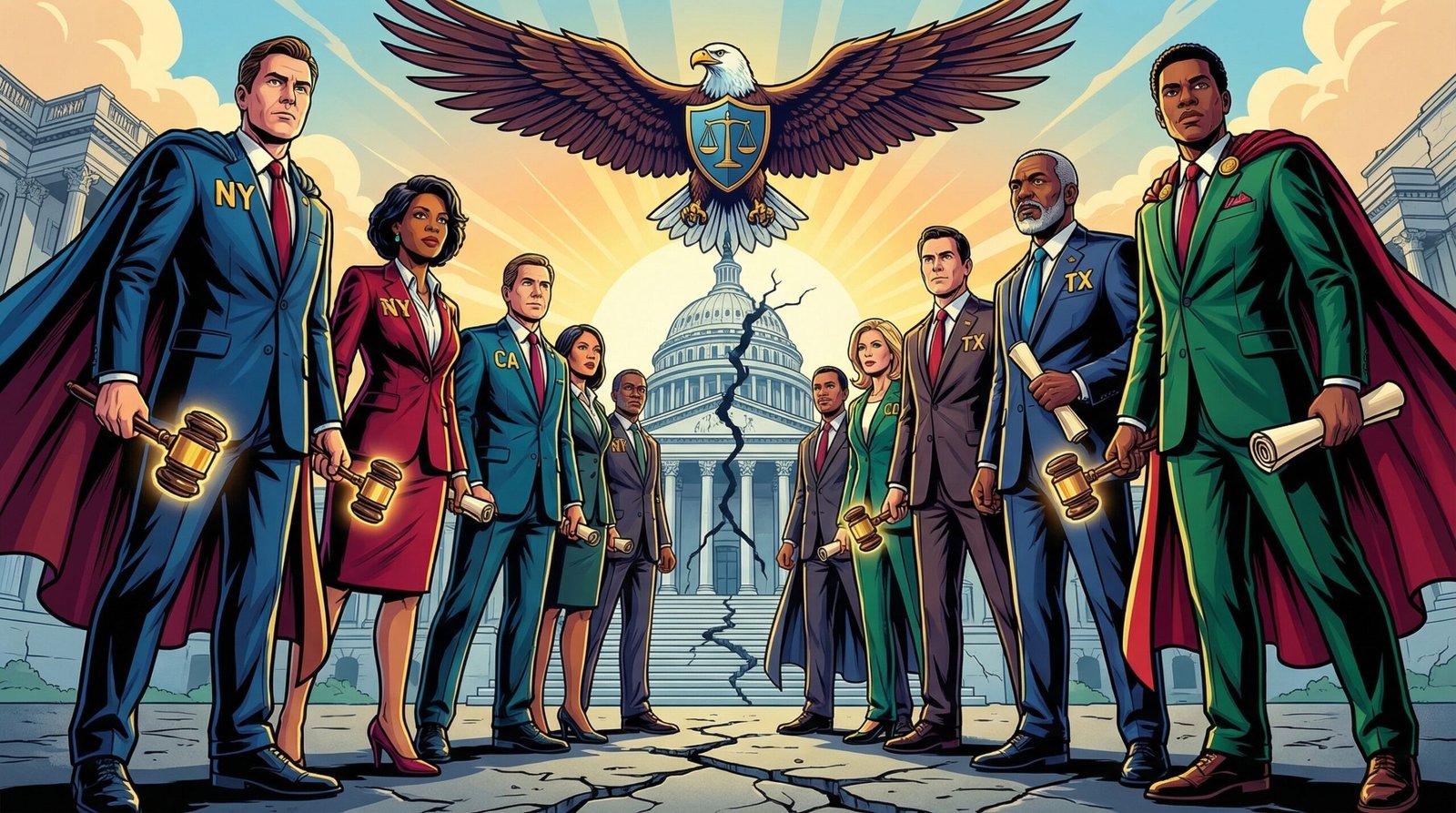
Multiple state attorneys general — led by New York AG Letitia James — announced they will not accept the federal settlement and will continue litigating the case independently. “The settlement recently announced with the U.S. Department of Justice fails to address the monopoly at the center of this case, and would benefit Live Nation at the expense of consumers,” James said Monday. “We cannot agree to it.”
New York, California, the District of Columbia, Florida, Louisiana, and Indiana are among the states either refusing to settle or expressing serious reservations. Their position is straightforward: a settlement that doesn’t break up the monopoly doesn’t fix the monopoly. The only remedy that restores competition is structural — forcing the sale of Ticketmaster so that venues, artists, and fans can choose their ticketer without being strong-armed by the same company that also controls their venue and their promotion deals.
The trial, which began last week, has not been dismissed. Judge Subramanian pointedly refused to dismiss the jury when announcing news of the settlement Monday — a signal that the case continues. He has ordered Rapino to appear in court Tuesday at 8:30 AM to explain why the settlement was signed and concealed from the court while trial proceedings continued. An attorney for the DOJ told the court she had not even been informed of the signed deal as the trial proceeded on Friday — meaning the DOJ’s own trial team was kept in the dark by their own department while simultaneously arguing the case in front of a jury.
If the state AGs prevail, the outcome could still be a Ticketmaster divestiture — the structural breakup that the federal settlement traded away. The trial is scheduled to resume Monday, March 16.
Who Pays the Price? The Generational Cost of Concert Monopoly
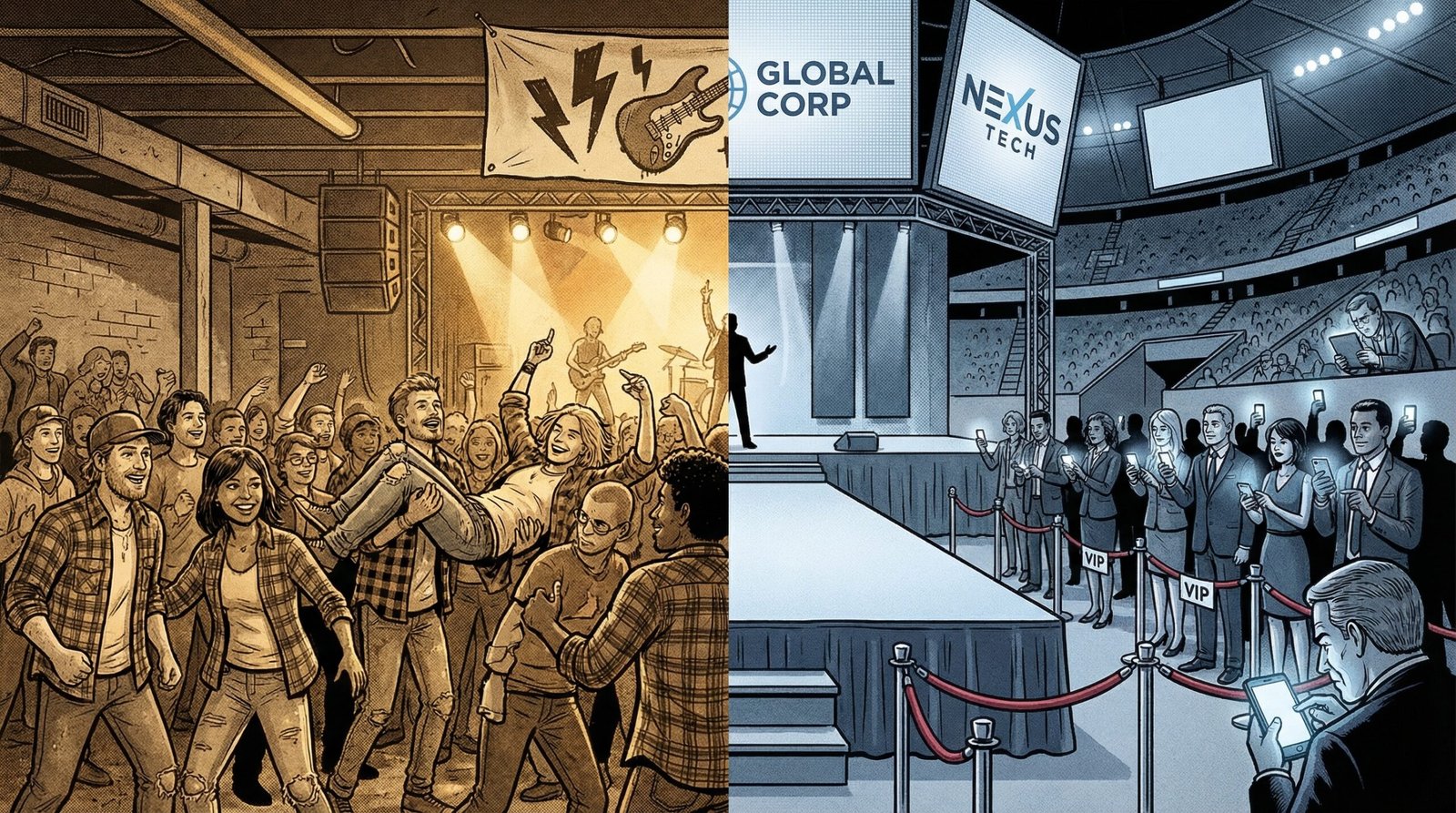
Here’s the thing about Live Nation’s monopoly that never makes it into the corporate press releases: the people it hurts most are young. Not because young people go to more concerts — though they do — but because they spend a disproportionate share of their already-strained income on the experience, while having no alternative and no recourse.
Average concert ticket prices hit $135.92 in 2024, a 41.3% increase since 2019, according to industry data. That’s the face value — before the fees. Ticketmaster’s service charges, order processing fees, facility charges, and delivery fees routinely add 30–50% on top of the face price. A $135 ticket becomes a $190 checkout. A $75 “affordable” show becomes $110 after fees.
A 2024 Bread Financial study found that 37% of Gen Zers and 39% of Millennials spent $500 to $5,000 or more on live events in a single year. These are generations with median savings under $5,000, retirement account balances that are catastrophically underfunded, and childcare costs that swallow 20–35% of household income. The New York Times reported in 2025 that the live music industry has “put today’s young adults in an impossibly expensive position” — forced to choose between cultural participation and financial stability.
Live Nation CEO Michael Rapino responded to coverage of soaring ticket prices by publicly stating concerts are still “underpriced.” That statement was not made as dark humor. He meant it. The man running the monopoly that controls what you pay to see your favorite artist believes you are not paying enough.
This isn’t an accident. It’s the same playbook as the ISP broadband monopoly that charges Americans 2–5x what Europeans pay for slower internet, the same as the grocery consolidation that added 30% to food bills, the same as the healthcare financialization that turned a doctor’s visit into a debt instrument. Sector after sector, the same pattern: consolidation, exclusivity agreements, fee extraction, and a regulator that arrives after the damage is done to negotiate a settlement that leaves the structure standing.
Will the Settlement Actually Lower Ticket Prices?
No. At least not in any meaningful near-term timeframe. This is not a controversial position — Hypebot’s industry analysis, published the same day as the settlement announcement, explicitly states: “They will almost certainly not lower ticket prices, at least in the short term.” The mechanism for lower prices would be genuine competition: multiple ticketing platforms with real market access, bidding against each other for venue contracts, competing on fees. The settlement doesn’t create that.
What it creates is an API that lets SeatGeek list tickets through Ticketmaster’s system. That is interoperability theater. Ticketmaster still owns the platform, sets the rules, and controls the venue relationships. Independent ticketers get to be tenants in Ticketmaster’s house — which is not the same as owning a competing house next door.
The counter-argument from DOJ and Live Nation is that this settlement provides relief faster than a years-long verdict and appeals process would. That argument has surface plausibility. Antitrust trials are notoriously slow — the Microsoft case ran from 1998 to 2001, with appeals extending years further. A verdict ordering Ticketmaster’s divestiture might not be implemented until 2029 or 2030. In the meantime, structural changes start flowing from the consent decree immediately.
The problem is that Live Nation has already demonstrated it will violate consent decrees and pay the fine as a cost of doing business. The 2010 decree was violated at least three times; the penalty was a slap on the wrist. There is no structural reason to believe the 2026 decree will be enforced more rigorously. The DOJ’s Antitrust Division under the current administration is not known for aggressive corporate enforcement. The states continuing to litigate represent the only realistic path to a structural remedy — and they face an uphill battle doing it without federal coordination.
FAQ: Ticketmaster DOJ Settlement 2026
Is Ticketmaster being broken up?
No. The DOJ settlement does not require Live Nation to sell Ticketmaster. The company retains its ticketing subsidiary and the flywheel structure — controlling venues, promotion, and ticketing simultaneously — remains intact. The settlement focuses on behavioral remedies rather than structural ones.
Will the Ticketmaster settlement lower ticket prices?
Not in the near term. Industry analysts and music business experts have broadly stated the settlement’s structural changes — an open API and contract caps — are unlikely to create the kind of genuine market competition that would lower prices. Prices are driven by the integrated monopoly structure, which the settlement leaves standing.
What states are still suing Live Nation?
New York, California, the District of Columbia, and several others refused to join the federal settlement. New York AG Letitia James stated the settlement “fails to address the monopoly at the center of this case.” The trial is scheduled to continue March 16, with the state AGs proceeding on their own.
Why is the judge upset about the settlement?
U.S. District Judge Arun Subramanian was not informed of the settlement despite it having been signed on March 5 — while trial proceedings were ongoing. He called the concealment “absolute disrespect for the court, for the jury, for this entire process.” He has ordered Live Nation CEO Michael Rapino to appear before him on Tuesday morning, March 10, and pointedly declined to dismiss the jury.
Sources & Methodology
Sources used in this article:
- Hypebot: “Live Nation and DOJ Settle, States To Continue Lawsuit” (March 9, 2026) — settlement terms, state AG positions, judge’s response, trial status
- Insurance Journal / Reuters: “Live Nation Reaches Settlement With DOJ in Antitrust Case” (March 9, 2026) — DOJ announcement details, New York AG statement, state AG positions
- Wall Street Journal (via Hypebot/Politico): settlement term details — $280M damages, open platform, venue contract caps, amphitheater divestitures, fee cap
- Music Business Worldwide: “Live Nation annual revenues top $25B in 2025” — revenue and attendance data
- New York Times (2025): “Concert Ticket Prices Are Soaring, and Busting Gen Z’s Budgets” — average ticket price $135.92, 41.3% increase since 2019
- Bread Financial (2024 study): 37% of Gen Zers, 39% of Millennials spending $500–$5,000+ on live events annually (via Yahoo Finance)
- DOJ v. Live Nation, Case No. 1:24-cv-03973 (S.D.N.Y., filed May 2024) — original complaint and allegations
This article covers a developing story. Settlement terms have not yet been formally filed with the court. Judge Subramanian has not yet approved the agreement. State litigation continues. This article will be updated as the situation develops.