The SNAP cuts 2026 represent the largest reduction to food stamp funding in the program’s history — nearly $300 billion stripped from the Supplemental Nutrition Assistance Program over a decade through H.R. 1, the “One Big Beautiful Bill,” signed on July 4, 2025. As of early 2026, an estimated 3.2 million adults per month are losing or at risk of losing food assistance under expanded work requirements — while the same Congress funded an Iran war costing $1 billion per day.

Key Takeaways
- H.R. 1 cut ~$300 billion from SNAP over 10 years — the deepest single cut in the program’s 60-year history, roughly twice the scale of the 1996 welfare reform cuts.
- The CBO estimates 3.2 million adults per month lose benefits due to expanded work requirements alone. As of February 2026, 1.75 million people had already been cut off.
- Work requirement age ceiling raised from 54 to 64 years old. Veterans, homeless individuals, and foster youth aging out of the system lost all exemptions.
- Starting fiscal year 2028, states must cover 5–25% of their own SNAP benefit costs based on error rates. The average national error rate of 11% puts virtually every state in the penalty zone.
- Stagflation, 92,000 jobs lost in February 2026, and rising food prices hit SNAP-eligible households simultaneously — just as benefits were stripped.
- Trump called cutting 2.4 million Americans off food stamps a “record” achievement in his 2026 State of the Union. He did not mention the $100 billion war tab those same Americans are now funding.

What Are the SNAP Cuts in H.R. 1?
The “One Big Beautiful Bill” — H.R. 1, signed into law on July 4, 2025 — imposed nearly $300 billion in cuts to SNAP over fiscal years 2025–2034. That’s approximately twice the size of the 1996 welfare reform SNAP reductions, and the largest single reduction to food assistance funding in the program’s six-decade history. The Congressional Budget Office scored the SNAP provisions at $285 billion over 10 years.
The law made several structural changes simultaneously, stacking them in ways that maximize the number of people who lose eligibility:
- Expanded work requirements to all adults ages 18–64 (up from under-54), effective November 1, 2025
- Eliminated longstanding exemptions for veterans, people experiencing homelessness, and youth aging out of foster care
- Restricted state waiver authority — states can only waive the three-month time limit for ABAWDs in areas with unemployment above 10%, a bar so high that only roughly 10 counties nationally currently qualify
- Added school-age parent requirements — parents of children 7 and older must now meet work requirements; previously the threshold was children under 6
- Shifted costs to states starting October 2026 — states must cover 5–25% of their own SNAP benefit costs based on payment error rates
- Eliminated SNAP-Ed funding entirely starting FY 2026 — a program that taught nutrition in schools and food banks
For context: SNAP has operated as a 100% federally funded benefit program since 1977. H.R. 1 ends that model.

Who Lost SNAP Benefits — and How Many?
By February 2026, an estimated 1.75 million people had already lost SNAP benefits following implementation of the new work requirement policies — before many provisions had even fully taken effect at the state level. The CBO’s own projections put the eventual reach at 3.2 million adults losing benefits in a typical month.
The casualties are not abstract statistics. They include:
- ~1 million children who lose or see reduced food assistance when their parents are cut off
- ~250,000 seniors aged 65+ who see benefits reduced under administrative changes
- 3+ million working parents with school-aged children ages 7–17 — 74% of whom are women — who now face work documentation requirements despite already being employed
- 800,000 parents of children ages 7+ who lost their previous parental exemptions entirely
- 1 million adults aged 55–64 newly subject to work requirements for the first time
- 120,000–250,000 refugees and asylum seekers, including ~50,000 children, who lose eligibility entirely
- Veterans, homeless individuals, and former foster youth — groups explicitly removed from the exemption list
Trump celebrated “lifting 2.4 million Americans off food stamps” in his 2026 State of the Union address, framing it as a policy achievement. The millions who didn’t choose to leave — who were simply cut off — were not mentioned. Nevada alone saw 47,000 people lose eligibility in a single enrollment cycle. New York City reported 123,000 ABAWDs immediately affected when requirements went live in March 2026.
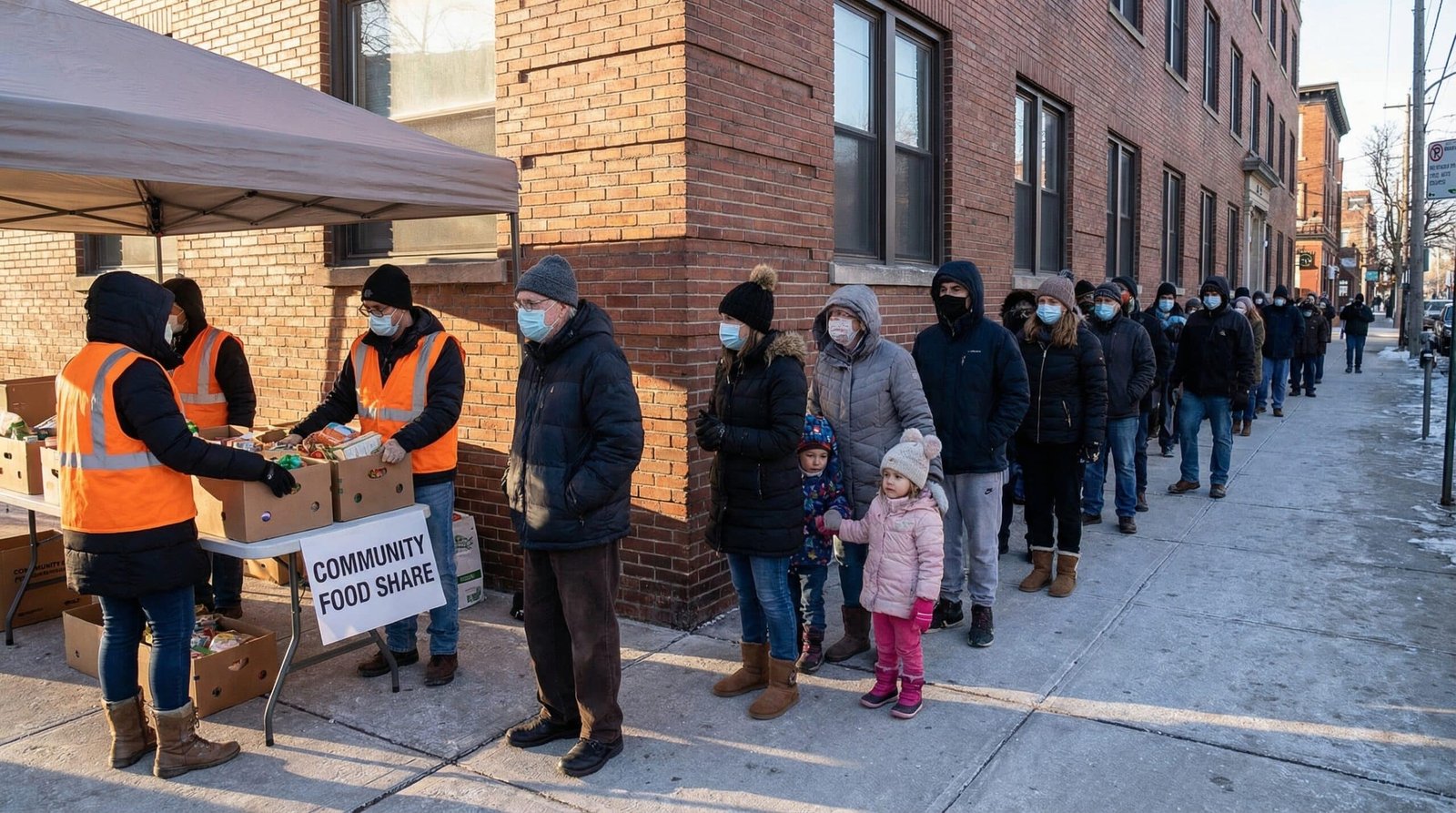
Meanwhile, food banks across the country reported surging demand beginning in late 2025 — a direct downstream effect of administrative eligibility denials forcing families into charitable food systems that were not designed to absorb this volume.

What Do the New SNAP Work Requirements Actually Require?
Under the pre-H.R.1 rules, “able-bodied adults without dependents” (ABAWDs) under age 54 had to work or participate in job training for at least 20 hours per week to receive benefits beyond a three-month window. States could request waivers in high-unemployment areas. H.R. 1 changed virtually every parameter of this system.
Current requirements (effective November 1, 2025):
- All adults ages 18–64 must work, volunteer, or participate in job training for at least 80 hours per month (equivalent to 20 hours/week)
- Work must be documented and verified with the state SNAP agency — not just self-reported
- Parents of children 7 years old or older must meet work requirements (previously, parents of children under 6 were exempt)
- Veterans, homeless individuals, and foster youth no longer qualify for automatic exemptions
- Students at four-year colleges who are low-income must work 20+ hours per week to maintain eligibility
- State waivers are now restricted to areas with unemployment above 10% — practically eliminating waivers, since only ~10 counties currently qualify
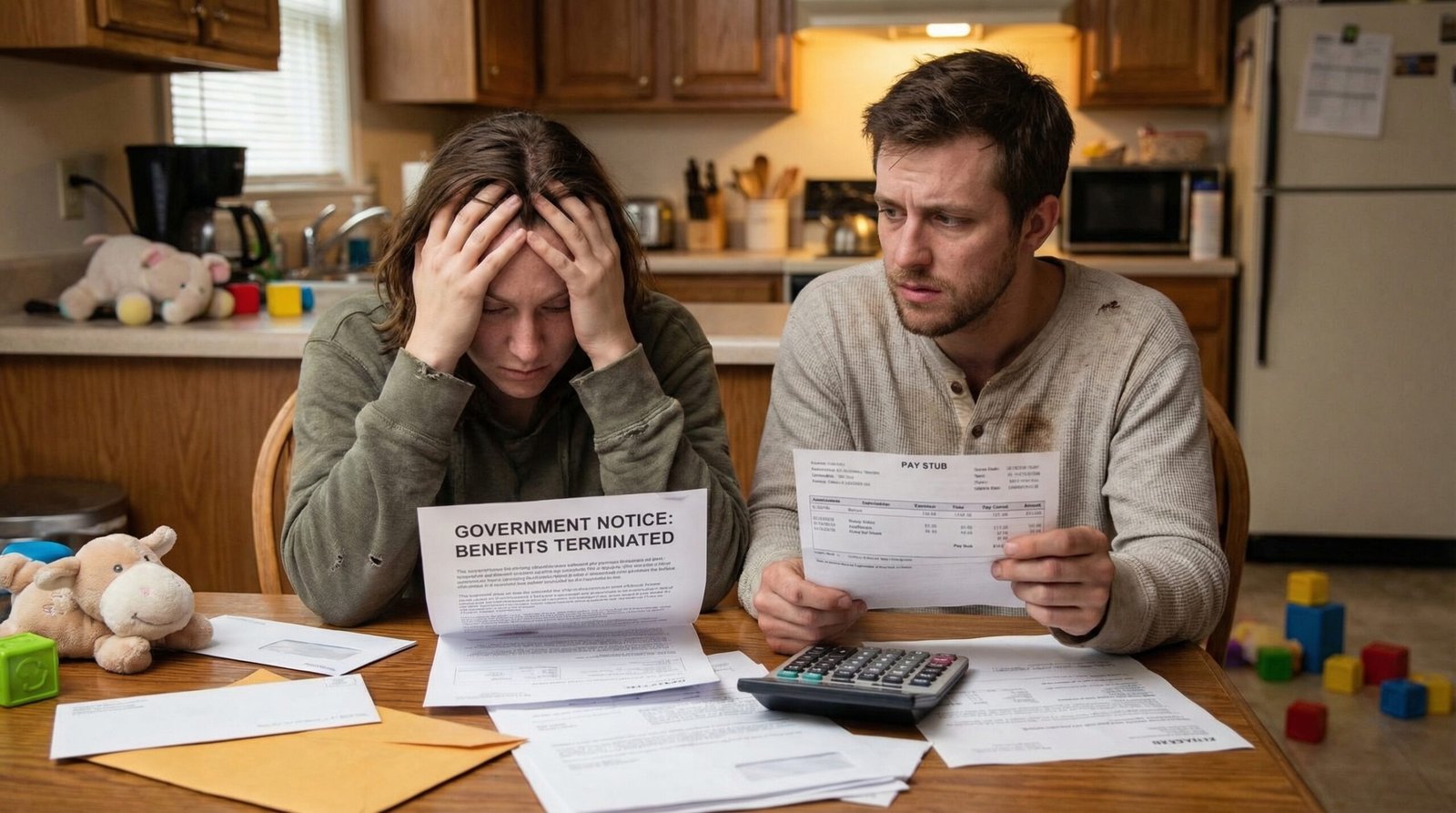
The practical problem is that documentation creates its own bureaucratic obstacle course. Research on prior work requirement programs — including the Arkansas Medicaid work requirement struck down in 2019 — found that the majority of people who lose benefits under such systems are actually already working. They lose benefits not because they fail to meet the hours threshold, but because they cannot navigate the monthly paperwork. For hourly workers juggling multiple jobs, seasonal employment, or irregular schedules, proving 80 hours monthly through an understaffed state agency system is a full-time job in itself.
A JAMA Health Forum analysis found that administrative churn — not genuine ineligibility — accounts for the majority of benefit losses in systems like this.

SNAP Cuts vs. Defense Spending: Who Paid for the Iran War?
Here is the math that the White House hasn’t presented in a single press briefing: The Iran war is costing approximately $1 billion per day. In the first week alone — according to Iran’s own Foreign Minister Abbas Araghchi, citing figures the Trump administration has not disputed — the conflict has run up a $100 billion tab. That’s one-third of the entire 10-year SNAP savings from H.R. 1, spent in seven days.
The contrast becomes almost absurd when laid out chronologically:
- July 4, 2025: H.R. 1 signed. $300B in SNAP cuts over 10 years. Positioned as “fiscal responsibility.”
- November 1, 2025: Expanded SNAP work requirements take effect. 3.2M adults begin losing food assistance monthly.
- February 28, 2026: U.S. and Israel launch “Operation Epic Fury” against Iran. $30B in the first 72 hours.
- March 7, 2026: Week one of the Iran war. $100B spent. Iran FM says “when markets reopen, that cost will balloon and be transferred to ordinary Americans at the pumping station.”
Meanwhile, defense contractor stocks have surged: Lockheed Martin up 39%, Raytheon up 31%, Northrop Grumman up 28%. The same legislation that stripped food assistance from 3.2 million people per month allocated unlimited emergency defense spending with zero offset requirements.
Goldman Sachs analysts noted this week that the current oil supply shock is “very large compared to Russia” — and oil is up 25% since strikes began. Every dollar of SNAP savings from work requirement denials is being absorbed many times over by higher gas prices, grocery bills, and utility costs hitting the exact households that were just cut off. The stagflation scenario is no longer hypothetical.
The $200 Million State Trap: How the Cost Shift Destroys Local Budgets
The most quietly devastating part of H.R. 1’s SNAP provisions isn’t the work requirements — it’s the state cost-sharing mandate that kicks in starting fiscal year 2028. This is the mechanism that could permanently destroy SNAP as a functioning safety net at the state level.
Here’s how it works: Starting FY 2028, states must pay a share of their own SNAP benefit costs — not just administrative costs, but the actual food assistance dollars — based on their payment error rate:
- Error rate 6–8%: State pays 15% of benefits
- Error rate 8–10%: State pays 20% of benefits
- Error rate above 10%: State pays 25% of benefits
The average national SNAP payment error rate is 11%. That means the average state is already above the 25% threshold before a single new policy takes effect. Ohio’s error rate was 9% in 2024 — putting it on the hook for $318 million annually. Pennsylvania’s analysis showed $212–636 million per year depending on the error rate tier it falls into. These are not rounding errors. These are line items that break state budgets.
The perverse incentive is that the way to lower your error rate is to deny more applications — which increases food insecurity but improves your fiscal standing under H.R. 1’s penalty structure. States are now financially incentivized to be less accurate in favor of being more restrictive. A state that denies a legitimate applicant faces no federal penalty. A state that approves a borderline case risks a 25% cost share on that benefit and all others in its error rate calculation.
Democrats attempted to address this in the farm bill debate in early March 2026, introducing amendments to roll back the SNAP provisions. As of this writing, those amendments have not passed.
How SNAP Cuts Hit Millennials and Gen Z Hardest
Conventional wisdom frames SNAP as a program for seniors and children. The data tells a different story: 42% of SNAP participants are non-elderly working-age adults aged 18–59. That is the demographic the new work requirements were specifically designed to target — and it is predominantly Millennial and older Gen Z.
Consider the context these generations entered 2026 with: 92,000 jobs lost in February alone. Stagflation accelerating. Gas up 25%. Grocery prices up 12–18% year over year. Retirement savings near zero for the median 35-year-old. Medical debt the leading cause of bankruptcy. And now, food assistance being administratively stripped from millions who qualified under the prior rules.
The $84 trillion wealth transfer being positioned as intergenerational relief is happening at the top of the wealth distribution. At the bottom, SNAP was one of the few functioning income supports for younger adults without children, gig workers who don’t qualify for unemployment, and workers in right-to-work states with no union protection. H.R. 1 systematically dismantled the eligibility pathways for all three groups.
The cruelest timing: The November 2025 work requirement expansion took effect during the same quarter the Iran war began — meaning the Americans most likely to be cut off from food assistance are simultaneously facing a war-driven inflation shock that is eroding whatever income they do have. Iranian FM Araghchi wasn’t wrong when he said the war’s costs would be “transferred to ordinary Americans at the pumping station.” He just forgot to mention that those same Americans also just lost their food stamps.
Counter-Argument: Didn’t Work Requirements Reduce Dependency?
The administration’s argument: Work requirements create incentives for self-sufficiency, reduce government dependency, and move people into the labor force. Trump’s claim that 2.4 million people were “lifted off food stamps” frames benefit reduction as a positive outcome.
The empirical record doesn’t support this framing. When Arkansas implemented Medicaid work requirements in 2018 — later struck down by a federal court — researchers found that 18,000 people lost coverage in the first four months. Follow-up studies found the vast majority were not able to find jobs as a result; they simply lost insurance without improving their employment situation. Many were already working but couldn’t document it.
SNAP-specific research from the Urban Institute found that among ABAWDs who lose SNAP under work requirements, only 7–8% show measurable increases in employment attributable to the policy. The other 92–93% lose food assistance without any corresponding improvement in earnings. They don’t get jobs — they get hungry.
The “dependency” framing also collapses when you examine who SNAP recipients actually are. BLS data consistently shows that the majority of working-age SNAP recipients are already employed — in jobs that simply don’t pay enough to cover food. The program was not designed as a disincentive to work. It was designed to supplement the wages that stopped keeping pace with productivity in 1979. Cutting SNAP doesn’t fix that underlying wage problem. It just removes the Band-Aid.
Frequently Asked Questions
How many people lost SNAP benefits in 2026?
As of early 2026, an estimated 1.75 million people had already lost SNAP benefits following implementation of H.R. 1’s expanded work requirements. The CBO projects the eventual steady-state impact at 3.2 million adults losing benefits in a typical month.
What are the new SNAP work requirements in 2026?
Under H.R. 1 (effective November 1, 2025), all adults ages 18–64 must work, volunteer, or participate in qualifying job training for at least 80 hours per month to maintain SNAP eligibility. Veterans, homeless individuals, and foster youth aging out of the system no longer qualify for automatic exemptions. Parents of children 7 and older must also meet work requirements.
How much did H.R. 1 cut from SNAP?
The Congressional Budget Office scored the SNAP provisions of H.R. 1 at approximately $285–300 billion over fiscal years 2025–2034 — the largest single cut to SNAP in the program’s 60-year history, roughly twice the scale of the 1996 welfare reform cuts.
Do states have to pay for SNAP now?
Starting fiscal year 2028, states must cover 5–25% of their own SNAP benefit costs based on their payment error rates. Since the average national error rate of 11% exceeds the 10% threshold, virtually every state faces a 25% cost-share obligation — potentially hundreds of millions of dollars annually per state with no mechanism to offset the cost.
Sources & Methodology
This article draws on federal legislative text (H.R. 1, 119th Congress), Congressional Budget Office score of SNAP provisions, Bureau of Labor Statistics data on SNAP participation and employment, analysis from the Center on Budget and Policy Priorities, Food Research & Action Center (FRAC), Urban Institute, JAMA Health Forum, Kaiser Family Foundation, and National Association of Counties. State cost-share projections are drawn from state-level analyses by Ohio Capital Journal, New York Hunger Solutions, and the Health Policy Institute of Ohio. Figures on defense contractor stock performance and Iran war costs are from financial news reporting as of March 7, 2026. All statistics reflect the most current available data at time of publication.